Welcome: Laizhou Machinery Group



An international buyer interested in an expandable event trailer usually begins by discussing:
Size
Guest capacity
Interior layout
Price
But another decision can be just as important:
Should the trailer be supplied complete with its chassis, or should the expandable superstructure be manufactured separately and installed on a locally sourced chassis?
Both approaches are possible for certain projects.
Neither is automatically better.
The correct choice depends largely on the destination country's road regulations, chassis availability, transportation requirements and local engineering capability.
For international buyers, making this decision early can prevent significant problems later in the project.
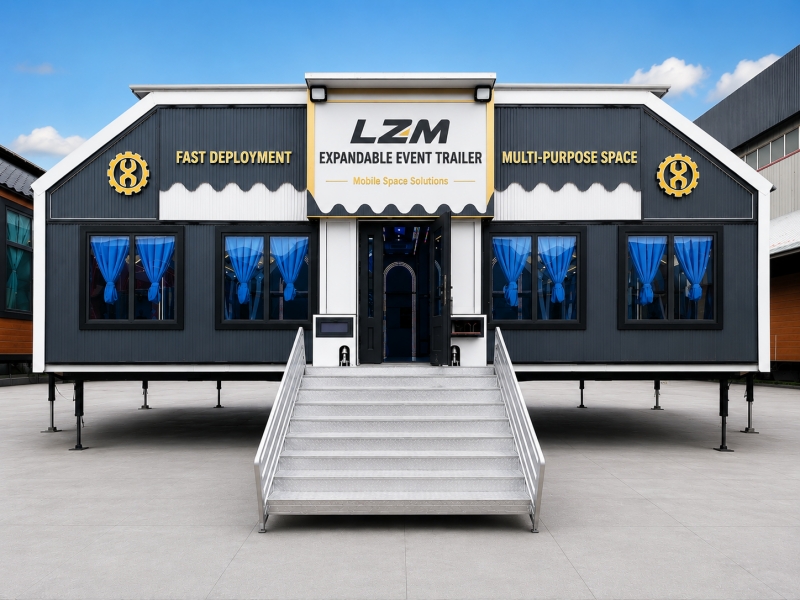
The first approach is to purchase the expandable structure together with the chassis.
The manufacturer integrates the major structure with the selected trailer chassis before shipment.
This can simplify manufacturing because the factory can coordinate:
Superstructure + Chassis + Expansion System + Weight Distribution
as one project.
For buyers in markets where the supplied chassis can meet local requirements, this may be the most straightforward option.
One major advantage is factory integration.
The manufacturer can verify the relationship between:
Structural mounting points
Axle positions
Support systems
Weight distribution
Overall transport dimensions
before shipment.
The buyer receives a more complete product rather than coordinating two major structural components from different suppliers.
This can reduce installation work after arrival.
When the complete trailer is assembled at the factory, more functions can be tested in the final configuration.
For example, the manufacturer can inspect:
Expansion
Retraction
Leveling
Structural alignment
with the superstructure already mounted on the chassis.
This gives the buyer an opportunity to review the assembled unit before shipment.
A trailer that can physically travel on roads is not automatically legal to register in every country.
Different markets may regulate:
Overall width
Overall height
Trailer length
Axle loads
Braking systems
Lighting
Coupling systems
Chassis certification
The requirements vary significantly.
This is why international buyers should investigate local road requirements before confirming the chassis configuration.
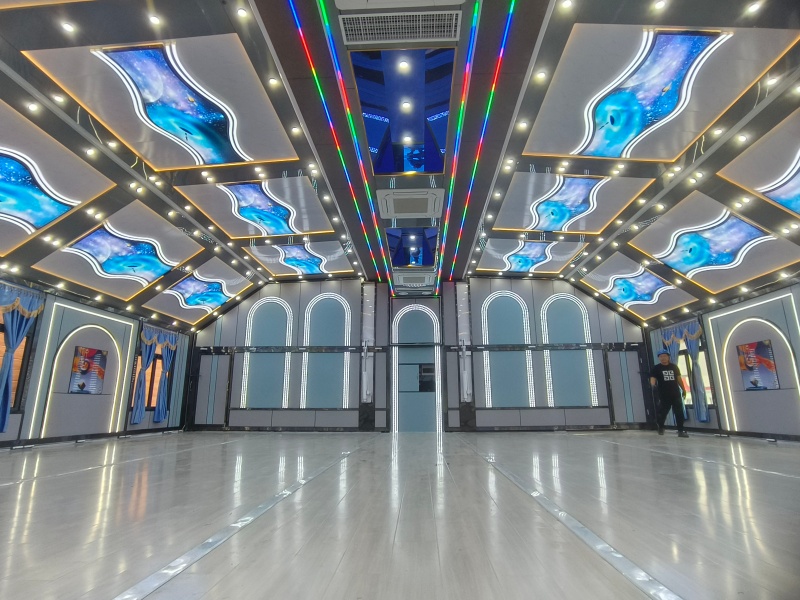
In some destinations, importing a complete trailer can create additional certification or registration challenges.
The expandable structure itself may be acceptable for the intended event application, while the imported road chassis creates the more difficult regulatory issue.
In that situation, the second approach becomes worth considering.
Instead of purchasing the complete trailer, the buyer purchases the expandable upper structure without the road chassis.
The superstructure is manufactured in China.
A suitable chassis is then:
Manufactured
Sourced
Certified
in the destination market.
The expandable structure is installed onto that chassis according to the agreed engineering interface.
This approach can be particularly useful when the destination has strong local chassis manufacturers or strict road regulations.
A locally manufactured chassis may already be designed according to destination requirements.
Depending on the market, this can make it easier to source appropriate:
Axles
Brakes
Suspension
Lighting
Coupling equipment
through local suppliers.
It can also make future chassis maintenance easier because the components are familiar to local workshops.
However, the final vehicle still needs to meet all applicable local requirements. A local chassis does not automatically guarantee approval of the complete finished project.
Buying only the upper structure does not mean the buyer can simply place it on any available trailer.
The chassis and superstructure need to work together.
Important information may include:
Mounting positions
Structural support points
Overall weight
Weight distribution
Center of gravity
Axle positioning
Required clearances
These need to be discussed before both sides begin production.
One of the biggest risks is allowing:
Factory A to build the expandable structure
while:
Factory B builds the chassis
without enough technical communication.
The two components may then arrive at the installation stage with incompatible dimensions or mounting arrangements.
The better approach is to define the interface before manufacturing begins.
For a superstructure-only project, technical drawings are critical.
The local chassis supplier may need information showing:
Overall structure dimensions
Mounting locations
Expected loads
Support positions
The expandable trailer manufacturer may also need the proposed chassis drawing.
Both sides can then review compatibility before production.
This is much safer than solving structural conflicts after the equipment is finished.
A superstructure-only project requires more work in the destination country.
The buyer should have access to a suitable company capable of handling:
Heavy structural installation
Welding or bolted connections as designed
Electrical integration
Final testing
depending on the project.
For a buyer without local technical support, a complete trailer may be easier to manage.
It can be tempting to assume:
“If I remove the chassis, the whole project must be much cheaper.”
The factory price may be lower because the chassis is excluded.
But the buyer must also consider:
Local chassis cost
Installation
Engineering
Local labor
Testing
Additional coordination
The correct comparison is therefore total project cost, not simply the Chinese factory price.
The two approaches may also require different logistics planning.
A complete large event trailer may require specialized international transportation depending on its dimensions and destination.
A superstructure-only unit may offer different shipping possibilities, but this depends on its actual transport dimensions and weight.
There is no universal rule that one option is always cheaper to ship.
A freight quotation should be based on the specific model.
Consider an event rental company planning to move the trailer between cities every week.
Road operation is a major part of the business.
In this case, the buyer may place greater importance on:
Local road compliance
Chassis serviceability
Brake parts
Axle parts
Tire availability
A locally sourced chassis may offer advantages if appropriate components and service are readily available.
Now consider a resort purchasing an expandable banquet hall.
The trailer may move from the port to the resort and then remain deployed for months.
Frequent road transportation is not the main business requirement.
The buyer may therefore evaluate the chassis decision differently from a touring rental company.
This illustrates an important principle:
The best chassis strategy depends on how mobile the “mobile venue” really needs to be.
For an Australian buyer, important questions may include:
Transport dimensions
Trailer mass
Axle configuration
Braking
Local registration requirements
A buyer should confirm these requirements locally before deciding whether an imported complete chassis is practical.
If local road approval becomes difficult, purchasing the expandable superstructure and matching it with an appropriate Australian-market chassis may be another project route.
The final solution should be reviewed by the relevant local professionals and authorities.
U.S. projects can also involve destination-specific requirements for trailers and commercial road transport.
For a trailer that will move frequently, buyers should investigate applicable federal, state and local requirements as relevant to the project.
For some projects, a locally sourced chassis may make component sourcing and future service easier.
For others, importing the complete unit may remain practical.
Again, the decision should be made project by project.
Years after delivery, a rental company may need:
Brake parts
Suspension components
Bearings
Axle service
Locally familiar chassis components can make maintenance easier.
This can be particularly valuable for high-mileage commercial rental operations.
The expandable superstructure and the road chassis should therefore be considered as two different maintenance categories.
The local chassis manufacturer needs reliable information about the upper structure.
At minimum, the engineering discussion should address:
Estimated structure weight
Equipment configuration
Weight distribution
Expected operating condition
Optional equipment can change these values.
For example:
Large LED systems
Additional HVAC
Water tanks
Batteries
Interior equipment
may affect the final weight.
The chassis should not be selected before the major configuration is known.
If the trailer includes large water or wastewater tanks, the project should consider whether they will contain liquid during transport.
Water adds significant weight.
Its location can also affect weight distribution.
This information should be communicated to the chassis engineer.
A cheaper chassis is not necessarily the cheaper solution over the life of the trailer.
Commercial buyers should consider:
Purchase Cost + Compliance + Installation + Maintenance + Parts Availability + Downtime
A chassis that is difficult to repair locally may create problems years after the initial purchase.
If you are considering a superstructure-only project, discuss the required technical information before placing the order.
The project may need documentation covering:
Superstructure dimensions
Approximate weight
Mounting arrangement
Support locations
Chassis interface
The exact documentation depends on the design.
The local chassis supplier should also provide its technical information for coordination.
A simple decision framework can help.
Imported chassis can meet destination requirements
Buyer wants maximum factory integration
Local installation capability is limited
Factory testing of the complete unit is preferred
Destination road requirements make imported chassis difficult
Reliable local chassis manufacturers are available
Buyer wants locally supported chassis components
The project has capable local engineering and installation partners
Neither option should be selected automatically.
The chassis affects more than transportation.
It can influence:
Floor height
Overall transport height
Weight distribution
Support positions
Entrance design
Changing the chassis strategy late in the project can therefore create unnecessary redesign work.
The delivery approach should ideally be confirmed near the beginning of the technical discussion.
The more useful question is:
Which configuration gives this project the most practical path from factory production to legal, serviceable operation in the destination market?
For one buyer, that may be a complete expandable event trailer.
For another, it may be an expandable superstructure installed on a locally manufactured chassis.
LZM can discuss both approaches according to the project requirements, destination market and intended operating model.
For international buyers, evaluating the chassis strategy early can help reduce compliance risk, installation problems and long-term service difficulties before production begins.
Explore Expandable Event Trailer Configurations