Welcome: Laizhou Machinery Group



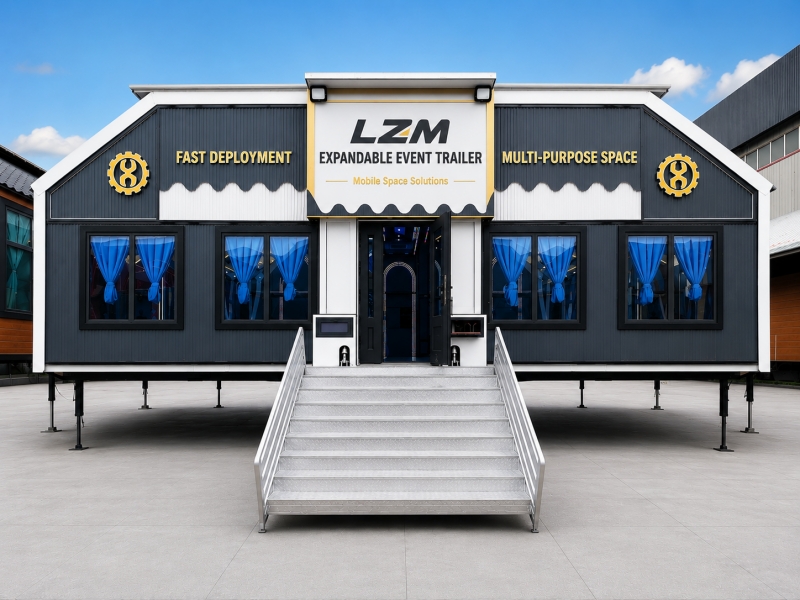
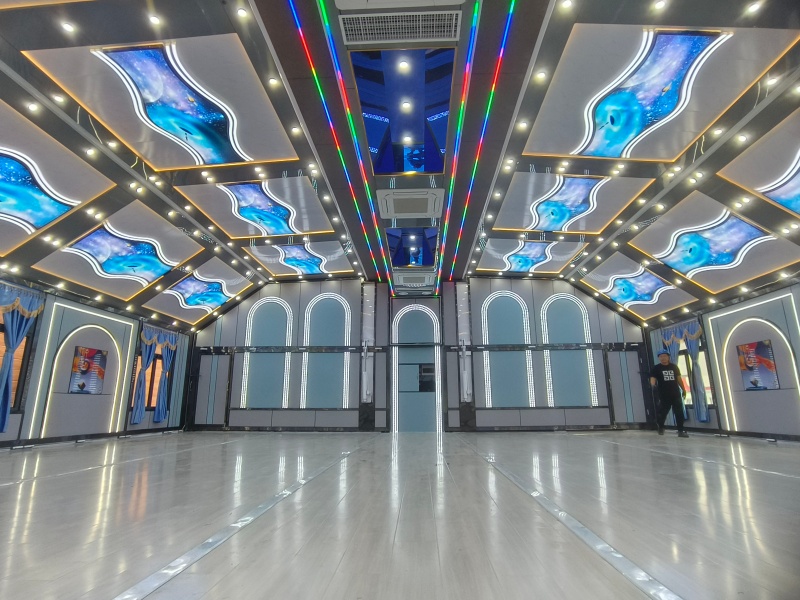
An expandable event trailer can transform from a road-transportable unit into a large commercial event space.
That transformation looks impressive.
But for an event rental company considering the investment, there is a practical question behind the technology:
What people are actually needed to operate it?
A large expandable trailer should not be evaluated only by its hydraulic opening time.
The complete operation can involve:
Site positioning
Leveling
Expansion
Utility connections
Interior preparation
Furniture
AV equipment
Safety checks
Event handover
Some of these tasks may be handled by the trailer operator.
Others may require electricians, AV technicians, decorators or local event staff.
Understanding these roles helps buyers estimate labor requirements, operating cost and scheduling before purchasing the trailer.
There is no universal answer such as:
“Every expandable event trailer requires exactly three people.”
Crew requirements depend on the project.
A smaller trailer used as a corporate showroom may need a very different team from a 21m expandable venue prepared for a large wedding.
Important factors include:
Trailer size
Site conditions
Frequency of movement
Interior configuration
Furniture
AV equipment
External stairs and ramps
Utility connections
Event type
The useful question is therefore not simply “How many people?”
It is:
“Which tasks need to be completed, and who is qualified to complete them?”
This distinction is important.
This includes tasks directly related to the mobile structure:
Positioning
Leveling
Support preparation
Hydraulic expansion
Retraction
Transport preparation
This may include:
Tables and chairs
Decoration
Lighting
LED screens
Catering equipment
Branding
Guest reception areas
A manufacturer may describe the crew needed to deploy the structure.
That does not necessarily represent the total workforce needed to prepare a 200-person wedding.
For a complete road-going trailer, someone needs to bring it to the site.
Depending on the destination and trailer configuration, this may require:
Appropriate towing vehicle
Qualified commercial driver
Knowledge of local transport requirements
The driver may also assist with positioning.
For some rental companies, the driver and trailer operator may be the same person.
For others, these are separate roles.
Before expansion begins, the trailer needs to be positioned correctly.
This can involve:
Reversing
Aligning with the site
Checking clearances
Confirming guest entrance orientation
Maintaining service access
A few meters of incorrect positioning can create problems later.
For example, after deployment the operator may discover that:
Stairs interfere with another structure
Service access is blocked
Guest circulation is poor
Good positioning reduces the need to move the trailer again.
Large vehicles have blind areas.
When maneuvering in a busy event site, a trained spotter can help the driver monitor:
Obstacles
People
Building edges
Other vehicles
Clear communication between the driver and spotter is important.
This is particularly useful at:
Hotels
Stadiums
Exhibition sites
Wedding venues
where space may already be occupied by other contractors.
Hydraulic controls should not simply be handed to whoever happens to be available.
The operator should understand:
Correct deployment sequence
Support procedures
Control functions
Normal equipment behavior
Emergency procedures
Retraction sequence
Training reduces the risk of incorrect operation.
For rental companies, it is usually sensible to have more than one trained employee rather than relying on a single person.
Imagine that only one employee knows how to operate the trailer.
Then that employee becomes unavailable on the day of an event.
The company has an expensive commercial asset but no qualified person to deploy it.
A stronger operating model creates redundancy.
At least several relevant staff members can understand the procedure, even if one remains the primary operator.
Expandable structures involve multiple steps.
The process should not depend on memory alone.
A typical workflow may include:
Site inspection
Trailer positioning
Parking and securing
Ground condition check
Support preparation
Leveling
Expansion
Entrance installation
Utility connection
Interior inspection
Event setup
Final operational check
The exact sequence depends on the trailer design and manufacturer instructions.
A trailer arriving at a level paved site is relatively straightforward.
A temporary outdoor site may be different.
Staff may need to deal with:
Soft ground
Uneven surfaces
Gravel
Wet conditions
Appropriate load-spreading or site-preparation measures may be required depending on the project.
This adds work before the trailer can be deployed.
The rental company should ideally know site conditions before arrival.
A pre-event site survey can identify:
Access
Surface
slope
obstacles
utility locations
This allows the crew to arrive with the appropriate equipment.
It is much more efficient than discovering a major site problem after the trailer reaches the venue.
The trailer operator and the electrician are not automatically the same person.
Depending on the project and local requirements, connection to:
Site power
Temporary distribution
Generator systems
may require appropriately qualified personnel.
The trailer supplier should provide the relevant electrical information.
The local operator should follow destination requirements.
At remote events, the trailer may use generator power.
The team needs to consider:
Generator location
Cable routing
Fuel arrangements
Noise
Safe operation
The generator should not simply be parked beside the guest entrance because it is convenient for the cable.
Event operation and guest experience need to be considered together.
In hot or cold climates, the interior may need conditioning before the event begins.
That means the operating team should not wait until guests arrive to start HVAC.
The venue may need to reach a comfortable temperature during:
Furniture setup
Decoration
Technical preparation
This affects the real setup schedule.
For a wedding, the trailer itself may already be deployed while staff are still working for hours on:
Tables
Chairs
Linen
Flowers
Lighting
Catering
Decorations
This is why buyers should avoid judging labor requirements only by the hydraulic system.
The event configuration may be the largest source of labor.
Consider two rental companies.
Furniture remains near a semi-permanent venue.
Every table and chair travels to a different site for every event.
Company B has significantly more:
Loading
unloading
positioning
securing
work.
The same expandable trailer therefore produces different staffing requirements.
Large rental businesses often divide responsibilities.
The trailer team focuses on:
Transport
Deployment
Technical operation
while an event crew handles:
Furniture
Decoration
Guest preparation
This specialization can make operations more efficient as the business grows.
If the venue contains:
Large LED screens
Professional audio
Event lighting
Streaming equipment
the trailer operator should not automatically be expected to configure all of it.
Complex AV systems may require specialist technicians.
For simpler installations, the operator may only need to perform basic checks.
The correct staffing model depends on the equipment package.
A touring brand activation may use:
Roadshow manager
Trailer operator
AV technician
Brand ambassadors
The ambassadors operate the customer experience.
The trailer operator manages the venue.
Separating these responsibilities allows each team member to focus on the correct task.
A wedding can involve:
Venue crew
Decorators
Caterers
DJ
Photographer
Florist
The expandable trailer team should not try to control every supplier.
Instead, the venue operator needs a clear handover point.
For example:
“The trailer is deployed, utilities are operating and the interior is ready for event contractors.”
After that, wedding suppliers can begin their work.
Without a defined handover, different contractors may interfere with each other.
A decorator may begin installing equipment while the technical crew is still testing the trailer.
A caterer may block a service route before furniture is positioned.
A simple event schedule can specify:
Trailer arrival
Deployment complete
Technical checks complete
Furniture setup
Decoration
Catering setup
Client inspection
Guest opening
This makes the operation more predictable.
Marketing materials sometimes focus on:
“The trailer opens in X minutes.”
For a commercial operator, a better metric is:
Arrival-to-event-ready time.
This includes everything required before the customer can use the venue.
That is the number that affects:
Labor cost
scheduling
site rental
customer promises
Rental companies can collect real operational data.
For each booking, record:
Driving hours
Positioning time
Deployment time
Furniture labor
Technical setup
Cleaning
Retraction
After several months, the company will understand its real operating cost much better.
This information can improve future quotations.
A booking that requires:
Long-distance transport
Difficult site access
Large furniture setup
Multiple technicians
should not necessarily be priced the same as a simple local deployment.
Labor is part of the project cost.
Rental companies can build pricing structures that account for additional operational requirements.
Suppose the trailer remains deployed for a five-day corporate event.
The major setup occurs once.
The venue then operates for several days before retraction.
Compared with five separate one-day locations, this can reduce setup labor relative to revenue-producing days.
This is one reason event duration matters when evaluating rental economics.
An expandable wedding venue installed at a resort for several months does not need a deployment crew every morning.
Once installed, daily staff requirements become more similar to a conventional venue.
The team focuses on:
Event preparation
Cleaning
Guest service
Routine inspection
rather than transportation and expansion.
At the other extreme, a roadshow may move frequently.
The team repeats:
Drive → Position → Deploy → Operate → Retract → Drive
again and again.
For this business model, standardized procedures and trained staff become especially important.
Small inefficiencies are repeated at every stop.
A crew that finishes an event late at night should not automatically begin a long transport operation without considering applicable working-hour and driving requirements.
Tour schedules need realistic time for:
Closing
Cleaning
Retraction
Driving
Rest
A theoretically possible schedule may not be a good operational schedule.
Rain, wind, heat or cold can make setup more difficult.
Staff may need additional time for:
Ground preparation
Weather protection
Cleaning
Site safety
Rental schedules should include contingency rather than assuming perfect conditions for every event.
Some events require trailers to arrive:
Early morning
Late evening
The crew needs adequate working visibility.
Temporary work lighting may be useful before the venue's own lighting system is fully operational.
Site safety should not depend on mobile phone flashlights.
Large moving structures require controlled operation.
One person should generally have clear responsibility for the deployment process.
Other crew members can monitor designated areas and communicate abnormalities.
Several people independently giving instructions creates confusion.
Expansion and retraction are technical operations.
The working area should be controlled according to the operating procedure.
Decorators, customers and other contractors do not need to stand beside moving sections simply because the process is interesting to watch.
The operator should maintain a clear work zone.
Instead of one enormous checklist, a rental company can divide tasks.
Vehicle inspection
Transport
Positioning
Deployment
Leveling
System checks
Furniture
Cleaning
Guest preparation
Power
AV
Specialist equipment
This makes responsibility clearer.
Smaller businesses do not necessarily need four separate employees for four roles.
One trained employee may perform several functions where appropriate.
The point is to define the responsibilities, not to create unnecessary job titles.
A small operation can still have a professional workflow.
Opening the venue is only half of the job.
Staff also need to know how to:
Clear the interior
Secure transported equipment
Check moving areas
Retract correctly
Prepare for road transport
Incorrect closing procedures can cause damage just as easily as incorrect opening procedures.
Training is better performed:
At the depot
At the factory
During controlled practice
rather than for the first time while a wedding planner is waiting.
Rental companies should practice the complete workflow before commercial operation begins.
Written operating instructions are important.
Video can also be useful for showing:
Control sequence
Visual inspection points
Equipment positions
especially when training additional staff.
But video should support—not replace—the official operating documentation.
If an operator encounters an unfamiliar issue, photos or video can help the manufacturer understand the situation.
Remote support can be valuable.
But the business should not depend on contacting the overseas factory for every normal deployment.
Daily operation needs to be manageable by the trained local team.
For an international commercial asset, buyers should consider whether major systems can be serviced locally.
This is particularly relevant for:
Hydraulics
HVAC
Electrical components
Chassis systems
A local technician may not know the exact trailer model, but should be able to understand well-documented commercial systems.
Training is not only about knowing what button to press.
A good operator should recognize when something appears abnormal.
Examples include:
Unexpected resistance
Unusual noise
Misalignment
Visible leakage
The correct response may be to stop and inspect rather than continue forcing the system.
This is an important part of equipment operation.
Before guests arrive, the team can perform a final check appropriate to the configuration.
This may include:
Interior condition
Doors
Lighting
HVAC
Guest access
Installed equipment
The purpose is simple:
Find problems before the customer finds them.
After guests and contractors leave, staff can check for:
Damage
Missing items
Spills
Equipment problems
before the trailer is closed.
This is especially important for rental companies because responsibility for damage may need to be documented.
Taking photographs before and after each rental can record:
Venue condition
Furniture
Visible damage
This is a simple operational practice that can support fleet management.
If every booking uses completely different procedures, staff need to relearn the job constantly.
Rental companies can standardize:
Site survey
Deployment
Furniture packages
Equipment checks
Closing procedure
while still offering customers flexible event designs.
Standardization happens behind the scenes.
The guest experience can remain customized.
A company with one trailer can sometimes operate informally.
A company with five trailers cannot depend on one experienced employee remembering everything.
As the fleet grows, the business benefits from:
Training records
Maintenance schedules
Standard checklists
Equipment inventories
Operational systems become part of scalability.
Buyers often ask about:
Trailer price
Dimensions
Guest capacity
before considering operating labor.
But labor affects the long-term business model.
Before ordering, estimate:
Transport Crew + Deployment Crew + Event Setup Crew + Technical Support
for the events you actually intend to serve.
Consider an event rental company operating a large expandable venue for a wedding.
The workflow might involve:
Day 1
Transport and deploy the trailer.
Day 2 Morning
Furniture and decoration teams prepare the venue.
Day 2 Evening
Wedding takes place.
Day 3
Clean, inspect, retract and transport.
The trailer may therefore support one evening event while requiring staff across several operational periods.
That needs to be reflected in the rental quotation.
A touring corporate venue may use a much more standardized interior.
Most furniture and AV remain integrated or follow a repeatable configuration.
The same trained roadshow team moves with the trailer.
In this case, repeated deployment can become much more efficient.
This illustrates why staffing depends heavily on the business model.
Before accepting a customized trailer, buyers should understand the complete process.
A useful demonstration can include:
Deployment
Controls
Leveling
Utility interfaces
Retraction
Basic inspections
The customer should leave with a clear understanding of normal operation.
Hydraulic expansion can reduce manual structural work.
It does not eliminate the need for trained operators.
Likewise, automation does not:
Drive the trailer
Inspect the site
Arrange furniture
Connect every external service
Manage guests
The commercial advantage comes from combining mechanized deployment with a disciplined operating team.
Instead of asking only:
“How many workers do I need?”
buyers should map the complete process:
Depot → Transport → Site → Deployment → Event Preparation → Event → Cleaning → Retraction → Return
Then assign responsibility to each stage.
This produces a much more accurate staffing estimate.
Before finalizing an expandable event trailer, discuss:
Who will tow or transport the trailer?
Who will operate the expansion system?
How often will the trailer move?
What site conditions are typical?
Who connects electrical power?
Is a generator normally required?
Who handles furniture?
Will AV remain installed?
Who handles cleaning?
What equipment travels inside?
What training will operators receive?
What manuals and operating videos are provided?
What local technicians can service the major systems?
These questions help turn a piece of equipment into an operable commercial asset.
An expandable event trailer is not successful simply because it can become a large room.
For a commercial operator, it also needs to fit into a repeatable workflow.
That means considering:
Transport + People + Procedures + Equipment + Time.
A well-trained crew can make deployment predictable.
Standard procedures can reduce mistakes.
Clear responsibilities can make multi-city roadshows and event rental fleets easier to scale.
For buyers, staffing should therefore be considered during the purchasing stage—not discovered after the trailer arrives.
LZM expandable event trailers can be configured for event rental companies, weddings, corporate events, brand activations and mobile hospitality projects, with operating requirements depending on trailer size, equipment and intended use.
For commercial buyers, the goal should be a venue that is not only impressive when fully expanded, but also practical for the team that needs to transport, deploy and operate it repeatedly.
Explore Expandable Event Trailer Configurations for Commercial Operators