Welcome: Laizhou Machinery Group



A successful brand activation in one city is difficult enough.
Now imagine repeating it in:
Dallas
Houston
Austin
Phoenix
Las Vegas
The campaign concept is supposed to remain consistent.
The customer experience should feel the same.
The brand identity should remain recognizable.
But every location introduces a new:
Venue
Floor plan
Contractor
Installation
Electrical connection
Weather condition
Local operating challenge
This is one of the fundamental problems of a multi-city brand activation campaign.
The marketing concept may be standardized.
The physical venue is not.
For brands and experiential marketing agencies running repeated roadshows, an expandable event trailer offers another approach:
Instead of rebuilding the brand environment in every city, move the environment with the campaign.
A single temporary activation can justify substantial custom construction.
The agency designs the space.
Contractors build it.
The event runs.
Then everything is dismantled.
For a five-city or ten-city campaign, repeating this process becomes much more complicated.
Each new city may require:
Receiving materials.
Building the structure.
Installing branding.
Installing AV equipment.
Testing lighting.
Preparing customer areas.
Running the event.
Dismantling everything.
Packing the materials.
Shipping them to the next city.
Then the process starts again.
The customer may see only a polished activation.
Behind it is a significant logistics operation.
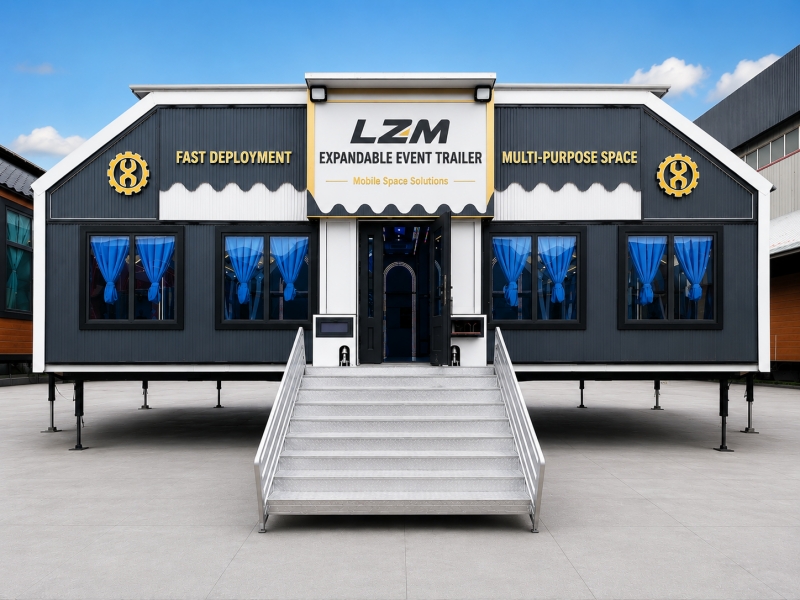
A mobile brand activation venue changes the model.
Instead of transporting hundreds of individual components and reconstructing the venue at every stop, the primary environment can remain integrated into the expandable trailer.
After arriving at the next location, the trailer is deployed and prepared for operation.
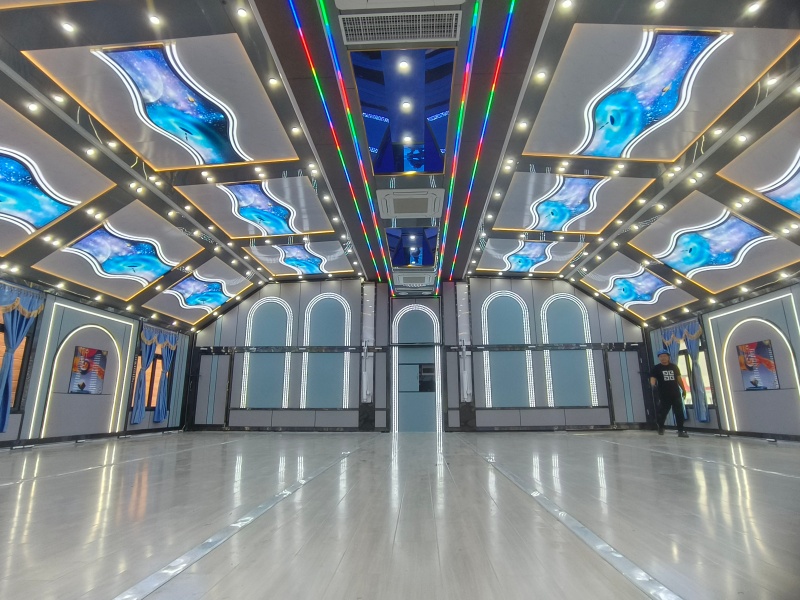
Depending on the project, permanent elements may include:
Flooring
Ceiling
Lighting
Display areas
AV infrastructure
HVAC
Electrical distribution
Storage
Brand graphics
This does not eliminate event setup.
It changes what needs to be set up repeatedly.
For a touring campaign, the question is not only:
“Does the activation look good?”
It is:
“Can we reproduce this experience reliably in every city?”
Repeatability matters because national and regional campaigns need consistent execution.
A visitor in Houston should not receive a dramatically inferior experience from a visitor in Dallas simply because the local contractor built the space differently.
A mobile venue can provide a more standardized physical platform.
Large brands invest heavily in:
Colors
Materials
Signage
Lighting
Product presentation
Small differences can matter.
With conventional temporary construction, every local build introduces the possibility of variation.
For example:
Wall dimensions differ.
Lighting is positioned differently.
Screens are mounted at different heights.
Flooring changes.
Customer circulation changes.
With an integrated mobile venue, many of these physical elements travel together.
The campaign begins each city with a more consistent base.
For a simple promotional booth, small differences may not matter.
For a premium activation involving:
Automotive
Technology
Fashion
Luxury goods
Consumer electronics
the environment itself communicates brand positioning.
Customers notice:
Finish quality
lighting
temperature
presentation
spatial design
A poorly executed temporary venue can weaken an otherwise expensive campaign.
Brand activations are not simply rooms with logos.
A strong activation may guide visitors through several stages.
For example:
Entrance
↓
Brand Introduction
↓
Product Experience
↓
Interactive Demonstration
↓
Consultation
↓
Social / Photo Area
↓
Exit
An expandable trailer can be designed around this journey rather than forcing the campaign into a different rented space at every destination.
If the same product is demonstrated repeatedly, dedicated areas can be incorporated into the venue.
These might include:
Display platforms
Product counters
Screens
Interactive stations
Power outlets
This reduces the need to recreate technical infrastructure at every stop.
The exact configuration depends on the campaign.
Modern brand activations increasingly depend on:
LED screens
Digital signage
Audio
Interactive displays
Computers
Lighting controls
Reinstalling these systems repeatedly can consume significant labor.
Where practical, parts of the AV infrastructure can remain integrated into the trailer.
At each stop, the team then focuses more on:
Content
Product
Guest experience
and less on rebuilding the venue.
A mobile venue does not have to display the same campaign forever.
Digital displays can change from:
Campaign A
to
Campaign B
without rebuilding the physical interior.
This can be useful for:
Marketing agencies
Event rental companies
Brands running multiple product campaigns
A neutral architectural base combined with digital branding can extend the commercial life of the asset.
Not every brand element needs to be digital.
Exterior and interior graphics can be designed as replaceable elements where appropriate.
For example:
Graphic panels
Banners
Signage
Display inserts
can change between campaigns.
The underlying structure remains the same.
This is especially important for rental companies that serve multiple brands.
A brand-owned trailer may use more permanent identity.
For example, a beverage or automotive company may operate the same branded roadshow for several years.
In that case, the venue can be highly customized around one brand.
An event rental company has a different requirement.
Its trailer needs to transform from:
Technology Brand
to
Sports Sponsor
to
Corporate Hospitality Client.
The permanent interior should therefore remain more neutral.
Roadshows operate on schedules.
The team may finish one event and need to move to another city shortly afterward.
Every additional day spent:
Dismantling
Packing
rebuilding
can affect the campaign calendar.
A repeatable mobile venue can reduce some of this reconstruction work.
But buyers should distinguish between:
Trailer Deployment
and
Complete Event Setup.
The trailer may expand hydraulically, but products, furniture, external branding and local site connections may still require additional work.
Large expandable venues involve real site operations.
Depending on the project, these can include:
Positioning
Leveling
Expansion
Electrical connection
HVAC startup
Furniture
AV testing
Exterior setup
Therefore, it is more useful to evaluate the complete operational workflow than to advertise only the hydraulic opening time.
For roadshows, total site-to-ready time is what matters.
A mobile venue creates consistency inside the trailer.
It does not make every site identical.
One location may be:
Stadium parking lot
Another:
Shopping center
Another:
Convention venue
Another:
Outdoor festival
The operator still needs to check:
Vehicle access
Ground conditions
Deployment clearance
Power
Guest circulation
Local requirements
A standardized trailer should therefore be combined with a standardized site survey process.
Before confirming each activation location, the roadshow team can check:
Can the trailer reach the site?
Is there sufficient turning space?
Is there enough expansion clearance?
Is the ground suitable?
What electrical supply is available?
Where will guests enter?
Where will staff and service vehicles operate?
This makes venue selection more systematic.
A conventional roadshow may use different local AV and lighting packages at every venue.
An integrated trailer has more predictable electrical requirements.
The campaign team can tell each location in advance what the venue needs.
This simplifies communication with:
Event sites
electricians
generator suppliers
However, actual power demand should be calculated from the final equipment configuration.
Some activation sites may not provide sufficient utility power.
Depending on the project, a generator can support operation.
This may be useful for:
Outdoor sporting events
Remote product demonstrations
temporary festival sites
But generator capacity should be based on the real electrical load, including major consumers such as HVAC and AV systems.
One challenge with outdoor activations is weather.
Customers may face:
Heat
Cold
Wind
Rain
An enclosed expandable venue can create a more controlled environment.
This is especially useful when customers are expected to spend meaningful time:
Watching presentations
Testing products
Talking with sales staff
Attending VIP sessions
Comfort can increase dwell time.
A brand may have invested heavily in:
Media
Influencers
staff
products
travel
for one activation date.
Bad weather can put that investment at risk.
An enclosed venue does not eliminate all weather-related operational issues, but it can reduce dependence on ideal outdoor conditions for the customer experience.
A mobile brand activation does not need to keep everything inside.
The expandable trailer can function as the central indoor environment while the surrounding site supports:
Product displays
Outdoor demonstrations
Queuing
Entertainment
Food and beverage
Photo opportunities
This creates a hybrid activation.
The trailer becomes the anchor venue rather than the entire event.
A vehicle cannot always be brought into the interior.
Instead, the trailer might contain:
Brand presentation
Configurator
VIP lounge
Product information
Sales consultation
while the actual vehicles remain outside.
The indoor and outdoor zones work together.
At sporting events, a sponsor may use the trailer for:
VIP guests
Product display
interactive experience
content
hospitality
while larger crowd activities happen outside.
Again, the mobile venue provides a controlled branded center.
Roadshows transport many small items:
Promotional materials
cables
product samples
staff equipment
cleaning supplies
Without planned storage, these items quickly clutter the guest area.
A customized trailer can include appropriate storage according to the campaign.
But storage should not consume valuable customer-facing floor area unnecessarily.
An object that sits safely on a display table during an event may become dangerous during road transport.
Equipment that travels inside the trailer needs to be:
Secured
Protected
Clear of moving sections
The transport configuration should therefore be planned separately from the event configuration.
For expensive electronics or demonstration products, dedicated transport cases can reduce damage.
These cases may travel:
Inside secured storage
In a separate support vehicle
depending on available space and weight.
Roadshow logistics should be considered during trailer design.
An expandable trailer can reduce repeated venue construction.
It does not necessarily eliminate every logistics vehicle.
Large campaigns may still need another truck for:
Product inventory
Furniture
promotional material
staff equipment
The objective is not to claim:
“One trailer carries everything.”
The objective is to make the central venue more repeatable and efficient.
Every added feature increases weight.
This can include:
Screens
Furniture
batteries
HVAC
product displays
A roadshow trailer moves frequently, so transport weight should be considered carefully.
Heavy optional equipment should not be added simply because there is physical interior space.
A trailer that moves twice per year and one that moves twice per week experience different operating patterns.
A high-frequency roadshow may prioritize:
Durable interior finishes
Reliable expansion
Easy cleaning
Secure storage
Standardized setup
Accessible maintenance
These can be more valuable than extremely delicate decorative features.
Marketing campaigns can be demanding on equipment.
Staff repeatedly:
Load
unload
clean
reposition displays
connect equipment
The venue should be designed for commercial repetition.
A beautiful interior that becomes damaged after several tours is not a successful roadshow asset.
Roadshow schedules can leave little time for repair.
Operators should identify routine checks for:
Hydraulic system
Tires and chassis
HVAC
electrical equipment
doors and seals
Maintenance can be planned between campaign legs rather than waiting for a breakdown.
For frequently moving commercial assets, selected small spare parts can be kept with the support equipment.
The appropriate list depends on the installed systems.
The objective is to avoid cancelling an activation because a small replacement component is several days away.
A roadshow may operate far from the manufacturer.
Major systems should therefore be understandable to qualified local:
Hydraulic technicians
electricians
HVAC technicians
where practical.
Remote manufacturer support can assist diagnosis, but local service capability reduces downtime.
When the same venue travels through multiple cities, staff become familiar with:
Expansion
controls
AV
storage
guest flow
The fifth event should become easier to operate than the first.
This operational learning is another benefit of using the same physical platform repeatedly.
The roadshow team can follow the same sequence at each city.
For example:
Inspect site.
Position trailer.
Level and deploy.
Connect power.
Start HVAC.
Install customer-facing equipment.
Test AV.
Install local branding.
Conduct safety inspection.
Open to guests.
A repeatable process reduces mistakes.
At the end of each stop:
Remove loose products
Secure displays
Disconnect temporary equipment
Clean the venue
Inspect for damage
Secure transported items
Retract according to operating procedure
Complete road checks
The next city should not inherit problems from the previous event.
A standardized venue also provides a more consistent environment for campaign measurement.
If every city uses a completely different physical space, comparing performance becomes harder.
With a repeatable platform, the brand can more meaningfully compare:
Visitor numbers
Dwell time
Leads
Product interactions
Sales conversations
because the venue experience changes less from location to location.
Standardization does not mean every city must be identical.
The core venue can remain consistent while local elements change.
For example:
Local sports partnership.
Energy-industry audience.
Technology-focused event.
The physical platform remains recognizable, but content and activation programming adapt to the market.
LED displays and digital signage allow the campaign to change:
Language
Local messaging
Partner logos
Product content
without changing the architecture.
The same trailer can therefore provide:
Global Brand Consistency + Local Campaign Flexibility.
The same activation may serve different audiences during the day.
For example:
Morning: Media preview
Afternoon: Public product experience
Evening: VIP hospitality
A flexible interior can support these transitions with changes to:
Furniture
lighting
digital content
rather than rebuilding the venue.
A mobile expandable venue does not make sense for every activation.
If a company needs one small event in one city, conventional rental infrastructure may be more economical.
The case becomes stronger when the brand repeatedly needs a substantial temporary environment.
Important questions include:
How many cities?
How many campaigns per year?
How much is currently spent rebuilding?
How long will the program continue?
How valuable is brand consistency?
The answer should come from the campaign economics.
A buyer considering a mobile venue should compare it with the existing alternative.
Traditional roadshow costs can include:
Temporary venue rental
fabrication
local labor
AV installation
dismantling
shipping
storage
repeated contractor management
The expandable trailer introduces its own costs:
Purchase
transport
maintenance
storage
operation
The useful comparison is the total cost across the campaign, not simply the purchase price versus one event's rental cost.
For an experiential marketing agency, the economics may be different from a single brand.
The agency can potentially reconfigure the same mobile venue for:
Beverage client
Technology client
Sports sponsor
Corporate roadshow
This spreads the investment across multiple campaigns.
In that model, neutral interior architecture and replaceable branding become especially important.
A sophisticated roadshow package can include:
Mobile venue
Transport
Deployment
HVAC
Lighting
AV
Furniture
Branding support
The customer purchases a more complete activation infrastructure solution.
This can differentiate the rental company from suppliers offering only a basic temporary structure.
A rental company purchasing its first expandable brand activation trailer should consider future customers.
If every wall permanently reflects Client A's branding, the asset may be difficult to rent to Client B.
Design permanent elements around:
Quality
functionality
flexibility
and make client identity replaceable.
A global or regional brand with a long-term touring program can justify more permanent customization.
The trailer itself can become a recognizable campaign asset.
Over time, customers may begin to recognize the venue when it arrives at:
Festivals
sports events
retail locations
The mobile structure becomes part of the brand's physical identity.
A buyer should define:
How many cities will the campaign visit?
How frequently will the trailer move?
What products will be displayed?
How many visitors enter at one time?
Is the experience public, VIP or both?
What AV equipment is required?
What needs to remain installed during transport?
What branding should be permanent?
What branding needs to change?
What climates will the trailer operate in?
What electrical supply is available?
Will a support vehicle travel with it?
These answers influence the correct configuration.
The first activation often receives the most attention.
But a roadshow asset should be designed for:
City 10, not just City 1.
That means considering:
Repeated transportation
Repeated setup
Cleaning
component access
spare parts
staff training
from the beginning.
A venue that looks spectacular at the launch but becomes difficult to operate after several stops is not a successful touring solution.
For multi-city brand activations, mobility is useful.
But mobility alone is not the main value.
The larger advantage is the ability to carry a repeatable physical customer experience from market to market.
Instead of rebuilding the campaign environment in every city, the brand moves a large part of that environment with the campaign.
That can improve:
Brand Consistency
Operational Predictability
Setup Efficiency
Customer Experience
Asset Reuse
For brands, experiential marketing agencies and event rental companies running repeated campaigns, those factors can be more important than simply having another temporary venue.
LZM manufactures customizable expandable event trailers for brand activations, roadshows, corporate events and mobile hospitality projects. Interior layout, digital displays, HVAC, electrical systems, storage and branding areas can be configured according to the campaign's intended use and operating market.
For a multi-city project, the trailer should be designed around the complete touring workflow—from transport and deployment to customer experience, closing and movement to the next city.
Explore Expandable Event Trailers for Brand Activation & Roadshows