Welcome: Laizhou Machinery Group



For a wedding venue operator, the most important hours are not always the hours when guests are inside the venue.
Sometimes they are the hours between two events.
A Saturday wedding may finish late at night. The next morning, the same venue may need to be prepared for:
Another wedding
A corporate lunch
An engagement party
A private celebration
For an expandable wedding venue used commercially, this creates an important purchasing question:
How quickly can the venue be cleaned, reset and prepared for the next booking?
The answer depends on much more than the hydraulic expansion system.
Flooring, furniture, storage, catering arrangements, interior materials and staff workflow can all influence turnaround time.
For event rental companies, hotels and wedding venue operators, these details can ultimately affect how many revenue-producing events the asset can support each year.
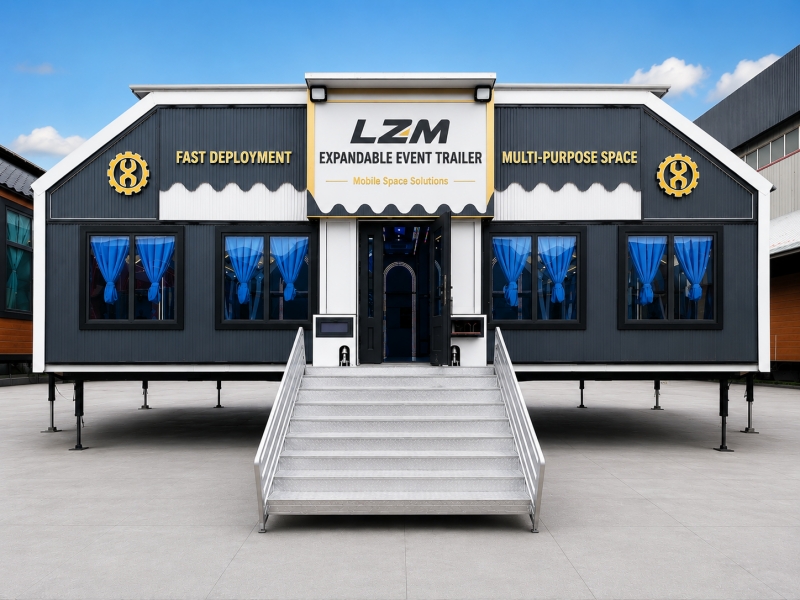
These two concepts are easy to confuse.
Deployment time refers mainly to preparing the expandable structure itself:
Positioning
Leveling
Expanding
Connecting utilities
Event turnaround time begins after one event finishes and the venue needs to be prepared for another.
If the trailer remains at the same site, it may not need to be retracted at all.
Instead, the work involves:
Removing decorations
Clearing catering equipment
Cleaning
Rearranging furniture
Testing equipment
Preparing the next layout
For a busy wedding venue, this operational turnaround can matter more than the hydraulic opening time.
Consider two venues with the same guest capacity.
Venue A needs almost an entire day to reset.
Venue B can be prepared efficiently for another event.
Venue B potentially has more scheduling flexibility.
That does not necessarily mean booking two weddings every day. Weddings often require substantial preparation and decoration.
But faster turnaround can make it easier to accept:
Friday evening corporate event
Saturday wedding
Sunday brunch or private function
The venue becomes a more flexible commercial asset.
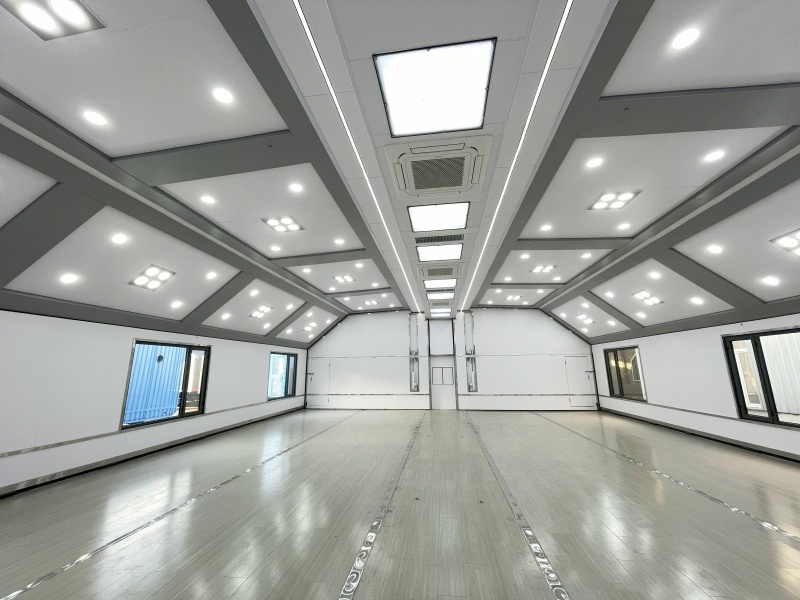
The floor experiences some of the heaviest use in a banquet venue.
During a wedding it may be exposed to:
High heels
Food
Drinks
Moving chairs
Catering carts
Decoration equipment
A beautiful floor that is extremely difficult to clean may not be ideal for a high-frequency rental operation.
The buyer therefore needs to balance:
Appearance + Durability + Cleaning Efficiency.
Luxury wedding interiors often aim for:
Elegant colors
Reflective surfaces
Premium finishes
But commercial venues are different from private living rooms.
Materials may be used dozens or hundreds of times.
For a rental company, the better material is often one that still looks premium after repeated:
Cleaning
Furniture movement
Guest traffic
rather than the material that looks best only on the first day.
A semi-permanent resort venue and a frequently moving rental trailer may have different priorities.
A resort may be able to use more elaborate decorative treatments because:
The trailer moves infrequently
Staff are familiar with the venue
Furniture may remain nearby
A mobile rental operator may prioritize:
Easy cleaning
Scratch resistance
Fast furniture movement
Easy replacement of damaged sections
The same interior specification is not automatically ideal for both businesses.
Tables and chairs consume significant labor.
After one event, staff may need to:
Remove tableware.
Remove linen.
Move chairs.
Move tables.
Clean the floor.
Install the next layout.
Replace furniture.
If the next event uses a completely different floor plan, the workload increases.
Furniture strategy therefore deserves attention before the trailer is purchased.
A wedding venue may use round banquet tables on Saturday and a corporate classroom layout on Monday.
Modular furniture can make this easier.
The operator may maintain different inventories for:
Weddings
Corporate events
Cocktail receptions
rather than permanently fixing one arrangement inside the venue.
This allows the same expandable structure to serve several markets.
Where will all those tables and chairs go?
This is frequently overlooked.
Possible solutions include:
Dedicated warehouse
Separate furniture trailer
On-site storage
Limited internal storage
Each approach has different implications.
Trying to store every piece of furniture inside the expandable event trailer can reduce usable venue area and complicate transportation.
A hotel or resort may already have:
Banquet chairs
Tables
Linen
Catering equipment
Storage rooms
In that case, the expandable venue does not need to operate as a completely independent event business.
It can use the hotel's existing infrastructure.
This can significantly simplify event turnaround.
A venue containing a full kitchen requires more cleaning than a venue used mainly for dining.
Commercial cooking can introduce:
Grease
Food waste
Heat
Odor
Additional equipment
If the expandable venue is installed beside a hotel with an existing kitchen, using that kitchen may reduce the amount of equipment that must be cleaned inside the trailer.
For a mobile rental operation, an external catering solution may also be practical.
Good event planning should consider two different flows:
Entrance → seating → dance floor → bar → restrooms.
Catering → table service → waste removal → cleaning.
If these routes constantly conflict, setup and cleanup become slower.
A well-planned layout can create a clearer back-of-house workflow.
Where the project design allows, a dedicated service access point can help catering and event staff work without repeatedly using the main guest entrance.
This can support:
Food delivery
Equipment movement
Waste removal
while preserving the appearance of the main entrance.
Door positions should, of course, also be coordinated with structural and local safety requirements.
Two weddings in the same venue can require completely different setup times.
Wedding A may use:
Simple floral arrangements
Standard tables
Basic lighting
Wedding B may require:
Large floral installations
Ceiling decoration
Custom backdrop
Special lighting
Photo installations
The trailer itself may be identical.
The turnaround time is not.
This is why venue operators should separate venue reset time from event decoration time.
A strong base interior can reduce how much temporary decoration each customer needs.
For example, a venue that already has:
Attractive ceiling
Quality lighting
Premium walls
Finished flooring
may require fewer temporary elements to look suitable for a wedding.
This can reduce both:
Setup labor
Decoration cost
for some events.
A highly specific interior color scheme may work beautifully for one wedding style but conflict with another.
A more neutral permanent interior can be adapted using:
Flowers
Lighting
Linen
Furniture
Digital screens
This helps the venue move from one event theme to another without major physical changes.
This is particularly important for rental companies.
A venue may host:
Wedding on Saturday
Corporate event on Monday
Product launch on Wednesday
Permanent decorative branding can make these transitions difficult.
Where practical, branding should be:
Replaceable
Digital
Modular
so the underlying venue remains flexible.
Lighting is one of the easiest ways to change atmosphere.
The same interior can feel very different through:
Warm wedding lighting
Corporate white lighting
Colored event lighting
This means the operator can create different visual identities without rebuilding the interior between events.
Lighting flexibility can therefore support faster commercial turnaround.
Where a project includes LED displays, the same physical screen can show:
Names, photos and ceremony visuals.
Presentation and company branding.
Product videos and campaign content.
Digital content can be changed in minutes.
Physical wall branding can take much longer.
A venue may look elegant but contain areas that are extremely difficult to reach.
For example:
Narrow gaps behind fixed furniture
Complicated decorative recesses
Difficult ceiling features
Inaccessible service areas
These create additional cleaning labor.
Commercial interiors should be designed not only to photograph well but also to be maintained efficiently.
Wedding guests and staff can accidentally:
Mark walls
Scratch surfaces
Spill drinks
Event rental companies should therefore consider how easily wall finishes can be:
Cleaned
Repaired
Replaced
A damaged decorative panel should not require rebuilding an entire wall.
Where practical, modular finishing systems can make local repairs easier.
If one panel is damaged, replacing a section may be more practical than refinishing the entire venue.
For an asset that earns money through bookings, downtime has a cost.
Serviceability should influence interior design.
Large glass sections can make an expandable wedding venue feel:
More open
More luxurious
Better connected to the landscape
They can be particularly attractive for:
Resorts
Vineyards
Waterfront properties
But glass also shows:
Fingerprints
Dust
Rain marks
more easily than solid wall panels.
Operators should include glass cleaning in the turnaround plan.
Guests see the outside before they see the ballroom.
Between events, staff may need to clean:
Entrance
Steps
Exterior panels
Glass
Decking
A premium mobile venue needs to look professional both inside and outside.
This becomes particularly important for weddings where photography begins before guests enter.
If the trailer includes internal restrooms, staff must also manage:
Cleaning
Consumables
Fresh water
Wastewater
For a fixed-site venue, this may be straightforward.
For a frequently moving rental trailer, it creates additional logistics.
Buyers should therefore ask whether integrated restrooms are genuinely necessary.
If the venue is installed at:
Hotel
Resort
Golf club
Wedding estate
existing restrooms may already be available nearby.
Using them can preserve more trailer space for:
Banquet seating
Lounge
Dance floor
and reduce cleaning requirements.
Again, the correct solution depends on the business.
Air conditioning should not be considered only while guests are inside.
After an event, the operator may need climate control during:
Cleaning
Decoration
Setup
especially in hot climates.
Staff cannot work efficiently inside a closed venue at extreme temperatures.
Actual HVAC operating hours can therefore exceed the official event duration.
Between events, staff can inspect simple HVAC items such as:
Filters
Condensate drainage
Unusual noise
Airflow
according to the equipment maintenance requirements.
Finding a problem during cleaning is much better than finding it when 150 wedding guests arrive.
After one event, third-party suppliers may remove:
DJ equipment
Lighting
Catering appliances
Before the next event, staff should confirm that:
Temporary cables are removed
Outlets are undamaged
Distribution panels are accessible
Permanent lighting operates normally
This creates a repeatable operational standard.
Once tables and chairs are installed, floor damage becomes harder to see.
The reset process is a good opportunity to inspect:
Surface damage
Expansion joints
Thresholds
High-traffic areas
Small problems can then be addressed before they become larger maintenance issues.
Expandable structures contain moving interfaces and seals.
For a trailer that moves frequently, operators can periodically check:
Door alignment
Seals
Moving-section interfaces
according to the maintenance plan.
The goal is not to conduct a full engineering inspection after every wedding.
It is to identify visible abnormalities early.
A growing rental company should not depend on:
“John knows how we normally do it.”
A written turnaround checklist makes the operation easier to scale.
For example:
After Event
Remove customer equipment
Remove waste
Clear furniture
Clean interior
Inspect floor and walls
Check restrooms if installed
Before Next Event
Install new layout
Test lighting
Test HVAC
Check doors
Confirm exits are clear
Inspect guest entrance
This can be adapted to the company's actual trailer configuration.
A simple operational habit is taking photographs after the venue has been prepared.
This provides a record of:
Condition
Layout
Cleanliness
before the next customer arrives.
For rental businesses, it can also help identify when damage occurred.
A commercial venue may be used by:
Customers
Caterers
DJs
Decorators
If something is damaged, responsibility can become unclear.
Rental agreements can establish procedures for:
Pre-event inspection
Post-event inspection
Damage reporting
according to local legal requirements.
This helps protect the asset.
Not every event needs a completely custom floor plan.
A rental company might develop several proven packages:
Round tables + dance floor.
Banquet seating + presentation area.
Standing tables + lounge.
Rows of chairs + screen.
Staff become familiar with these configurations, making setup faster and more predictable.
If a customer wants an entirely unique arrangement requiring additional:
Labor
Furniture movement
Decoration
the operator can account for that in the commercial quotation.
Turnaround time is not just an operational issue.
It is also a cost.
After several events, operators can track:
Cleaning hours
Furniture setup hours
Decoration support hours
Technical inspection hours
This reveals the real cost of each event type.
A wedding generating high revenue may also require much more labor than a simple corporate meeting.
Consider:
High rental price but requires two days of setup and cleanup.
Lower rental price but requires only several hours of preparation.
The more useful business metric may be:
Revenue or contribution margin relative to the number of asset days and labor hours consumed.
This helps rental companies understand which events are genuinely profitable.
Suppose an event occupies the venue for six hours.
But the complete booking requires:
One day for decoration
Event day
Half a day for cleanup
Commercially, the asset is occupied for much longer than six hours.
Operators should price and schedule according to asset commitment, not only guest hours.
This is where fast reset can become particularly valuable.
A hotel may use the same expandable hall for:
Saturday: Wedding reception
Monday: Corporate conference
Tuesday: Private dinner
The asset produces value across several customer segments.
A flexible base interior makes these transitions easier.
Imagine permanently designing the entire venue around:
Pink flowers
One wedding theme
One decorative style
It may photograph beautifully.
But customers wanting a different aesthetic may reject it.
For commercial operation, the permanent structure should provide a premium foundation.
The customer-specific identity can then be added temporarily.
The expandable venue provides:
Architecture
Lighting
Climate control
Floor
Walls
Ceiling
The event company adds:
Furniture
Flowers
Branding
Entertainment
This separation allows the venue to support more types of bookings.
It also makes turnaround easier.
If an expandable trailer remains at one resort for an entire wedding season, rapid retraction is less important.
The operator can focus more on:
Interior quality
Permanent landscaping
Decking
Guest entrance
But event-to-event cleaning and furniture reset remain important.
A mobile structure can operate like a conventional banquet venue once deployed.
A mobile rental operator faces:
Clean and prepare for the next customer.
and:
Retract, secure, transport and redeploy.
These are separate processes.
The business should understand both when building its schedule.
If possible within the operating plan, major loose items and waste should be removed before retraction.
Closing the structure with:
Loose decorations
unsecured equipment
waste
can complicate transport and the next setup.
A closing checklist helps prevent this.
If furniture travels inside the trailer, it cannot simply remain where guests left it.
Items need appropriate transport arrangements so they do not:
Move
Damage walls
Damage glass
Interfere with mechanisms
The manufacturer and buyer should agree on how transported items will be stored or secured.
A support truck can carry:
Tables
Chairs
Decoration
Tools
Spare parts
while the expandable trailer remains primarily the venue.
This adds another vehicle to the operation but may simplify the trailer interior and increase flexibility.
The correct solution depends on the rental model.
Small operational details matter.
Staff need somewhere to keep:
Cleaning tools
Consumables
Basic maintenance items
If no storage is planned, these items eventually appear in random corners of the venue.
A modest dedicated service-storage area can improve daily operation.
Weddings generate:
Food waste
Packaging
Bottles
Decoration waste
Where does it go after the event?
A venue operating at a hotel can use existing waste facilities.
A remote mobile venue may need a separate plan.
Waste should not remain inside the trailer during transportation.
Complexity can look impressive in a rendering.
But every:
Fixed decorative feature
Special surface
Hidden compartment
may require additional maintenance.
For a commercial rental business, simplicity can be valuable.
A premium interior can still use clean, elegant design without becoming difficult to operate.
Before ordering, ask:
Can wall panels be replaced?
Can lighting be accessed?
Can HVAC equipment be serviced?
Can hydraulic components be reached?
Can damaged flooring sections be repaired?
A venue designed for maintenance can return to service faster after a problem.
For customized interiors, keeping a small quantity of matching:
Flooring
Wall finish
Trim
may make future repairs easier.
Years later, the exact color or material may no longer be readily available.
For a commercial venue, maintaining visual consistency matters.
The first event is easy.
Everything is:
New
Clean
Perfect
The more important question is:
What will the venue look like after repeated commercial use?
Material durability, cleaning and repairability determine whether the interior continues to look premium.
Turnaround efficiency does not begin with a faster cleaning crew.
It begins with decisions made during design:
Practical flooring
Durable walls
Flexible furniture
Useful storage
Accessible technical systems
Logical service routes
Neutral interior design
These decisions can save labor during every future booking.
Before finalizing an expandable wedding venue, ask:
How frequently will the venue host events?
Will it move between sites?
Where will furniture be stored?
Will catering happen inside or outside?
Are internal restrooms necessary?
Which surfaces are easiest to clean and repair?
How will decorations be attached and removed?
Can the same interior support weddings and corporate events?
How will technical equipment be accessed for maintenance?
What equipment must be secured before transportation?
These are operational questions, but they should influence the original specification.
For a commercial buyer, an expandable wedding venue has two jobs.
The first is obvious:
Create an attractive environment for guests.
The second is less visible:
Be practical for staff to operate again and again.
A venue that photographs beautifully but requires excessive labor after every booking can become expensive to run.
The stronger commercial design combines:
Luxury Appearance + Durable Materials + Efficient Cleaning + Flexible Layout + Practical Maintenance.
That is what allows an expandable event trailer to function not merely as an impressive mobile structure, but as a repeatable commercial wedding and banquet venue.
LZM expandable event trailers can be configured for weddings, banquet events, hotels, resorts and event rental companies, with different interior layouts and equipment according to the buyer's operating model.
When planning a project, buyers should consider not only how the venue will look during its first wedding, but also how efficiently it can be prepared for the next event and the next hundred events.
Explore the expandable mobile wedding venue range.
Explore Expandable Wedding & Banquet Event Trailer Configurations