Welcome: Laizhou Machinery Group



Buying an expandable event trailer is not the end of the project.
For an international buyer, it is the beginning of years of operation.
The trailer may eventually be thousands of kilometers away from the manufacturer and working at:
Weddings
Corporate events
Sports hospitality
Brand activations
Rental projects
If a light fails, the solution is simple.
If a hydraulic section will not retract the day before an important event, the situation is very different.
This is why buyers should evaluate more than:
What is the warranty period?
A more useful question is:
How will the manufacturer support this trailer after it arrives in my country?
For a commercial expandable event trailer, effective after-sales support can involve:
Warranty + Spare Parts + Technical Documentation + Remote Diagnosis + Local Serviceability + Operator Training
These elements should be discussed before the purchase order is finalized.
If a machine is purchased from a local dealer, a technician may be able to visit quickly.
International equipment creates a different service model.
The manufacturer may be located in China while the trailer operates in:
Texas
Queensland
Dubai
Johannesburg
Toronto
Sending a factory technician internationally for every minor problem would be slow and expensive.
A practical after-sales strategy therefore needs to distinguish between:
and
This distinction is important.
A well-designed commercial trailer should not depend on the manufacturer physically visiting the customer every time a standard component requires service.
Buyers naturally ask:
“How many years of warranty?”
That is reasonable.
But warranty duration alone does not explain what actually happens when something fails.
Two manufacturers could both advertise a one-year warranty while providing completely different service experiences.
Buyers should also ask:
What components are covered?
What types of failure are covered?
What is excluded?
Are replacement parts supplied?
Who pays freight?
Is local labor included?
What evidence is required?
How is the fault diagnosed?
The practical warranty procedure is often more important than the headline number.
A commercial event trailer contains many different systems.
These may include:
Main structure
Hydraulic system
Electrical system
HVAC
Lighting
Doors
Windows
Interior finishes
Optional AV equipment
Optional sanitary systems
Different components may have different warranty conditions.
For example, a manufacturer's responsibility for a structural manufacturing defect may differ from normal wear on a hydraulic hose.
Buyers should therefore request clear warranty terms rather than assuming every component has identical coverage.
Commercial equipment experiences wear.
Components such as:
Hydraulic hoses
Seals
Tires
Filters
Lamps
Certain electrical components
may require replacement during normal operation.
A warranty generally should not be confused with a lifetime maintenance program.
The operator still has responsibility for:
Inspection
Preventive maintenance
Correct operation
Replacement of wear items
A good after-sales system helps the buyer distinguish between normal maintenance and genuine manufacturing defects.
Suppose an operator attempts to retract the trailer while furniture is blocking a moving section.
The resulting damage is different from a component failing because of a manufacturing defect.
Similarly, problems caused by:
Overloading
Unauthorized modification
Incorrect electrical connection
Poor maintenance
Collision
Improper site support
may not be treated the same as factory defects.
This is why operating instructions and staff training matter.
Clear procedures protect both the equipment and the customer.
This is one area where international buyers sometimes make incorrect assumptions.
A warranty may provide a replacement component without automatically paying the labor cost of a technician in the destination country.
Local service rates can vary dramatically.
For example, hydraulic, electrical or HVAC technicians in one country may charge much more than technicians in another market.
Buyers should therefore ask explicitly:
If a covered component fails, does the warranty include only the part, or also local labor and freight?
This should be understood before ordering rather than argued about after a failure occurs.
Imagine two situations.
Promises a long warranty but does not keep compatible spare components available.
Provides clear component identification, spare-parts recommendations and responsive technical support.
For a commercial rental company, Manufacturer B may provide the more useful operating support.
The objective is not simply to receive compensation after a failure.
The objective is:
Get the trailer operating again as quickly as possible.
Downtime has a direct commercial cost.
Suppose a relatively inexpensive electrical component fails.
The component itself might not be valuable.
But if the trailer cannot expand or operate correctly, the owner may lose:
Event revenue
Customer trust
Future bookings
Reputation
The economic value of spare parts therefore comes from reducing downtime.
For commercial operators, a $100 component can sometimes protect a booking worth many thousands of dollars.
Not every part needs to be kept in storage.
The better approach is to identify components according to:
Failure Probability
×
Operational Importance
×
Replacement Lead Time
A critical part is one where failure could stop the venue from operating and replacement may take significant time.
Such components deserve more attention than decorative items that can easily be sourced locally.
The exact list depends on the trailer configuration.
Potential categories can include selected:
Hydraulic seals
Hydraulic fittings
Hoses or hose specifications
Relays
Contactors
Fuses
Sensors
Switches
Control components
Lighting drivers
Door hardware
Seal materials
This is not a universal mandatory list.
The manufacturer should recommend spare parts based on the actual systems installed in the customer's trailer.
An oversized spare-parts package can waste money.
Some components may:
Rarely fail
Have limited storage life
Be easily available locally
Become obsolete before they are used
The purpose of a spare-parts strategy is not to duplicate the entire trailer in a warehouse.
It is to identify:
Which failures would create unacceptable downtime?
That is the right basis for deciding what to stock.
International buyers should pay attention to serviceability during product design.
Where practical, using recognizable commercial components can make maintenance easier.
For example, local technicians may be able to service standard:
Hydraulic hoses
Electrical protection devices
Bearings
Fasteners
HVAC components
without waiting for a factory-specific replacement.
This reduces dependence on international shipping for routine repairs.
Some components may be unique to the trailer design.
This is not automatically a problem.
But buyers should know:
Who supplies them?
Does the manufacturer keep them available?
What is the normal production lead time?
Can an emergency replacement be shipped quickly?
Is there an interchangeable alternative?
The more critical the proprietary component, the more important this discussion becomes.
A hydraulic hose is a good example of a component that may not always need to be shipped internationally.
In many countries, commercial hydraulic service companies can manufacture replacement hoses if they know the correct:
Diameter
Pressure rating
Length
Fittings
This can reduce downtime dramatically.
The trailer owner should therefore have enough technical information for a competent local service company to identify the required hose correctly.
A damaged hydraulic cylinder may require more information than a hose.
Useful data can include:
Cylinder dimensions
Stroke
Mounting arrangement
Connection type
Relevant pressure information
Depending on the problem, the cylinder may be:
Repaired locally
Resealed locally
Replaced by the manufacturer
The best solution depends on the actual failure.
If the trailer does not expand, the pump itself may not necessarily be defective.
The problem could involve:
Electrical supply
Fuse
Relay
Motor
Valve
Low hydraulic oil
Control signal
Immediately replacing the most expensive component is not good troubleshooting.
A manufacturer should help the customer work through the system logically.
This is where remote technical support becomes valuable.
A useful technical-support process should not begin with:
“It doesn't work.”
The customer should provide useful information.
This can include:
Video
Photos
Error indication
Control-panel status
Voltage readings
Hydraulic-oil condition
Description of what happened before the failure
Better information produces faster diagnosis.
For expandable event trailers, a short video can often reveal information that is difficult to explain in writing.
For example:
One side moves while another does not
Pump makes unusual noise
Support leg stops halfway
Door alignment changes
Hydraulic oil leaks from a fitting
A technician at the factory can inspect the movement visually and ask more focused questions.
For international after-sales service, video communication is one of the most practical diagnostic tools.
After delivery, the operator should not have to search through old sales emails to find technical help.
There should be a clear support contact.
Ideally, the owner should know:
Sales contact
Technical contact
Emergency contact procedure
Spare-parts ordering process
This becomes especially important when staff changes occur several years after purchase.
One common problem with specialized equipment is that operational knowledge stays with one employee.
That employee eventually leaves.
The next operator has no idea:
How to deploy the trailer
Which hydraulic oil is required
Which fuse controls a circuit
How to retract it during a power failure
Documentation prevents this knowledge from disappearing.
It should belong to the business, not one person's memory.
Depending on the project configuration, useful documentation may include:
Operating manual
Deployment sequence
Electrical diagram
Hydraulic schematic
Component list
Maintenance instructions
Spare-parts list
Equipment specifications
Troubleshooting guide
Emergency procedures
For superstructure-only projects, installation documentation may also be required.
The exact documentation package should reflect the complexity of the product.
Electrical problems can be extremely difficult to diagnose if no diagram exists.
A useful schematic can help a qualified technician identify:
Power source
Protection devices
Control circuits
Motors
Lighting circuits
HVAC connections
The technician can then test the system logically instead of guessing.
This reduces both repair time and the risk of incorrect modifications.
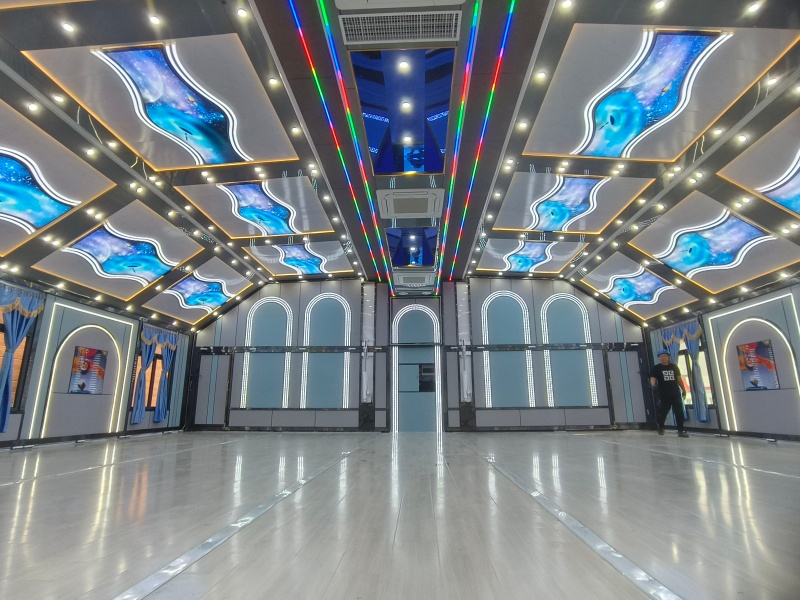
Documentation is much more useful when the physical components inside the trailer are also identifiable.
Control cabinets should use logical labels where appropriate.
For example:
Circuit numbers
Component references
Terminal identification
A technician should be able to compare what they see inside the trailer with the technical drawings.
This is basic maintainability.
International projects may involve:
Chinese manufacturer
English-speaking buyer
Local technician using another language
Technical documentation should at least be understandable to the operating team.
For many export projects, English documentation provides a practical common reference.
Where local authorities require specific labels or language, those requirements should be discussed before production.
Paper manuals can disappear.
Commercial operators should keep digital copies of important documents.
Useful files might include:
PDF manuals
Electrical drawings
Hydraulic diagrams
Spare-parts list
Component photographs
Commissioning videos
These can be stored in the company's technical records and shared with service technicians when required.
The phrase:
“We need a new contactor.”
is less useful than:
“We need the replacement for component K3, model XXXXX.”
Component identification should be documented during manufacturing.
This can include:
Manufacturer
Model
Voltage
Rating
Quantity
A detailed component list makes future spare-parts sourcing much easier.
Photos can become useful maintenance records.
For example:
Control cabinet
Hydraulic power unit
Hose routing
Hidden wiring
Equipment mounting
Some systems may become more difficult to view after interior panels or equipment are installed.
Manufacturing photographs can therefore help with future troubleshooting.
A generic marketing video shows how attractive the finished venue looks.
A commissioning video serves another purpose.
It can show:
Correct deployment sequence
Control-panel operation
Support-leg procedure
Utility connection
Retraction sequence
This can become a training resource for future employees.
For commercial equipment, operational videos can be more valuable than promotional footage.
The trailer should not arrive on Friday and host a wedding on Saturday without proper training.
The buyer's team should first learn:
Position
↓
Level
↓
Expand
↓
Inspect
↓
Operate
↓
Retract
Staff should understand what normal operation looks and sounds like.
That makes it easier to recognize abnormal conditions later.
A rental company should avoid having only one employee capable of operating the trailer.
People become:
Sick
Busy
Unavailable
Employed elsewhere
At least several appropriate staff members should understand the system.
Redundant operational knowledge reduces business risk.
Manufacturer support does not replace the operator's own daily checks.
Before an important event, operators can inspect relevant items such as:
Hydraulic leaks
Control functions
Support system
Electrical supply
HVAC
Doors
Emergency lighting
Interior damage
Finding a problem three days before the event is much better than finding it while 200 guests are arriving.
Some customers define after-sales support as:
“Who fixes the machine after it breaks?”
A better model is:
How do we prevent avoidable failures?
Preventive maintenance can include appropriate checks of:
Hydraulic system
Electrical connections
Chassis
Tires
Brakes
HVAC
Seals
Doors
Structural joints
The exact schedule should follow the equipment and operating environment.
An event rental trailer that expands twice per week experiences more operating cycles than a resort trailer that opens once for six months.
Maintenance intervals should therefore reflect:
Operating frequency
Travel distance
Environment
Equipment use
Calendar time alone does not always tell the complete story.
A high-utilization rental fleet needs disciplined maintenance records.
The expandable structure may operate perfectly while road components accumulate wear.
A commercial trailer may travel thousands of kilometers between events.
Maintenance therefore includes both:
and
The second category can include:
Axles
Suspension
Brakes
Tires
Lighting
Coupling
A mobile building is also a transport asset.
Air-conditioning equipment is a good example of why local serviceability matters.
In many markets, HVAC can be serviced by qualified local technicians.
This is usually more practical than waiting for a manufacturer technician to travel internationally.
However, the buyer needs accurate information about:
Equipment model
Refrigerant
Electrical requirements
Installation
This allows local technicians to work effectively.
Local repair capability is valuable, but some problems should still involve the manufacturer.
Examples may include:
Structural deformation
Expansion alignment issue
Main control logic problem
Unusual repeated hydraulic failure
In such situations, modifying the system without engineering guidance can make the problem worse.
The first step should be diagnosis.
The main expandable steel structure is not ordinary interior decoration.
Unauthorized:
Cutting
Welding
Drilling
can potentially affect structural behavior.
If structural damage occurs, the buyer should consult the manufacturer or an appropriately qualified engineer before repair.
A local welding shop being available does not mean every repair should be improvised.
Some damage is primarily cosmetic.
For example:
Wall finish
Flooring
Decorative trim
Furniture
These items may often be repaired or replaced locally depending on material availability.
This is one reason buyers may want to receive:
Material names
Color references
Spare finish pieces
for future maintenance.
Imagine a wall panel is damaged three years after delivery.
The exact decorative finish may no longer be available.
Keeping a small quantity of matching:
Flooring
Wall finish
Trim
Decorative material
can make repairs look much better.
This is especially useful for luxury wedding venues where visual consistency matters.
Exterior or structural paint may require touch-up after:
Scratches
Stone chips
Minor handling damage
Knowing the relevant color specification helps local repair shops match the original appearance.
This becomes especially valuable when the trailer operates frequently and experiences normal transport wear.
A trailer used near the sea experiences more aggressive exposure.
Salt and humidity can affect:
Steel
Fasteners
Electrical connections
Hydraulic components
Chassis
After-sales planning should therefore reflect the environment.
A maintenance program suitable for a dry inland climate may not be appropriate for a permanently deployed coastal venue.
Markets with significant dust may require more attention to:
HVAC filters
Moving mechanisms
Electrical enclosures
Seals
Again, the correct maintenance strategy depends on where and how the trailer operates.
The manufacturer should know the intended environment during project design.
Cold climates can affect:
Batteries
Hydraulic oil
Seals
HVAC
Water systems
If the trailer will operate in severe winter conditions, the buyer should discuss this before production.
After-sales problems are easier to avoid when environmental requirements are designed into the product from the beginning.
Trailers with:
Restrooms
Kitchens
Water tanks
can face freezing risk.
If water remains inside pipes or equipment during severe cold, damage can occur.
Operators in freezing climates should follow suitable winterization procedures.
This is operational maintenance, not necessarily a product defect.
Plumbing components should also be considered from a serviceability perspective.
Buyers can ask whether items such as:
Pumps
Faucets
Valves
Toilets
use components that can be replaced locally.
A restroom problem should not make the entire mobile venue unusable for weeks.
Large LED displays can consist of many modules.
Instead of replacing the complete screen because one module fails, the system may be serviceable through:
Spare modules
Power supplies
Control cards
depending on the installed equipment.
If LED is mission-critical to the venue, buyers should ask the AV supplier about recommended spare components separately.
Commercial buyers should distinguish between different support responsibilities.
The event trailer manufacturer may be responsible for the trailer platform and installed systems.
A furniture supplier may handle furniture.
An AV supplier may handle screens and sound.
A local HVAC company may service climate equipment.
Understanding these service boundaries makes after-sales management more efficient.
A large event venue contains equipment from multiple technical disciplines.
Expecting one overseas factory technician to personally repair:
HVAC
Generator
LED screen
Plumbing
Furniture
anywhere in the world is usually unrealistic.
A stronger international service model is:
Manufacturer Engineering Support
Local Qualified Technicians
Available Replacement Parts
This can provide faster and more economical support.
A practical international repair workflow may look like this:
Customer sends photos, video and problem description.
Manufacturer reviews the problem.
Simple tests are performed.
The failed component is identified.
A local technician performs the physical repair if appropriate.
Manufacturer confirms operation.
This avoids unnecessary international travel while retaining factory engineering involvement.
International support sometimes involves large time differences.
A U.S. customer experiencing a problem in the afternoon may contact China during the night.
For critical commercial operations, the buyer should understand normal support availability and have:
Manuals
Spare parts
Local technicians
available rather than relying entirely on instant factory response.
Good preparation reduces the importance of time-zone delays.
For commonly encountered issues, a simple troubleshooting process can save significant time.
For example:
Check:
Main power
Emergency stop
Control system
Pump operation
Hydraulic oil
Relevant sensors or controls
The exact sequence depends on the actual system.
The objective is to eliminate simple causes before replacing components.
When commercial pressure is high, operators may be tempted to bypass:
Interlocks
Sensors
Protection devices
to make the trailer operate.
This can create a much larger problem.
Safety-related components should not be disabled casually.
If a protection system repeatedly prevents operation, the underlying cause needs to be diagnosed.
Knowing that an emergency procedure exists is not enough.
Operators should understand it before they need it.
This may include procedures for situations such as:
Power failure
Control-system issue
Incomplete retraction
The exact method depends on the supplied system.
Training should occur under controlled conditions.
A good service strategy is prepared while the trailer is still at the factory.
Before shipment, the buyer and manufacturer can confirm:
Final configuration
Component list
Spare-parts package
Manuals
Technical drawings
Training
Testing
Videos
Trying to reconstruct all of this several years later is much more difficult.
Before delivery, the trailer should be operated sufficiently to verify relevant functions.
Depending on the configuration, this may include:
Expansion
Retraction
Hydraulic supports
Electrical system
Lighting
HVAC
Doors
Water systems
Identifying a fault at the factory is much easier than discovering it after international shipment.
International buyers may choose to:
Visit the factory
Send an inspection company
Review live video
Review recorded testing
The appropriate approach depends on the project value and buyer requirements.
The important point is to verify the actual finished configuration before shipment.
For important components, identification information can be recorded.
This can help future service teams locate:
Correct replacement
Correct manual
Correct technical specification
Without component identification, after-sales support becomes unnecessarily dependent on photographs and guesswork.
A trailer can leave the factory operating correctly and still require inspection after:
Ocean shipping
Port handling
Inland transportation
Before the first commercial event, the buyer should commission the trailer again.
This can include:
Visual inspection
Hydraulic operation
Electrical operation
HVAC
Leveling
Expansion and retraction
Do not make the first post-shipping deployment a customer's major wedding.
A simple maintenance record can include:
Date
Operating hours or cycles
Road mileage where relevant
Inspection results
Repairs
Parts replaced
Over time, this information becomes extremely valuable.
It helps identify:
Recurring failures
Component life
Appropriate replacement intervals
A rental fleet with several trailers benefits even more from structured maintenance data.
High-frequency commercial operators may want to track expansion and retraction cycles.
This can help correlate component wear with actual use.
A trailer that moves twice each week experiences a very different mechanical life from one that remains open for a season.
Usage-based maintenance can be more informative than calendar-based assumptions alone.
Maintenance should not be evaluated only by repair cost.
Rental companies can track:
Downtime caused by technical issues
This reveals whether a component or procedure is creating a real commercial problem.
A slightly more expensive replacement part may be worthwhile if it reduces repeated lost booking time.
If the same component fails repeatedly, replacing it again may not solve the real issue.
The underlying cause could involve:
Incorrect specification
Poor alignment
Excessive load
Voltage problem
Environmental exposure
Repeated failure should trigger root-cause analysis.
Good after-sales support does more than ship the same component repeatedly.
Commercial operators sometimes replace certain wear components before complete failure.
Why?
Because planned maintenance can occur:
Midweek
During low season
At the workshop
An unexpected failure can occur:
Saturday morning
100 miles from base
Before a fully booked wedding
For critical commercial assets, predictability has value.
If a company eventually purchases several expandable trailers, standardizing certain components can simplify:
Spare inventory
Staff training
Troubleshooting
Maintenance
For example, using similar:
Control architecture
Hydraulic components
Lighting systems
across the fleet may reduce service complexity.
This should be discussed when repeat orders are planned.
If every trailer uses completely different components, the operator needs more spare parts.
If multiple units share key components, one spare may support several assets.
This improves inventory efficiency.
It can also make technicians more familiar with the equipment.
An event rental company does not necessarily need to employ full-time:
Hydraulic technician
Electrician
HVAC engineer
It can develop relationships with qualified local service companies.
Before the trailer enters commercial operation, the operator can identify:
Hydraulic service provider
Commercial electrician
HVAC contractor
Heavy trailer/chassis workshop
Then, when a problem occurs, the support network already exists.
This can be surprisingly useful.
A local hydraulic or electrical technician who has seen the trailer during normal operation will understand it more quickly during a future repair.
For high-value commercial equipment, preventive familiarity can shorten emergency response time.
The trailer has both:
Road Vehicle Systems
and
Expandable Venue Systems.
The chassis may use components supplied by other manufacturers.
Road-related service can involve:
Axle supplier
Brake supplier
Suspension supplier
Local heavy-vehicle workshop
Buyers should understand which company supports which subsystem.
Tires are consumable road components.
Shipping replacement tires internationally from the event trailer factory would usually be inefficient.
A sensible export configuration should consider tire sizes and specifications that can be serviced appropriately in the destination market where practical.
The same serviceability principle applies to other road-running components.
In markets with complex road compliance requirements, some buyers may choose:
Expandable Superstructure from China
Locally Supplied Chassis
One potential advantage is that:
Axles
Brakes
Suspension
Road compliance
can be supported through the local chassis supplier.
The Chinese manufacturer then focuses more on the expandable superstructure.
However, good engineering coordination between the two parties is essential.
Selling only the expandable upper structure creates a different after-sales responsibility.
The local chassis installer may need:
Mounting drawings
Interface dimensions
Weight information
Load distribution
Hydraulic/electrical connections
The manufacturer should provide sufficient technical information for integration.
A superstructure-only sale should not be treated as simply putting a large box onto any available trailer frame.
Where the customer installs the superstructure locally, technical support may include:
Drawings
Photos
Videos
Online meetings
The purpose is to ensure that the local engineering team understands the intended interface.
The exact support scope should be agreed before the order.
Owners often customize commercial trailers over time.
They may add:
Generator
LED screen
Battery system
Kitchen
Additional furniture
Major modifications can affect:
Weight
Electrical load
Structure
Hydraulic operation
The operator should document significant changes.
For substantial technical modifications, manufacturer or engineering review may be appropriate.
If the original system is extensively altered, it can become difficult to determine why a later failure occurred.
For example, changing electrical protection or hydraulic pressure settings can influence component behavior.
Commercial operators should therefore avoid undocumented modifications to critical systems.
If the trailer uses programmable control equipment, buyers should discuss how controller replacement would be handled.
Questions can include:
Is program backup retained?
Can replacement hardware be configured?
Who has the technical files?
This may not apply to every trailer.
But where programmable controls are used, software becomes part of the after-sales strategy.
If a manufacturer produces multiple customized projects, two trailers that look similar may contain different:
HVAC
Electrical components
Hydraulic equipment
Control systems
After-sales support becomes easier when each unit has a clear project record.
Buyers should refer to:
Project number
Serial number
Configuration
when requesting parts.
A box of unidentified components is not a useful spare-parts system.
If spare parts are shipped with the trailer, they should be identifiable.
Labels can indicate:
Part name
Part number
Quantity
Applicable system
The buyer should also maintain an inventory after receiving them.
A spare component stored for five years in a wet outdoor container may not be usable when finally needed.
Parts should be stored appropriately according to their requirements.
Sensitive components may need protection from:
Moisture
Heat
Dust
Corrosion
A spare part only has value if it still works when required.
If a component is used, reorder it.
Otherwise the company may discover during the next failure that its “spare” was consumed two years ago.
Rental businesses can include critical-spares inventory in routine maintenance audits.
When comparing quotations, Buyer A may choose the lowest purchase price.
But suppose the cheaper supplier provides:
Poor documentation
Difficult-to-source components
Slow technical response
while another supplier provides more maintainable systems.
Over several years, the second asset may create lower operating risk.
Purchase price is therefore only one component of:
Total Cost of Ownership.
Suppose a rental trailer earns substantial revenue per weekend.
If poor serviceability causes three cancelled bookings per year, the lost revenue can exceed the saving achieved by purchasing a cheaper trailer.
Commercial buyers should therefore consider:
What will technical downtime cost our business?
This gives after-sales support a measurable economic value.
Instead of asking only:
“Do you have warranty?”
ask:
Which parts should we stock?
What happens if the hydraulic system stops?
Can our local technician replace a hose?
Will you provide the electrical diagram?
Can you identify components by model?
How do we order replacement parts three years later?
Can you diagnose problems by video?
Is emergency retraction documented?
Which maintenance items are our responsibility?
These questions reveal much more about whether the manufacturer has thought seriously about long-term operation.
Commercial equipment contains components that wear.
A promise that sounds extremely generous should still be examined carefully.
Buyers should ask:
What exactly is covered?
Are there exclusions?
Who pays labor?
Who pays freight?
How is a claim approved?
A clearly defined practical warranty is more valuable than a vague marketing promise.
Immediate technical response is useful.
But buyers should not design an operating model where every small question requires contacting the factory.
The strongest after-sales arrangement makes the operator progressively more self-sufficient.
Good documentation and training allow local teams to handle routine issues.
Manufacturer support remains available for more complex problems.
No commercial vehicle or venue operates forever without service.
The correct objective is:
Predictable Maintenance + Serviceable Components + Fast Diagnosis + Minimal Downtime
A buyer who expects zero maintenance will eventually be disappointed regardless of manufacturer.
A buyer who prepares for maintenance can protect the asset much more effectively.
Different owners need different support priorities.
May care most about:
HVAC
Long-term seals
Interior maintenance
Seasonal commissioning
May care most about:
Hydraulic reliability
Chassis maintenance
Fast spare parts
Deployment troubleshooting
May care most about:
Electrical systems
Screens
Rapid reconfiguration
Frequent road movement
The support plan should reflect how the trailer generates revenue.
If a company operates one trailer five times per year, a failure is inconvenient.
If a company operates ten trailers every week, maintenance becomes an operational discipline.
Larger fleets may eventually require:
Scheduled inspections
Spare-parts inventory
Maintenance personnel
Standardized procedures
Service records
The expandable trailers become fleet assets rather than individual projects.
This may be the most important long-term point.
A warranty eventually expires.
The trailer should still be usable afterward.
Commercial buyers therefore need a product that can continue to be:
Inspected
Maintained
Repaired
Modified responsibly
for years.
Serviceability outlives warranty duration.
Many after-sales problems are actually design-stage problems.
Examples include:
Inaccessible components
Unidentified wiring
Unique fittings
No spare parts
No technical drawings
These are much harder to correct after delivery.
Buyers should therefore discuss maintenance and service before production, not after a breakdown.
Before placing an order for an expandable event trailer, confirm:
Warranty scope
Warranty exclusions
Replacement-parts policy
Freight responsibility
Local-labor responsibility
Recommended spare-parts package
Operating manual
Electrical drawings
Hydraulic information
Component identification
Maintenance guidance
Emergency procedures
Remote technical support
Operator training
Local serviceability
This provides a far more complete picture than asking only:
“How long is the warranty?”
A commercial expandable event trailer may operate for many years and generate revenue across hundreds of events.
During that time, it will eventually need:
Inspection
Maintenance
Consumables
Replacement components
Technical advice
That is normal.
The difference between a manageable technical issue and a business-disrupting failure often depends on whether the owner already has:
Documentation + Spare Parts + Trained Staff + Local Technicians + Manufacturer Support
For international buyers, this service ecosystem should be treated as part of the purchasing decision.
The most important question is therefore not simply:
“Does the manufacturer offer a warranty?”
It is:
“Can we keep this trailer operating reliably in our market after it arrives?”
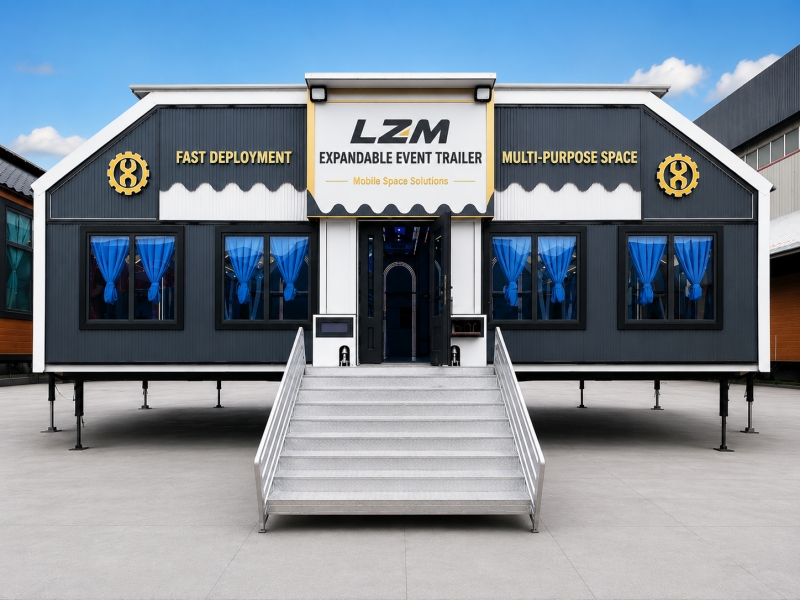
LZM manufactures expandable event trailers for weddings, banquet venues, corporate hospitality, brand activation and commercial event rental, with project-specific hydraulic, electrical, HVAC and interior systems. Technical documentation, recommended spare parts and after-sales requirements can be discussed according to the final project configuration.
Explore LZM expandable event trailer configurations and discuss warranty, spare parts and long-term technical support for your project:
Expandable Event Trailer Manufacturer & Technical Support