Welcome: Laizhou Machinery Group



An international buyer may spend weeks discussing the expandable event trailer itself.
They review:
Trailer size
Interior layout
Guest capacity
HVAC
Lighting
Electrical systems
Furniture
Exterior appearance
Then one practical question appears:
How do we actually get such a large trailer from China to our country?
This is an important question because an expandable event trailer is very different from ordinary machinery that can simply be loaded into a standard shipping container.
Large models can have substantial transport length, width, height and weight.
The correct logistics plan therefore depends on the actual closed transport dimensions, final configuration, destination port and inland transport route.
International buyers should investigate shipping before confirming the final model—not after manufacturing has already been completed.
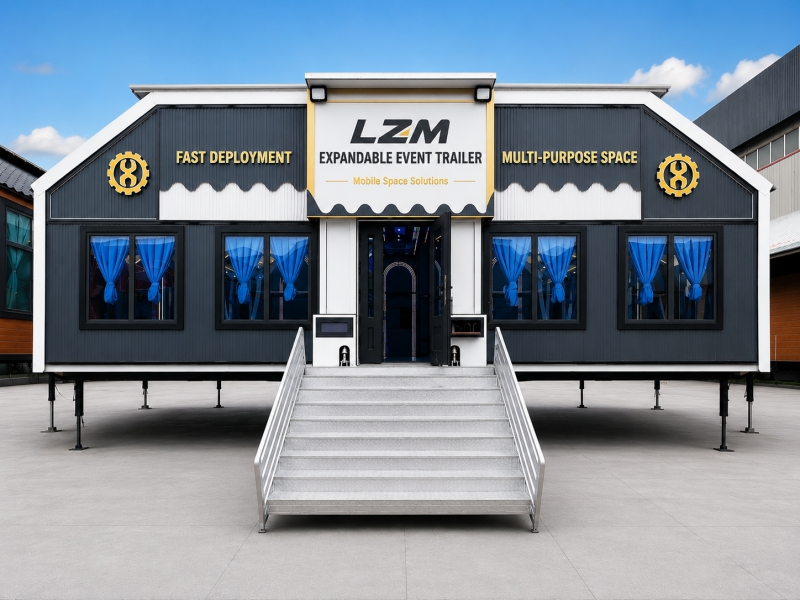
Shipping is based on the trailer in its transport configuration.
The expanded event dimensions are important for the operating site.
The shipping company primarily needs to know:
Closed length
Closed width
Closed height
Gross shipping weight
These figures determine which transportation methods can be considered.
A 12m expandable event trailer and a 21m model may require very different logistics arrangements.
Custom equipment can also change the final weight.
This is why freight should be calculated against the actual project configuration, not a photograph of another customer's trailer.
This sounds obvious, but it creates confusion.
An expandable event trailer may create a very wide indoor venue after deployment.
That does not mean it travels internationally in the expanded condition.
For transportation, the expandable sections are retracted into the closed structure.
The logistics calculation therefore considers:
Transport Mode
rather than:
Event Mode.
However, even in transport mode, a large commercial event trailer may still exceed standard container dimensions.
For many large complete event trailers, a conventional 20ft or 40ft enclosed container is not the natural shipping solution.
The reason is straightforward:
the complete trailer itself can approach or exceed standard container dimensions, particularly in width, height or length.
But buyers should not make assumptions based only on nominal trailer length.
The actual transport dimensions need to be checked.
Some components or specially designed superstructure solutions may be shipped differently depending on the project.
The manufacturer and freight forwarder should evaluate the final dimensions before selecting the shipping method.
RoRo — Roll-on/Roll-off shipping is commonly used internationally for vehicles and rolling equipment.
Where suitable routes and ports are available, a complete event trailer may potentially be handled through a RoRo service.
The general concept is that the unit enters the vessel as rolling cargo rather than being enclosed inside a conventional container.
This can be attractive for some complete-trailer projects.
But availability depends on:
Origin port
Destination port
Trailer dimensions
Weight
Port capabilities
Shipping-line acceptance
Current sailing schedules
RoRo should therefore be confirmed for the actual project rather than assumed to be available to every destination.
A flat rack provides an open shipping platform rather than a fully enclosed container.
It can be used for certain oversized cargo.
Whether an expandable event trailer or superstructure can use this method depends on:
Length
Width
Height
Weight
Securing requirements
Lifting method
Shipping-line acceptance
Oversized dimensions can also create additional freight and handling charges.
The logistics provider needs accurate engineering dimensions before confirming suitability.
For particularly large units, another solution may be specialized or breakbulk shipping.
This can involve cargo being handled individually rather than transported as standard containerized freight.
Large industrial equipment is often shipped this way when conventional container methods are unsuitable.
Expandable event trailers can fall into this category depending on their final dimensions.
This is why a buyer should never estimate shipping simply by checking the online price of a 40ft container.
The cargo category can be completely different.
Another important distinction is the supply scope.
Includes the expandable structure mounted on the road chassis.
The international logistics plan needs to handle the entire unit.
The buyer may source or manufacture an appropriate chassis locally.
In this case, the upper expandable structure is shipped separately according to the agreed engineering solution.
This can change:
Shipping dimensions
Cargo handling
Destination installation
Inland transportation
But it also introduces local assembly requirements.
Therefore, shipping cost alone should not determine whether the buyer selects a complete trailer or superstructure-only solution.
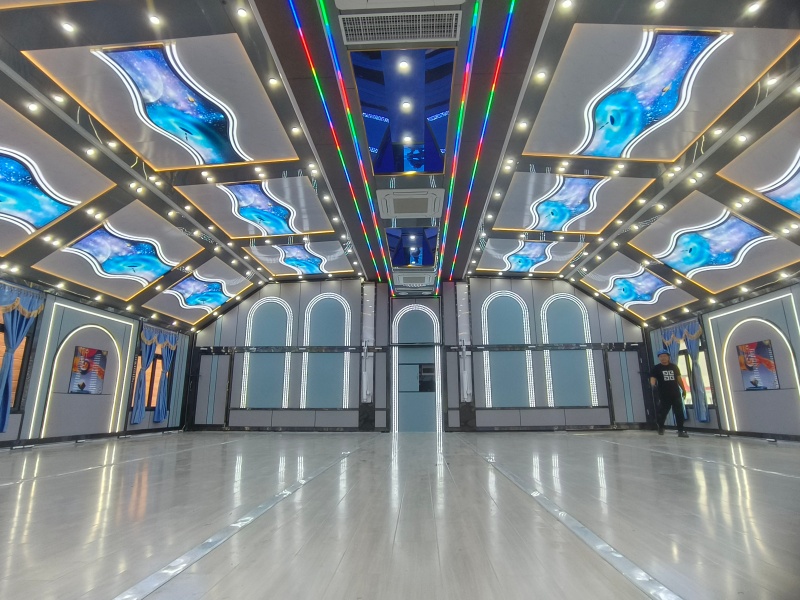
The main reason is often destination road compliance.
A locally sourced chassis may simplify certain requirements involving:
Axles
Brakes
Lighting
Coupling
Registration
Local servicing
But the buyer then needs a competent local chassis manufacturer or engineering partner.
The project must coordinate:
Superstructure + Chassis + Mounting + Weight Distribution + Electrical/Hydraulic Interfaces
This should be planned before production begins.
International shipping does not begin when the cargo reaches the vessel.
The trailer first needs to move from the manufacturing facility to the Chinese export port.
This creates an inland logistics stage.
The freight provider needs to consider:
Trailer dimensions
Weight
Road route
Transport permits where required
Suitable towing or carrying equipment
Port entry requirements
For very large equipment, domestic transport inside China can itself be a meaningful logistics cost.
Buyers comparing EXW and FOB prices should understand this difference.
This is particularly important for new international buyers.
The buyer effectively takes responsibility from the manufacturer's facility according to the agreed Incoterm conditions.
The seller's responsibilities extend further to the agreed loading/export stage according to the applicable Incoterm.
The exact commercial responsibilities should always be stated in the quotation.
A lower EXW price may look attractive, but the buyer still needs to arrange additional domestic logistics and export handling.
When comparing suppliers, confirm that the quotations use the same Incoterm.
Buyers often request:
Please quote CIF to my port.
CIF pricing can include specified ocean freight and insurance obligations according to the agreed Incoterm.
But buyers should not assume CIF means:
Delivered to my event site with every local cost paid.
Destination costs may still involve items such as:
Port charges
Customs clearance
Import duties
Taxes
Local handling
Storage
Inland transport
Specialized transport permits
The local importer or freight forwarder should confirm these costs.
Some buyers ask for one simple final figure:
DDP to my address.
For ordinary small products, this can sometimes be straightforward.
For oversized commercial trailers, the situation can be considerably more complicated.
Local transport may involve:
Specialized trucking
Permits
Escort requirements
Route surveys
Customs
Taxes
Road restrictions
Whether DDP is practical needs to be evaluated individually.
A manufacturer should not casually promise a fixed door-to-door price without understanding the destination logistics.
The nearest port geographically is not automatically the best port.
A suitable destination port should be able to handle the type and size of cargo being shipped.
Buyers and freight forwarders may need to consider:
RoRo availability
Breakbulk capability
Oversized cargo handling
Crane capacity
Local customs procedures
Inland road connections
Distance to the final site
Sometimes a slightly more distant port can provide a much more practical logistics route.
The trailer arrives at the destination country.
The shipping problem is not finished.
It still needs to reach:
Event rental yard
Resort
Hotel
Wedding property
Corporate site
Storage facility
Large equipment may face local restrictions involving:
Road width
Bridge clearances
Tunnels
Turning radius
Height
Weight
Urban access
Permit requirements
This becomes increasingly important for very large models.
Buyers should therefore evaluate the complete route:
Factory → Chinese Port → Vessel → Destination Port → Final Site
not just the ocean voyage.
A trailer may legally enter a country but still be unable to reach the intended property easily.
Imagine a luxury resort located down a narrow mountain road.
Or a wedding venue accessed through a small entrance gate.
Or an urban site with low bridges.
The shipping company can deliver the trailer to the country, but the operator still needs a practical local route.
Before ordering a large model, buyers should consider:
Minimum road width
Gate width
Turning areas
Height restrictions
Bridge restrictions
Site access
This is particularly important for 19m and 21m projects.
A buyer may assume:
Longer distance = higher freight.
Distance matters, but oversized shipping is influenced by many other factors.
These can include:
Cargo dimensions
Weight
Shipping method
Origin port
Destination port
Sailing availability
Fuel costs
Seasonal rates
Oversized surcharges
Port handling
Inland trucking
This is why freight quotations can change over time.
A shipping estimate received during the early enquiry stage should not always be assumed to remain valid months later.
An expandable event trailer may require several weeks for engineering and production.
International freight markets can change during that period.
Therefore, quotations may need to distinguish between:
Estimated Freight
and
Confirmed Freight at Time of Shipment.
Buyers should understand how long a freight quotation remains valid.
This avoids confusion when ocean rates change between order confirmation and factory completion.
A buyer may compare:
15m Trailer
with
21m Trailer
primarily by factory price.
But the bigger unit can also influence:
Chinese inland transport
Port handling
Ocean freight
Destination handling
Local permits
Site access
The total difference between models can therefore be larger than the EXW price difference alone.
Commercial buyers should compare:
Total Landed Project Cost
not simply:
Factory Purchase Price.
Suppose a rental company concludes that both a 19m and a 21m model could serve its normal bookings.
The larger model provides more space.
But if the 21m configuration creates substantially more complex transportation at its destination, the 19m model may be commercially more practical.
This is another reason why bigger is not automatically better.
Trailer size should be evaluated together with:
Capacity + Site + Transportation + Revenue.
Large event trailers can contain substantial structural and equipment weight.
Heavy custom equipment may include:
HVAC
LED displays
Generator
Water tanks
Batteries
Kitchen systems
Other customized equipment
These items can affect:
Cargo handling
Axle load
Local transport
Lifting requirements
Shipping cost
The buyer should provide custom-equipment requirements before the final logistics plan is calculated.
If a superstructure or large cargo item needs crane handling, lifting needs to be planned properly.
The shipping and engineering teams may need information about:
Weight
Center of gravity
Lifting positions
Structural support
Crane requirements
Large equipment should not simply be lifted wherever convenient.
Handling plans need to follow the engineered structure.
Ocean shipping creates a different environment from normal road transportation.
The cargo may experience:
Humidity
Salt exposure
Rain during handling
Vibration
Long transit periods
Export preparation should therefore consider appropriate protection for the actual shipping method.
Different parts of the trailer may require:
Securing
Weather protection
Surface protection
Interior protection
The exact method depends on how the unit is transported.
This is relevant to corrosion planning.
A trailer intended for an inland customer can still encounter marine conditions during ocean transport.
A trailer intended for a coastal customer faces both:
Ocean Shipping Exposure
and
Long-Term Coastal Operating Exposure.
These are separate considerations.
Where enhanced corrosion protection is required for long-term coastal operation, this should be specified during manufacturing.
The trailer may contain finished:
Flooring
Walls
Lighting
Screens
Furniture
Electrical equipment
These systems need to arrive in usable condition.
Items that can move during shipping should be properly secured.
Depending on the project, some furniture or delicate components may be packed separately.
The manufacturer and logistics provider should determine an appropriate shipping configuration.
A luxury wedding trailer may eventually contain:
Tables
Chairs
Flowers
Fabrics
Decorative objects
Loose furniture
Not all of these need to be installed before international transportation.
For commercial wedding projects, it may be more practical to distinguish between:
Factory-Integrated Interior
and
Event Decoration / Loose Furniture.
This can simplify transport and reduce damage risk.
International buyers should also consider after-sales logistics.
Shipping a small spare component individually later can sometimes be disproportionately expensive.
Depending on the project, the buyer may therefore request a recommended spare-parts package to travel with the main unit.
Possible items depend on the trailer configuration.
The manufacturer should identify suitable spare components rather than adding random parts.
International shipment can require commercial and technical documents depending on the destination and project.
These may include appropriate:
Commercial invoice
Packing information
Bill of lading documentation
Export documentation
Product information
Other destination-required documents
Specific import requirements vary by country.
The buyer or customs broker should confirm exactly what is required before shipment.
This distinction is extremely important.
A trailer can potentially:
clear customs
without necessarily being automatically:
approved for unrestricted public-road use.
Road requirements may involve:
Vehicle registration
Dimensions
Weight
Axles
Brakes
Lighting
Coupling
Local inspection
Buyers should therefore investigate road compliance separately from import procedures.
Paying import duty does not itself create road approval.
When only the expandable superstructure is imported, the buyer needs to prepare for installation after arrival.
Before shipping, both sides should understand:
Chassis dimensions
Mounting positions
Structural interfaces
Weight distribution
Hydraulic requirements
Electrical connections
Installation responsibility
Where possible, this work should be planned while the superstructure is still being manufactured.
Waiting until the cargo reaches the destination can create expensive delays.
International shipping takes time.
That time can be used productively.
While the trailer is in transit, the buyer can prepare:
Installation site
Electrical supply
Access route
Ground conditions
Chassis where applicable
Local permits
Staff
Storage
Event equipment
The objective should be to reduce the amount of unfinished preparation remaining after the trailer arrives.
Depending on the market and logistics arrangement, buyers may work with:
Freight Forwarder
for transportation and shipping coordination.
Customs Broker
for import clearance and customs procedures.
Some companies provide both services.
For oversized equipment, it can be helpful to work with providers experienced in heavy or project cargo rather than only standard container freight.
A common mistake is telling the manufacturer:
“Our event is October 1. Please finish the trailer by September 20.”
That leaves almost no time for international shipping, customs, inland transportation, setup or testing.
Instead, work backward:
Event Date
↓
Local Setup and Testing
↓
Inland Transport
↓
Customs Clearance
↓
Ocean Transit
↓
Port Loading
↓
Factory Completion
↓
Final Testing
↓
Manufacturing
This produces a much safer project schedule.
A wedding venue opening, major sporting event or product launch may have a fixed date.
Shipping schedules can still experience:
Port congestion
Weather delays
Vessel changes
Customs inspections
Inland transport delays
For time-critical projects, buyers should avoid planning delivery immediately before the first paid event.
Allowing commissioning and testing time after arrival reduces operational risk.
To obtain a meaningful freight estimate, provide:
Trailer model
Closed transport dimensions
Gross weight
Supply scope
Origin location
Destination country
Preferred destination port
Final inland destination where relevant
Required delivery schedule
If the project is still being designed, the manufacturer may provide preliminary dimensions for budgeting.
Final freight should be confirmed using the completed project's actual shipping data.
Do not compare only the ocean freight number.
A better comparison may include:
China Inland Transport
Origin Handling
Ocean Freight
Destination Handling
Customs
Inland Transport
Special Permits / Project Cargo Charges
The cheapest ocean rate can sometimes result in a more expensive total route if destination handling or inland transportation is difficult.
This may be the most overlooked shipping question.
The trailer can cross the Pacific or Indian Ocean successfully.
But can it travel the last 20 kilometers to the customer's property?
For a large expandable trailer, the final mile can involve:
Narrow roads
Gates
Urban restrictions
Turning limitations
Low bridges
Poor road surfaces
The buyer should evaluate this before selecting the model.
For a large mobile venue, logistics should never be treated as an administrative task that begins after manufacturing.
Shipping influences:
Trailer size
Chassis strategy
Destination port
Project cost
Delivery schedule
Local site access
It therefore belongs in the early purchasing discussion.
The correct sequence is:
Application → Trailer Configuration → Transport Dimensions → Shipping Strategy → Destination Route → Final Order
not:
Build First → Ask How to Ship It Later.
An expandable event trailer can be a substantial international investment.
The buyer needs to understand not only what the factory charges, but what it costs to place the completed venue at the location where it will generate revenue.
That may include:
Manufacturing + Export Logistics + Ocean Freight + Import + Inland Transport + Local Preparation
Only then can the buyer properly compare the project with:
Permanent construction
Local manufacturing
Event tents
Modular structures
Other temporary venue solutions
LZM manufactures expandable event trailers in multiple sizes for international projects and can provide the relevant transport dimensions, project specifications and export information needed for logistics evaluation according to the selected configuration.
Review expandable event trailer models and discuss international shipping requirements for your project:
Expandable Event Trailer International Shipping & Project Options