Welcome: Laizhou Machinery Group



After a major storm, flood, hail event, or other natural disaster, an insurance company can suddenly receive a large number of claims from the same geographic area.
Customers need information. Documents need to be submitted. Assessors need to coordinate inspections. Claims teams may need temporary workspace close to the affected communities.
But the insurer's permanent offices may be far from where the claims are occurring.
For insurers and catastrophe-response service providers in Brisbane, Australia, an expandable event trailer could provide a temporary mobile claims center that can be deployed closer to policyholders after a major event.
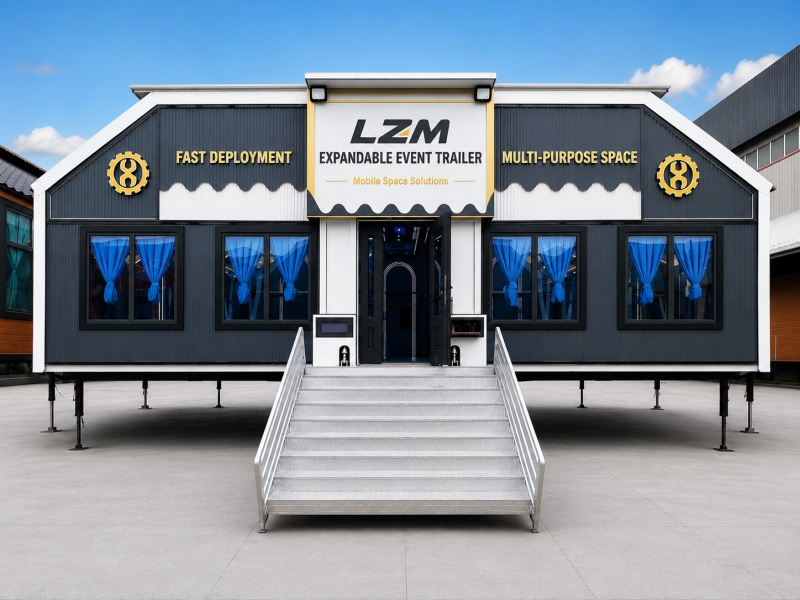
Normal insurance offices are designed around normal claim volumes.
A severe weather event can change that quickly.
Within a short period, an insurer may need additional capacity for:
Policyholder registration
Initial claim reporting
Document submission
Claims consultations
Assessor coordination
Customer waiting areas
Staff workstations
The requirement may be significant but temporary — exactly the type of situation where constructing another permanent office would make little sense.
Customers dealing with property damage may already be facing disrupted transport, temporary accommodation, or other practical difficulties.
A mobile claims facility could potentially be positioned closer to the affected community, depending on site access and local operating requirements.
Possible deployment locations might include:
Community service areas
Temporary recovery centers
Large parking areas
Regional service locations
Insurance catastrophe-response sites
Instead of requiring every customer to travel to a distant branch, the insurer can bring part of its claims operation closer to the area experiencing unusually high demand.
An insurance claims center has different spatial requirements from a general event venue.
Privacy and workflow need to be considered from the beginning.
The expandable interior could be divided into functional areas such as:
Reception and registration
Customer waiting area
Individual consultation spaces
Document processing area
Claims staff workspace
Private meeting rooms
Equipment and document storage
The final layout would depend on expected customer volume and the insurer's claims process.
Insurance claims can involve financial information, property details, identification documents, photographs, and other customer information.
For that reason, simply placing multiple desks in one large open room may not be appropriate.
Partitions or separate consultation rooms can be considered where greater privacy is required.
Acoustic treatment may also be useful when several customer consultations take place simultaneously.
The objective is to create a functional service environment rather than simply additional floor area.
Modern claims operations depend heavily on digital systems.
A mobile insurance facility may need to support:
Computers
Internet connectivity
Printers and scanners
Display screens
Document imaging
Charging points
Communication equipment
Internal network equipment
Electrical capacity, cable routing, equipment positions, and connectivity should therefore be considered during the design stage.
Backup power requirements may also need evaluation for catastrophe-response applications.
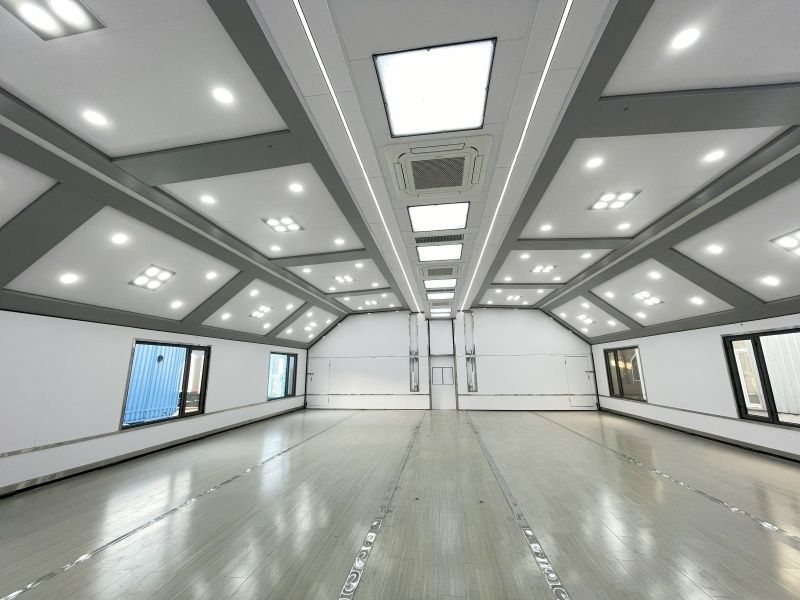
A temporary claims center may operate for long hours and accommodate a continuous flow of customers and staff.
Climate control therefore becomes important.
For projects in Brisbane, cooling and ventilation requirements should be evaluated according to:
Outdoor conditions
Trailer dimensions
Number of occupants
Electronic equipment load
Operating hours
Frequency of door opening
If the facility is intended for deployment in different regions of Australia, the HVAC configuration may need to consider a wider range of operating conditions.
One of the more interesting commercial considerations is utilization.
A permanent temporary building may solve the problem at one location but have limited value after the recovery period ends.
A mobile facility has another potential operating model.
After demand decreases in one area, the same claims center could be relocated for another catastrophe response, regional service campaign, or temporary insurance operation.
Potential operators could include:
Insurance companies
Loss-adjusting companies
Catastrophe claims specialists
Insurance service contractors
Disaster-response organizations
This makes mobility part of the business case rather than simply a transportation feature.
Before selecting the trailer size and interior configuration, an insurer or service provider should define the intended operating model.
Important information includes:
Expected customers per day
Number of claims staff
Number of private consultation areas
IT equipment requirements
Electrical requirements
Connectivity requirements
Climate-control requirements
Storage requirements
Frequency and distance of relocation
Transportation, electrical, accessibility, workplace, privacy, fire-safety, and other applicable requirements should be evaluated according to Australian and local project requirements.
Insurance companies cannot predict exactly where the next major weather event will create a sudden concentration of claims.
They can, however, consider how temporary service capacity will be provided when it is needed.
An expandable event trailer can be configured as a reusable mobile claims facility, providing space for customer reception, private consultation, documentation, and claims-team operations.
LZM develops expandable event trailers according to required capacity, interior layout, electrical systems, climate conditions, and individual commercial or public-service applications.
Explore the expandable platform for insurance claims and catastrophe-response projects:
Mobile Insurance Claims & Catastrophe Response Center