Welcome: Laizhou Machinery Group



A conventional food trailer is mainly designed to prepare and sell food through a service window. But some restaurant operators need something very different: a mobile space where food preparation and the customer dining experience can exist within the same project.
That distinction becomes particularly important for BBQ businesses.
In Brisbane, Australia, a mobile BBQ restaurant could support festivals, sporting events, tourism locations, seasonal businesses, private functions, and temporary commercial operations without relying entirely on a permanent restaurant building.
An expandable event trailer provides enough flexibility to approach the project as a mobile restaurant, rather than simply another food truck.
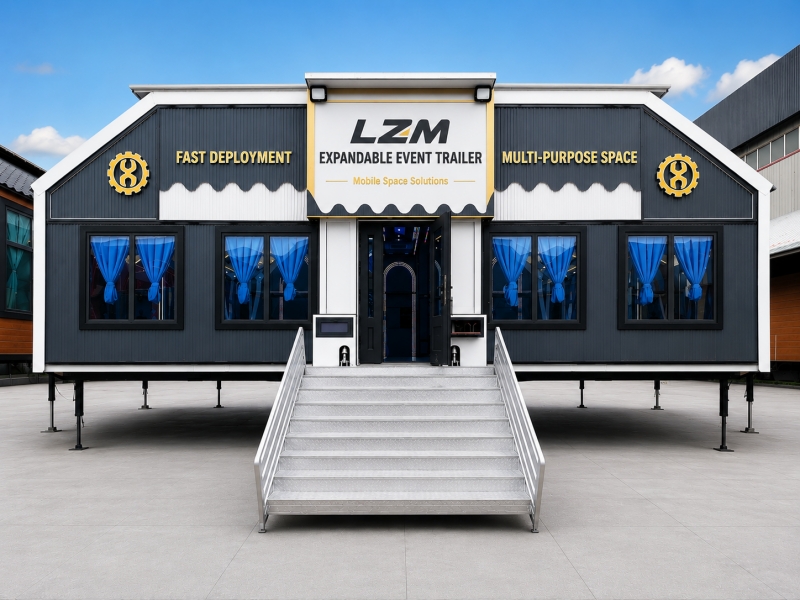
The first question is whether customers will only buy food or actually dine inside the expanded space.
A takeaway-focused BBQ operation may mainly require cooking, preparation, refrigeration, and service areas.
A mobile BBQ restaurant with indoor dining has additional requirements:
Customer seating
Dining tables
Service aisles
Food preparation areas
Handwashing and cleaning areas
Refrigerated storage
Air conditioning
Ventilation and exhaust systems
This changes both the layout and the required trailer size.
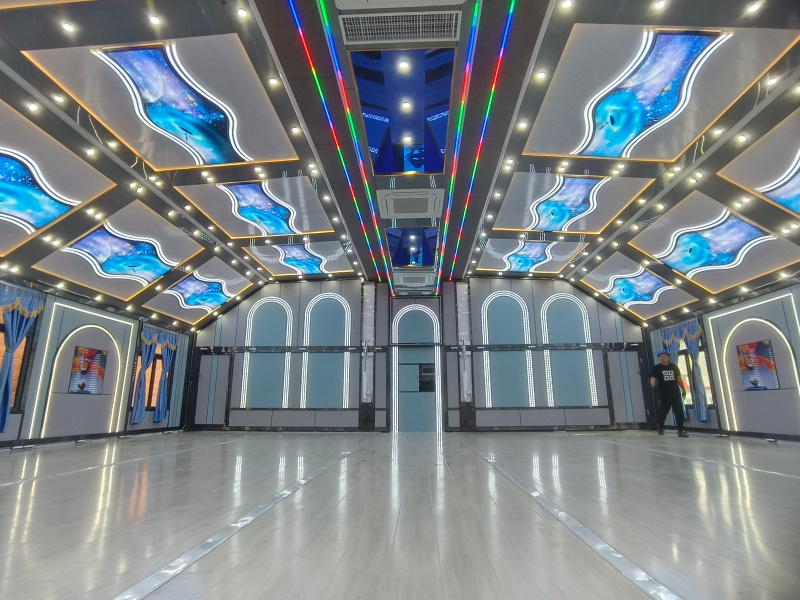
BBQ cooking produces heat, smoke, grease, and odors. These factors need to be considered when planning a restaurant environment.
The cooking workflow should not simply be placed inside an open dining room without considering ventilation and separation.
Depending on the customer's operating model, the project may use separate zones for:
BBQ preparation
Cooking equipment
Food assembly
Customer service
Indoor dining
Storage
Some projects may also keep certain heavy BBQ equipment outside the main enclosed dining area while using the expandable structure for preparation, serving, and customer seating.
The appropriate arrangement depends on the actual cooking method and equipment.
Ventilation is particularly important for BBQ applications.
Before the interior is designed, buyers should provide information about the intended cooking equipment.
Useful details include:
Grill type
Fuel or energy source
Cooking capacity
Exhaust requirements
Equipment dimensions
Equipment power demand
This information helps determine whether extraction hoods, ducting, ventilation systems, or other provisions need to be incorporated into the project.
A mobile BBQ restaurant may generate revenue differently from a conventional food truck.
Instead of serving only takeaway customers, an expandable dining space can potentially support:
Table service
Group dining
Private parties
Corporate events
Festival hospitality
Sports-event catering
For operators, the number of guests that can dine comfortably may be just as important as cooking capacity.
Buyers should therefore define expected customer capacity early in the project.
Brisbane's warm climate makes cooling and ventilation important considerations.
Cooking equipment adds additional heat inside the facility, while customers expect a comfortable dining environment.
The climate-control configuration should therefore consider:
Outdoor temperature
Cooking heat load
Number of guests
Trailer size
Insulation
Ventilation requirements
The required system should be calculated according to the actual project rather than treated as a standard configuration.
A restaurant project requires more utility planning than many general event applications.
Depending on the equipment and operating model, buyers may need to consider:
Electrical supply
Fresh-water connection or storage
Wastewater management
Refrigeration
Hot-water requirements
Cooking equipment
Cleaning facilities
If gas-fired or other specialized cooking equipment is planned, the relevant installation and safety requirements should also be evaluated according to local regulations.
A mobile BBQ restaurant involves food preparation, public occupancy, and potentially high-temperature cooking equipment.
Requirements may vary significantly between countries and local authorities.
Food-service, fire-safety, electrical, gas, transportation, accessibility, and operating requirements should be evaluated according to the standards applicable at the final project location.
For this reason, buyers should confirm local requirements before finalizing the technical configuration.
A mobile BBQ restaurant sits between two familiar concepts.
It offers more customer space than a conventional food trailer but retains more deployment flexibility than a permanent restaurant.
For restaurant operators, catering companies, event businesses, and hospitality groups, this model may create opportunities to operate at changing commercial locations or serve temporary events with a more complete dining experience.
LZM can develop the expandable structure and interior configuration according to customer capacity, cooking equipment, service workflow, climate conditions, and project requirements.
Explore the expandable platform for mobile BBQ restaurant and dining projects:
Expandable Mobile BBQ Restaurant Platform