Welcome: Laizhou Machinery Group


When organizations need more space, the first idea is often to build another permanent facility.
A new building seems like the natural answer.
However, many projects face different challenges:
Demand changes over time
The location is temporary
The business is testing a new market
A fast deployment is required
The space may need to move between locations
In these situations, a flexible expandable event trailer provides another option.
The question is not simply whether a permanent building is better.
The question is:
What type of space matches the actual business requirement?
Before choosing any physical structure, project owners should understand how the space will be used.
A permanent building usually makes sense when:
The location is fixed
Demand is stable
Long-term operation is expected
Construction investment is justified
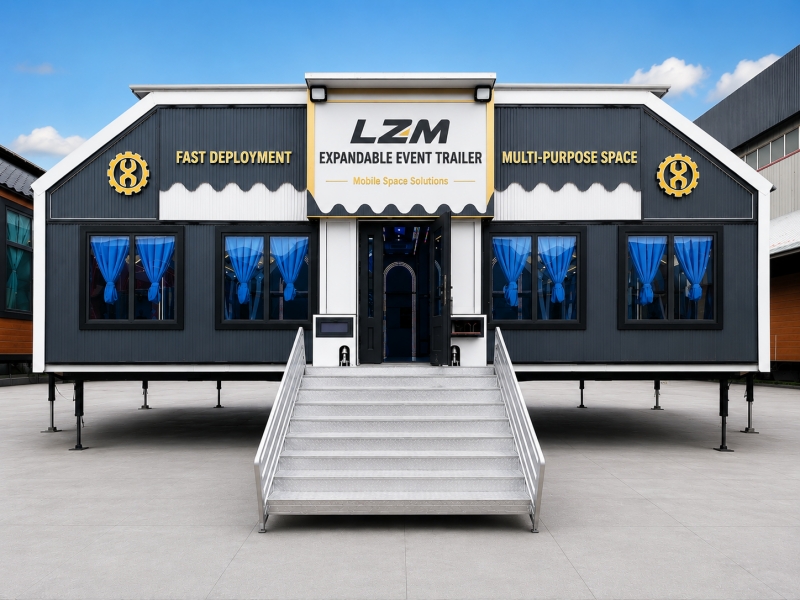
An expandable event trailer may be worth considering when:
The space requirement changes
The project needs mobility
The business wants faster deployment
The location is temporary or seasonal
The correct solution depends on the operating model.
A permanent building is designed for one location.
But many modern businesses operate differently.
Examples:
A brand may run campaigns in multiple cities.
A company may organize seasonal events.
A tourism business may need extra capacity during peak periods.
A government program may require temporary public facilities.
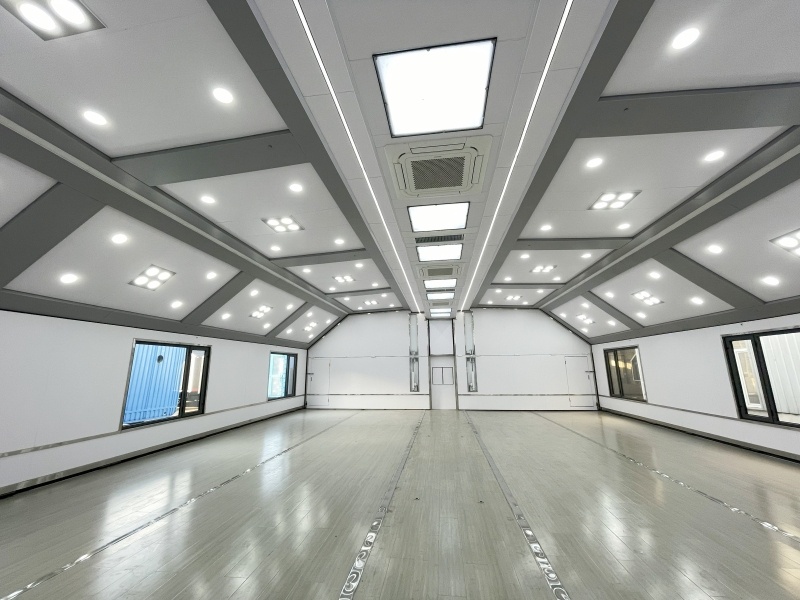
A mobile expandable space can follow these changing requirements.
Hotels, resorts and event venues often experience demand fluctuations.
A venue may have:
Enough rooms
Enough catering capability
Strong customer demand
But limited event space.
A permanent expansion project may take years.
An expandable event facility can provide additional capacity for:
Weddings
Corporate events
Private functions
VIP hospitality
The space can support business opportunities when the existing facilities are fully booked.
Retail and brand businesses increasingly create temporary experiences.
Examples:
Product launches
Pop-up stores
Customer events
Roadshows
A permanent store is not always the first step.
A mobile commercial space allows brands to test locations and create customer experiences without immediately committing to another fixed property.
Some organizations need to bring services closer to people.
Examples:
Mobile training centers
Educational programs
Community activities
Public information projects
A fixed building limits the service area.
A mobile facility can travel closer to different communities.
The same expandable platform can support many industries.
Examples include:
For:
Destination weddings
Reception halls
Private celebrations
For:
Conferences
Hospitality areas
Brand experiences
For:
Training programs
Language learning
Educational activities
For:
Kids activity centers
Media production
Special events
For:
Consultation centers
Community programs
Temporary facilities
A common misunderstanding is that every project should move frequently.
That is not true.
Some expandable event trailers may remain at one location for years.
Others may travel regularly.
The important question is:
Does mobility create business value for this project?
If the answer is yes, a mobile structure may provide advantages that a permanent building cannot.
Before choosing a configuration, project owners should consider:
Available land area
Ground conditions
Access roads
Electrical supply
Climate conditions
Local regulations
Expected operating period
A successful project depends on matching the structure with the actual site.
A small customer reception space and a 200-person event venue are completely different projects.
Important planning factors include:
Number of visitors
Seating arrangement
Interior functions
Audio and visual systems
Catering requirements
Bathroom solutions
Climate control
The interior should be designed around the customer journey.
Another important decision is the supply method.
Depending on the country and application, buyers may consider:
Suitable when:
The road configuration is acceptable
The customer wants a finished solution
Local registration requirements are clear
Suitable when:
A local chassis is preferred
Local compliance requirements are important
The customer has local installation capability
The best option depends on the project location and operating plan.
Before requesting a quotation, customers should prepare:
Country and city
Application
Expected capacity
Operating frequency
Required size
Interior layout
Electrical requirements
Climate conditions
Mobility requirements
Complete trailer or body-only preference
Clear project information helps create a more suitable solution.
There is no single answer for every business.
A permanent building may be the right choice for a stable long-term facility.
An expandable event trailer may be the better choice when flexibility, speed and adaptability are important.
The key is not choosing the largest structure.
The key is choosing the structure that supports the way the business actually operates.
LZM develops customized expandable event trailers for commercial, hospitality, education, entertainment and public service applications.
Explore the expandable platform for customized mobile space projects:
Customized Expandable Event Trailer Platform