Welcome: Laizhou Machinery Group


Modern media production is no longer limited to traditional television buildings.
News organizations, online media companies and content creators increasingly need professional production spaces in different locations.
A sports event may require an interview studio.
A company may need a temporary recording environment.
A media organization may want to produce programs closer to the audience.
But building a permanent studio at every location is not practical.
A mobile TV production studio provides another approach: bring a professional production environment to where the content is created.
Many people think a production studio is mainly about:
Cameras
Microphones
Lighting
Recording equipment
However, the physical environment also affects production quality.
A professional studio requires:
Controlled background
Comfortable working space
Equipment arrangement
Acoustic considerations
Reliable power supply
Climate control
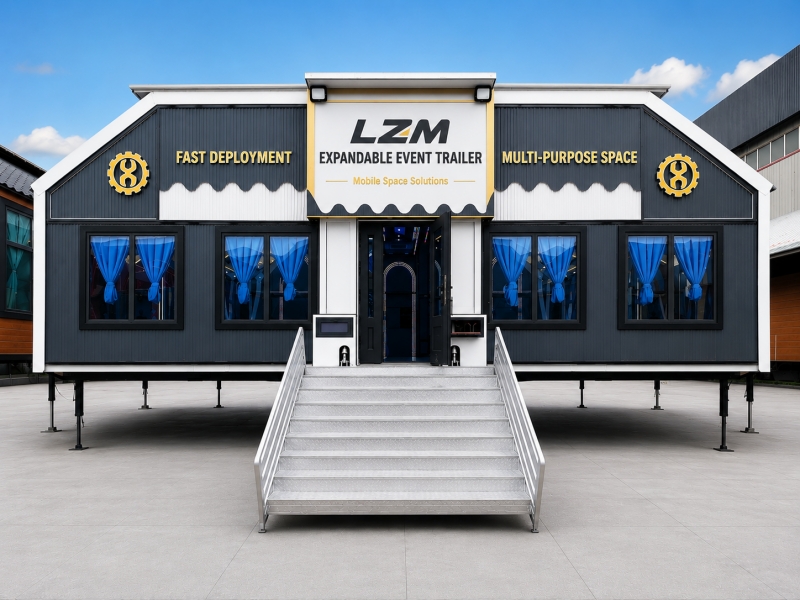
An expandable event trailer can provide the indoor space needed to organize these functions.
A conventional trailer has limited width.
This can make it difficult to create a comfortable studio environment.
An expandable structure provides another possibility.
During transportation:
Compact dimensions
Easier movement
At the destination:
Wider working area
Multiple functional zones
Better equipment arrangement
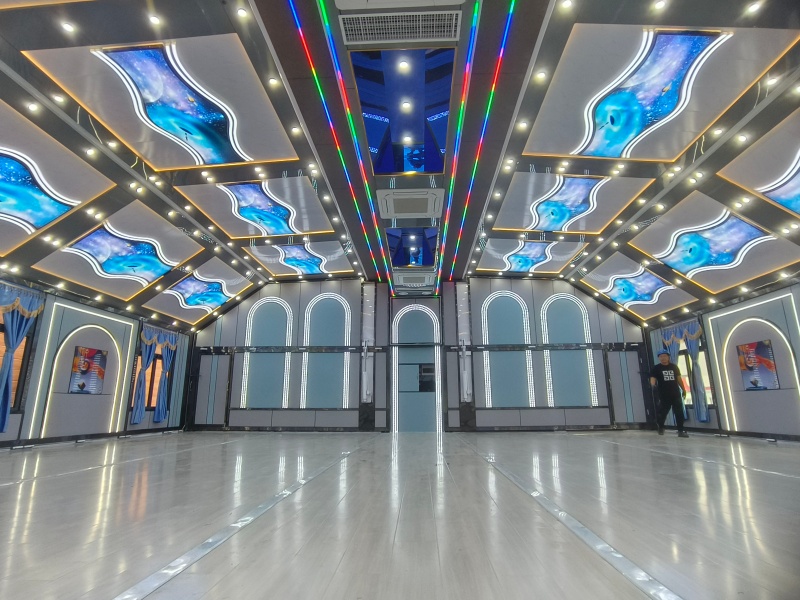
This allows the interior to be designed around actual production workflow.
A news organization may need a different studio from a podcast company.
Possible configurations include:
For:
Guest interviews
News programs
Expert discussions
Including:
Host position
Guest seating
Background design
Lighting system
For:
Online broadcasts
Product launches
Digital events
Including:
Camera positions
Streaming equipment
Control area
For:
Audio programs
Video podcasts
Creator content
Including:
Recording table
Microphone positions
Acoustic treatment
For:
Editors
Producers
Technical staff
Including:
Workstations
Storage
Equipment preparation area
Los Angeles has a large media ecosystem.
The city includes:
Television production companies
Digital content creators
Entertainment businesses
Sports organizations
Marketing agencies
But content production is increasingly distributed.
Programs are created at:
Events
Corporate locations
Outdoor venues
Brand activities
Sports competitions
A mobile studio allows production teams to move with the project.
A sports organization may not need a permanent studio at every venue.
But during major events, it may require:
Player interviews
Commentator programs
Sponsor content
Social media production
A mobile production studio can be positioned near the event location.
The competition happens outside.
The media production happens inside.
The same platform can support organizations producing regular content.
Examples:
For:
Online courses
Student media
Academic interviews
Campus broadcasts
For:
Online worship
Sermon recording
Community programs
For:
Training videos
Corporate communications
Product announcements
The interior changes according to the content requirements.
A studio environment requires more planning than a normal office.
Customers should consider:
Number of cameras
Lighting equipment
Audio requirements
Background design
Equipment weight
Power consumption
Internet connection
Air conditioning requirements
The final layout should be developed around the production workflow.
A permanent studio stays in one place.
A mobile production studio can follow demand.
For example:
January:
Sports event coverage
↓
March:
Corporate content production
↓
June:
Festival media program
↓
September:
University recording project
One facility can support multiple production scenarios.
A mobile studio is not designed to replace a major broadcast complex.
Large television networks may still require permanent production centers.
The value of a mobile studio is flexibility.
It works best when organizations need:
Additional production capacity
Temporary studio space
Location-based content creation
Faster deployment
Before designing the project, customers should consider:
What type of content will be produced?
How many people work inside?
How many cameras are required?
Is live broadcasting needed?
What equipment will be installed?
Are sound treatments required?
How often will the studio move?
What climate conditions apply?
These details determine the trailer size and interior configuration.
Media production is becoming more flexible.
Content is no longer created only inside traditional buildings.
For broadcasters, production companies and organizations creating digital content, an expandable mobile studio provides a professional environment that can move closer to events, audiences and opportunities.
LZM can customize expandable event trailers with production layouts, technical areas, lighting systems and commercial interiors according to project requirements.
Explore the expandable platform for mobile media production projects:
Mobile TV Production Studio Platform