Welcome: Laizhou Machinery Group



An international customer chooses the size, interior layout, air conditioning and event configuration.
Then another question appears:
Should the expandable structure arrive as a complete trailer, or should the customer purchase only the expandable body and install it on a locally sourced chassis?
At first, buying the complete trailer may seem like the obvious choice.
One supplier. One finished unit. One shipment.
But for an international mobile project, the simplest purchasing option is not always the simplest operating option.
The correct decision depends on where the unit will operate, how often it will move and what local road requirements apply.
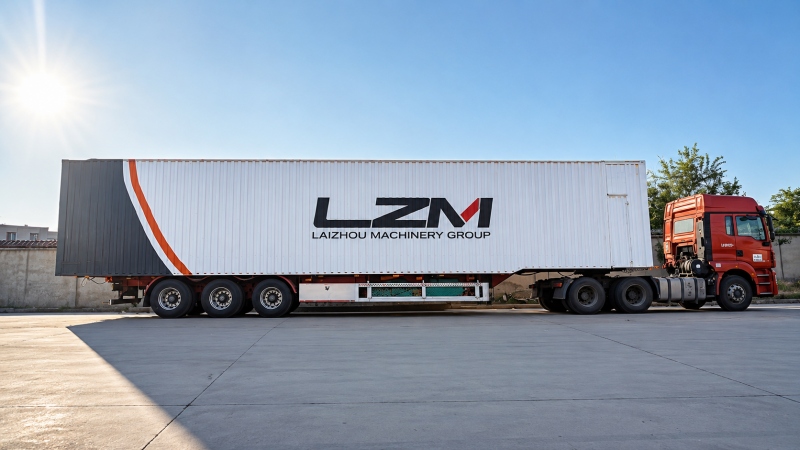
Not every customer uses an expandable event trailer in the same way.
Consider two projects.
The unit arrives at a resort, wedding property or commercial site and remains there for several years.
It may move very rarely.
The unit travels between:
Exhibitions
Sporting events
Corporate functions
Customer locations
Different cities
For Project B, chassis and road compliance become a much larger part of the purchasing decision.
The more frequently the unit travels, the more important the local transport requirements become.
With this approach, the customer purchases:
Expandable body + Chassis + Running system
as one complete unit.
The obvious advantage is integration.
The structure, hydraulic system and chassis can be considered together during manufacturing.
For markets where the supplied chassis configuration is acceptable and the operating conditions are clearly understood, this can simplify the manufacturing process.
But international buyers need to look beyond factory completion.
The more important question is:
Can this complete trailer be legally registered and operated where you intend to use it?
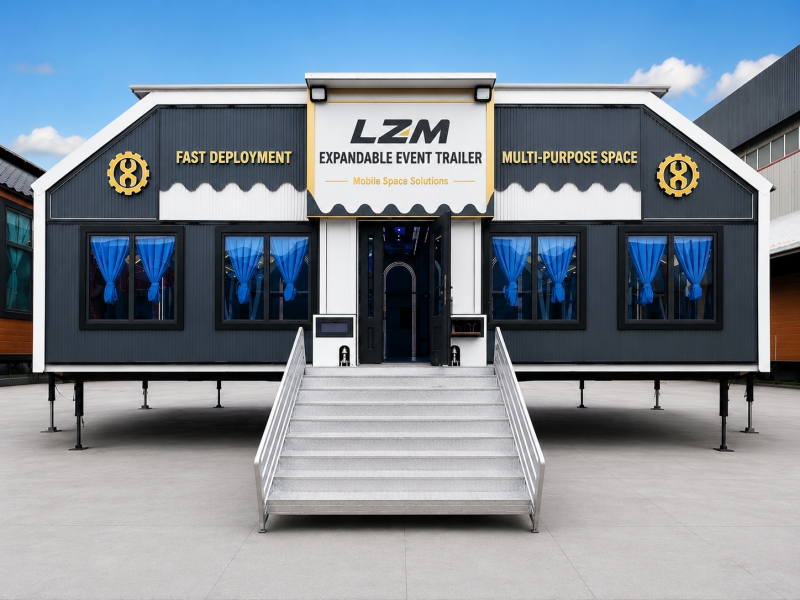
Countries can have different requirements involving:
Trailer dimensions
Axle configuration
Braking systems
Lighting
Coupling systems
Chassis certification
Registration
Roadworthiness
Maximum permitted weight
Requirements may even vary according to the particular trailer configuration and intended operation.
That means a complete trailer should not be selected simply because it is convenient to manufacture.
Local compliance needs to be investigated before the order is finalized.
The second approach separates the expandable facility from the road-going chassis.
LZM manufactures the expandable body and associated systems.
The customer then sources an appropriate chassis locally or works with a local engineering company to complete the installation.
Why would a buyer choose this route?
Because the locally sourced chassis may already be designed around the country's:
Registration requirements
Axle standards
Braking regulations
Lighting requirements
Coupling standards
Service network
For some international projects, this can reduce uncertainty surrounding the road-going part of the product.
This distinction is important.
When discussing an expandable body-only project, the customer may still require a substantial amount of work to be completed before shipment.
Depending on the agreed specification, the expandable structure can incorporate systems such as:
Hydraulic expansion
Structural framing
Flooring
Ceiling
Interior wall finishes
Lighting
Electrical preparation
Air-conditioning provisions
Doors and windows
Customized interior elements
The exact supply scope needs to be defined clearly during quotation.
“Body only” describes the chassis strategy.
It does not automatically define the entire interior specification.
Separating the body and chassis creates another engineering question:
How will they connect?
Before manufacturing, both sides need to understand issues such as:
Chassis dimensions
Mounting positions
Structural interfaces
Weight distribution
Hydraulic requirements
Electrical connections
Installation responsibilities
The locally sourced chassis cannot simply be treated as an unknown component that will somehow fit later.
Coordination should begin before production.
A U.S. customer may want an expandable venue for:
Corporate events
Weddings
Sports hospitality
Mobile exhibitions
Brand activations
If the trailer will frequently travel on American roads, the customer needs to evaluate U.S. requirements relating to the road-going configuration.
In such a project, sourcing an appropriate local chassis and integrating the expandable body can be worth considering.
For a unit that will remain largely stationary after delivery, the decision may be different.
The operating model matters.
European customers also need to consider local road and registration requirements.
A customer may love the expandable structure but discover that importing and registering a complete foreign-manufactured trailer creates additional compliance work.
In that situation, separating the mobile structure from the locally regulated chassis may offer another project route.
But this should be evaluated with the customer's local technical or regulatory professionals before ordering.
For some destinations, purchasing a complete trailer may remain the more practical choice.
If:
Local regulations permit the configuration
Registration requirements are manageable
The customer wants a turnkey unit
Local chassis integration would add unnecessary complexity
then the complete trailer may make sense.
This is why LZM should not automatically recommend the same supply method to every country.
The market matters.
International buyers also need to consider how the unit will reach the destination.
Large expandable trailers may require specialized shipping arrangements because of their dimensions.
A body-only configuration may change:
Shipping dimensions
Loading method
Port handling
Destination installation requirements
But body-only supply does not automatically mean transportation will always be cheaper.
The final logistics solution depends on the actual model, dimensions and destination.
Freight should therefore be evaluated after the configuration is confirmed.
A trailer that moves frequently will eventually require maintenance.
The chassis side may involve:
Tires
Brakes
Axles
Suspension
Lighting
Coupling components
A locally sourced chassis can make access to compatible replacement parts and local service easier in some markets.
Meanwhile, LZM remains responsible for the expandable structure and the systems included within the agreed supply scope.
This separation of responsibilities should be clear before the project begins.
International buyers can start with four questions.
If yes, local chassis compliance becomes particularly important.
Confirm this before ordering, not after arrival.
If yes, body-only integration may deserve serious consideration.
If mobility is limited, the project may need to be evaluated differently from a touring event trailer.
There is no universal answer.
For a genuinely mobile project, the chassis is not an accessory.
It is part of the project architecture.
The decision between complete trailer and expandable body only can influence:
Engineering
Transportation
Compliance
Installation
Maintenance
Long-term operation
It should therefore be discussed at the beginning of the project rather than immediately before shipment.
When requesting a quotation, international buyers can provide:
Country
City
Application
Expected capacity
Required trailer size
Frequency of relocation
Complete trailer or body-only preference
Local chassis information, if available
Electrical standard
Summer and winter temperatures
Interior requirements
Required delivery time
If the customer is unsure about the chassis strategy, the operating country and intended mobility are the best starting points.
The expandable event space may look similar after installation.
But the route used to create the finished mobile facility can be very different.
For some buyers:
Complete Trailer → Delivery → Operation
may be the practical solution.
For others:
Expandable Body → Local Chassis Integration → Local Registration → Operation
may provide a more appropriate route.
The goal is not to sell every international customer exactly the same configuration.
The goal is to choose a supply strategy that makes sense for how and where the facility will actually operate.
Review the expandable structure and available project configurations here:
Explore LZM Expandable Event Trailer Configurations