Welcome: Laizhou Machinery Group



A successful resort can face an unusual problem.
The rooms are occupied.
Restaurants are busy.
The ballroom calendar is full.
And another customer wants to book a major event.
The resort may have extensive outdoor grounds, gardens or waterfront areas, yet still lack enough enclosed event space to accept another corporate function, private celebration or VIP gathering.
Building another permanent ballroom is one answer.
But for resorts where demand changes with seasons and event calendars, an expandable mobile venue creates another option.
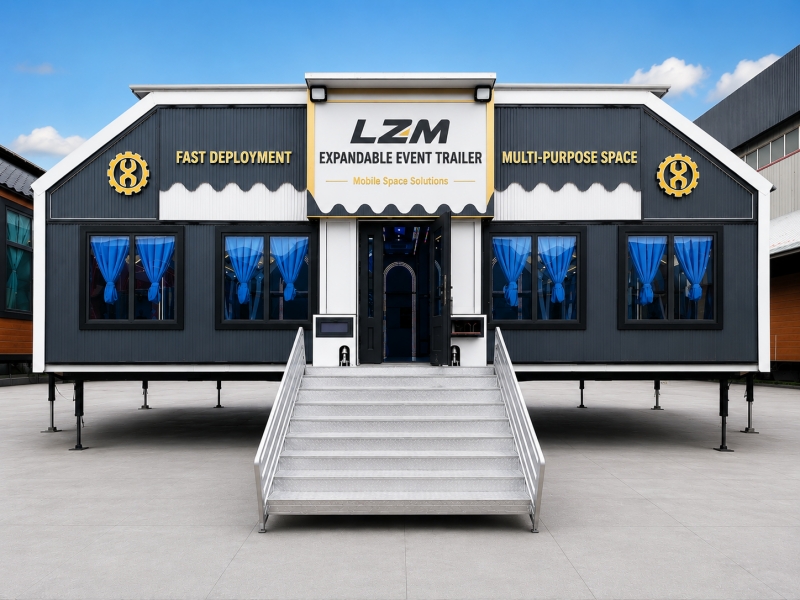
Consider a resort receiving an enquiry from a company planning a three-day executive event.
The customer may require:
Welcome reception
Conference seating
Private dining
Product presentation
VIP lounge
Evening entertainment
The hotel has the accommodation.
It has catering.
It has staff.
It has the location.
But its existing function rooms are already committed.
Declining the event means losing not only venue revenue, but potentially:
Guest rooms + Catering + Beverage + Hospitality + Additional services
Additional event capacity can therefore influence revenue across several departments.
Many luxury resorts occupy significantly more land than the buildings themselves.
Depending on the property, available areas may include:
Gardens
Waterfront zones
Parking areas
Golf course surroundings
Private event lawns
Desert-facing spaces
An expandable event trailer can be positioned on a suitable prepared area and opened to create additional enclosed floor space.
The resort does not need to permanently convert the surrounding landscape into another building.
A resort event space may need to change function during the same day.
In the morning, the interior might contain:
Theater Seating → Presentation Screen → Speaker Area
After the conference finishes, furniture can be rearranged.
By evening, the same space could become:
Cocktail Reception → Lounge Seating → Bar → Entertainment
This ability to change layouts is particularly useful for multi-day corporate programs.
One group can use the facility for several different activities without moving to another venue.
Hotels often evaluate corporate events as complete packages.
A company bringing 150 guests may also purchase:
150 hotel rooms
Breakfast
Lunch
Dinner
Meeting services
Entertainment
Airport transfers
Additional leisure activities
This means the commercial value of accepting the event can be considerably greater than the rental price of the function space itself.
If ballroom capacity is the only reason the hotel cannot accept the group, additional mobile event space can address a very specific bottleneck.
Abu Dhabi combines:
Luxury hotels
Beach resorts
International conferences
Corporate travel
Sporting events
Government and business activities
Premium tourism
Some hospitality demand is also linked to particular seasons and major events.
That makes permanent expansion a different investment decision from flexible capacity.
A hotel may not need another ballroom every day of the year.
It may need one precisely when the most valuable customers arrive.
For a luxury resort, appearance matters.
Guests paying for a premium experience should not feel that they have been moved into a basic temporary structure.
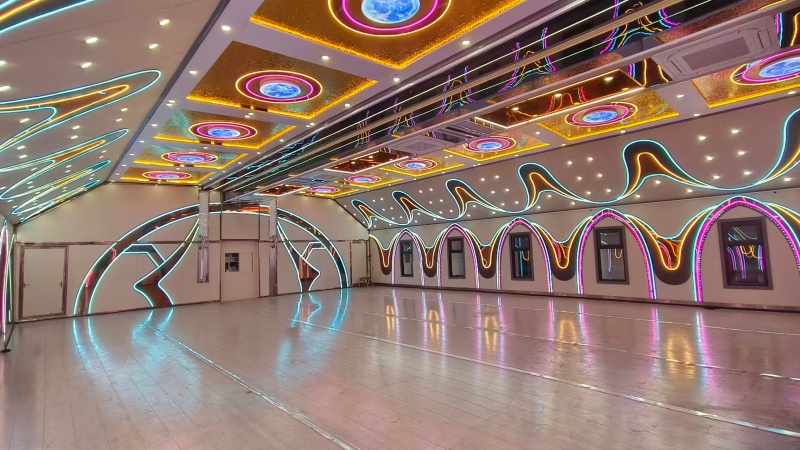
Interior customization can focus on:
Ceiling finishes
Decorative wall panels
Flooring
Ambient lighting
Lounge furniture
Screens
Sound systems
Climate control
Exterior treatment and branding can also be coordinated with the project concept.
The objective is to make the additional space feel like part of the hospitality experience.
The business case becomes stronger when the unit is not limited to conferences.
During different periods, the same expandable space could support:
Meetings, conferences and company dinners.
Private areas during sporting or entertainment events.
Premium presentations for automotive, fashion or luxury brands.
Birthdays, anniversaries and invitation-only functions.
Additional capacity when the resort's permanent ballroom is unavailable.
The interior arrangement can change according to the event.
This creates another possible model.
A hospitality group operating several resorts may not need identical additional capacity at every property simultaneously.
A relocatable facility could potentially follow demand:
Abu Dhabi Resort → Dubai Property → Seasonal Destination → Major Event → Return
Whether this is practical depends on road regulations, chassis configuration, site conditions and relocation frequency.
But where movement is feasible, one mobile asset could serve more than one property.
A luxury hospitality environment in Abu Dhabi requires serious consideration of cooling capacity.
The calculation needs to consider:
Outdoor temperature
Number of guests
Lighting
Screens and AV equipment
Operating hours
Door opening frequency
Interior heat sources
Air conditioning should therefore be planned around the real event configuration rather than selected only according to floor area.
Power requirements must also include hospitality and AV equipment.
This needs to be decided according to the project configuration.
For certain expandable structures, integrating bathrooms may reduce usable event space or complicate the layout.
At a resort, an alternative may be to position the facility close to existing hotel amenities or use separate premium mobile restroom facilities.
The correct solution depends on site layout and customer expectations.
A hotel may initially focus on interior appearance.
But the first design question should be:
How many people must the facility actually accommodate?
A 100-person corporate dinner and a 200-person cocktail reception require different layouts.
LZM would therefore need information including:
Maximum guest capacity
Seating style
Event types
Stage requirement
Sound system
Screens
Food and beverage service
Air conditioning
Heating if required
Bathroom arrangement
Site conditions
Frequency of relocation
Once the operating model is clear, the interior can be developed around it.
For a hotel or resort, additional space should not be evaluated only as another building.
The more useful calculation may be:
How many profitable events are currently being rejected because permanent function rooms are unavailable?
If the answer is significant, flexible event capacity can become a commercial tool.
An expandable event trailer gives hospitality operators another way to increase event inventory without necessarily constructing another permanent ballroom.
And when demand changes, the same space can be repurposed for another hospitality function.
Luxury resorts already possess many of the expensive components required for successful events: location, accommodation, catering, staff and customer traffic.
Sometimes the missing component is simply enough enclosed event space.
A large expandable facility can help bridge that gap and create additional capacity for high-value events when the existing ballroom calendar is full.
See the expandable platform that can be configured around resort hospitality and large guest capacities:
Expandable Resort Hospitality Venue