Welcome: Laizhou Machinery Group



For a major property development, sales can begin long before the first residents move in.
Apartments may be sold off-plan. Villas may be marketed while roads and landscaping are still under construction. New resort and commercial developments may need to attract investors before permanent customer facilities are completed.
This creates an important question for developers:
Where should potential buyers experience the project?
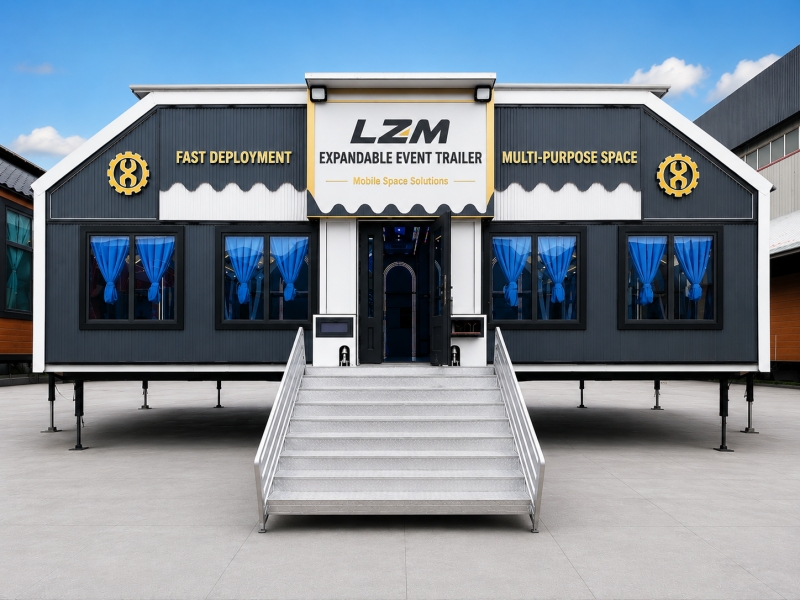
A customized expandable event trailer can provide a temporary but professional sales environment directly at, or close to, the development site.
Off-plan property sales depend heavily on presentation.
A buyer may be making a significant investment based on:
Architectural plans
Interior concepts
Development models
Location information
Digital visualizations
Sales presentations
A basic temporary office may provide desks and chairs, but premium developments often need something more convincing.
The sales environment itself becomes part of the property brand.
After entering the mobile sales center, visitors could first arrive in a project presentation area.
This space may include:
Development model displays
Masterplan information
Large digital screens
Interior renderings
Location maps
Project videos
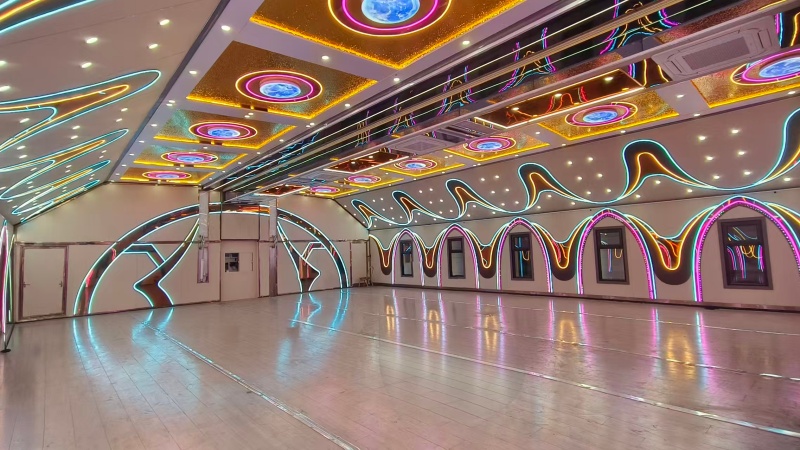
For a large expandable trailer, the open floor area provides more flexibility for creating a customer journey rather than simply arranging several desks inside a narrow vehicle.
After understanding the development, serious buyers often want to discuss specific units.
Separate consultation areas can be incorporated for conversations about:
Floor plans
Unit availability
Pricing
Payment schedules
Upgrade options
Purchase procedures
For luxury developments, private rooms or semi-private VIP consultation zones can create a more appropriate environment for high-value transactions.
Dubai continues to develop residential, hospitality and mixed-use property projects across different districts.
Many projects are marketed before completion, and developers invest heavily in presentation, customer experience and branding.
A relocatable sales facility can be positioned near one development during its active sales period.
When that phase is substantially sold, the same mobile asset can potentially be moved to another project.
That changes the economics compared with constructing a new temporary sales pavilion every time.
A villa community and a high-rise apartment project may require completely different sales environments.
The emphasis may be on:
VIP reception
Premium interior finishes
Private consultation
Large visual displays
The priority may instead be:
Higher visitor capacity
Multiple sales desks
Efficient customer flow
Digital unit selection
The design could place more emphasis on:
Lifestyle presentation
Hospitality
Destination imagery
Investor meetings
The expandable structure provides the floor area, while the interior can be developed around the project's sales strategy.
A property sales center may operate throughout the day and receive customers during hot weather.
Air conditioning is therefore a major technical consideration.
Depending on the project, other requirements may include:
Insulation
Large display screens
LED lighting
Dedicated electrical circuits
Reception counters
Meeting furniture
Storage
Exterior branding
The electrical load should be evaluated according to the final equipment configuration.
This is one of the strongest differences between a mobile sales center and a conventional temporary building.
A traditional sales pavilion may eventually need to be:
Demolished
Converted
Left unused
An expandable mobile facility can potentially move.
For a developer operating several projects, the same unit could follow the development pipeline:
Project A launch → Project B presales → Project C investor campaign
The interior branding and certain decorative elements can be updated for the next development.
The concept may also be relevant to:
Real estate marketing agencies
Property exhibition companies
Resort developers
Master developers
International property sales companies
A rental company could also operate mobile sales environments for different developers rather than owning a permanent facility at one project.
Instead of beginning with the question, “Which trailer size do we need?”, the project can start with the sales process.
For example:
Entrance → Project Introduction → Model / Digital Presentation → Sales Consultation → VIP Discussion → Exit
Once this customer journey is established, the interior zones can be arranged around it.
Other questions include:
How many visitors may enter simultaneously?
How many sales consultants will work inside?
Is a physical scale model required?
How large are the digital displays?
Are private VIP rooms necessary?
Will refreshments be provided?
Will the unit move between different developments?
These details influence the final configuration.
Property development changes location constantly.
The sales environment does not necessarily have to be rebuilt from zero every time.
An expandable event trailer can provide developers with a large, customizable indoor platform for project presentation, customer consultation and high-value sales activities while retaining the ability to relocate.
For developers managing multiple projects, that mobility may turn a temporary sales facility into a reusable commercial asset.
See the expandable platform that can be customized around a property sales journey:
Expandable Property Sales Gallery Platform
See how the same expandable platform can also be used for real estate sales centers and other expandable mobile space applications.