Welcome: Laizhou Machinery Group



For a caravan dealer, a successful first shipment is only the beginning of the supplier relationship.
The first order may be used to test:
Product quality
Customer response
Retail pricing
Factory communication
Shipping arrangements
After-sales requirements
If the caravans sell successfully, the next challenge is different:
Can the dealer order the same product again with consistent specifications and quality?
For importers planning a long-term off road caravan business, repeat-order consistency can be just as important as the initial wholesale price.
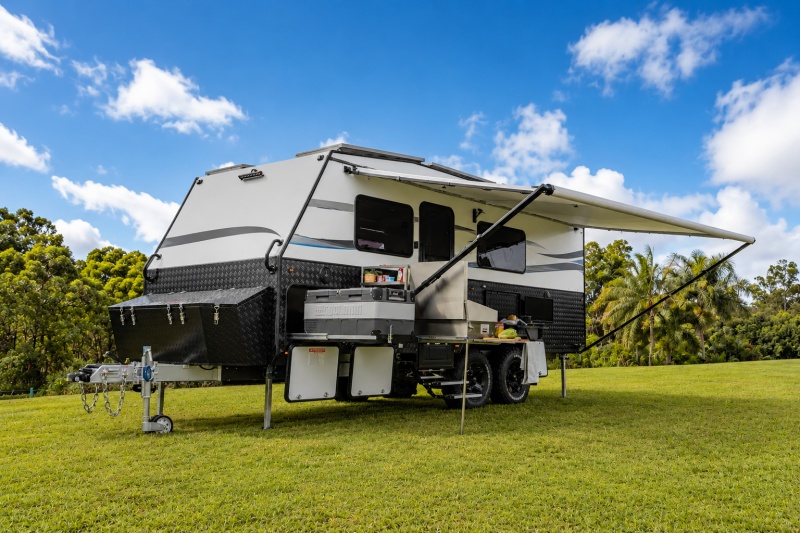
The first order often contains uncertainty.
Dealers may still be learning which:
Caravan sizes sell best
Layouts customers prefer
Equipment is actually valued
Options create unnecessary cost
Components need local spare parts
By the second order, the dealer has real market information.
This creates an opportunity to improve the product—but it also creates a risk of changing too many things at once.
A good repeat-order strategy should separate necessary improvements from unnecessary specification changes.
Once a caravan model has been accepted by the market, the dealer should define its standard configuration.
This may include:
Body size
Interior layout
Sleeping capacity
Battery system
Solar capacity
Freshwater capacity
Appliances
Suspension
Wheels and tyres
Interior materials
Exterior branding
Instead of rebuilding the caravan specification for every purchase, future orders can refer to an established dealer model.
For example:
Dealer Model A – Standard Specification
This creates a repeatable product rather than a series of individually customized caravans.
Customers buying the same dealer model generally expect the product to remain reasonably consistent.
This is especially important for service components such as:
Water pumps
Switches
Lighting
Electrical equipment
Plumbing fittings
Interior hardware
If every production batch uses different components, after-sales support becomes more complicated.
A dealer may eventually need several replacement parts for caravans sold under exactly the same model name.
For this reason, component standardization has real commercial value.
Manufacturing supply chains change.
A component may:
Be discontinued
Become temporarily unavailable
Increase significantly in price
Be replaced by a newer model
The objective should not be to pretend that substitutions will never happen.
Instead, dealers and manufacturers need a process for managing important changes.
For a significant component substitution, the dealer should understand:
What is changing?
Why is it changing?
Is performance equivalent?
Does appearance change?
Does installation change?
Are replacement parts compatible?
This is particularly important when a dealer already has many caravans operating in the local market.
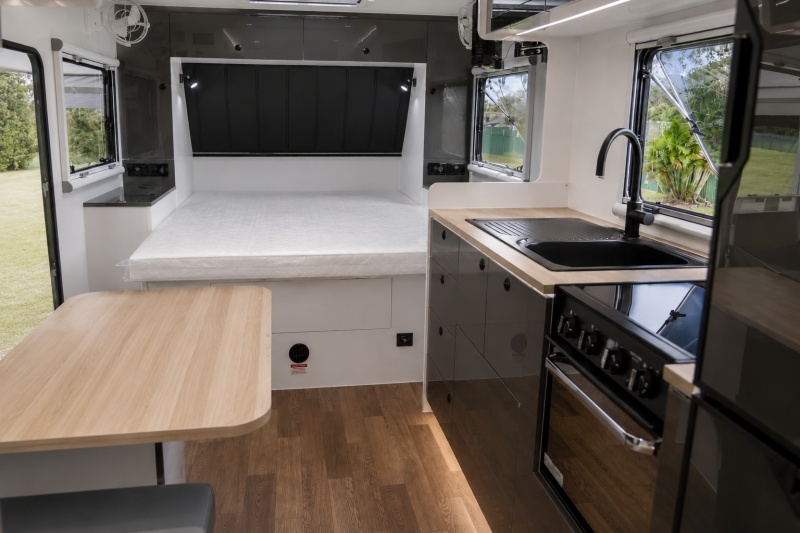
As dealer sales grow, a simple revision system can help.
For example:
Model X – Revision 1
Original production specification.
Model X – Revision 2
Updated battery system and interior hardware.
This is much easier to manage than changing components informally without recording the differences.
Product revisions can also help with:
Spare parts
Warranty diagnosis
Workshop training
Customer documentation
After selling the first shipment, dealers often receive customer requests for additional features.
That feedback is valuable.
But it does not mean every requested option should immediately become standard equipment.
Adding more:
Batteries
Solar
Water capacity
Appliances
Accessories
can increase both purchase cost and finished caravan weight.
Before making an option standard, dealers should ask:
How many customers actually requested it?
If only a small percentage need the feature, it may be better offered as an option or equipment package.
If a model sells well, constant redesign can create unnecessary risk.
Customers may already understand:
Its layout
Price
Equipment
Market position
Sales staff also become familiar with the product.
Major changes should therefore have a commercial reason.
Examples might include:
Repeated customer feedback
Reliability improvement
Regulatory requirement
Component availability
Meaningful cost reduction
Changing a product simply because another component is available can create complexity without increasing sales.
The dealer's first shipment provides valuable quality information.
Before ordering the next batch, review:
Delivery inspection
Customer feedback
Warranty claims
Workshop observations
Component failures
Installation issues
If the same problem appears repeatedly, it should become a specific quality-control point for future production.
For example, if a dealer identifies a recurring issue with a particular fitting, future inspection can specifically verify that area.
This turns real after-sales experience into better production control.
Quality control should become more structured as order volume increases.
A repeat-order inspection may verify:
Correct model and layout
Dealer branding
Interior finish
Electrical functions
Plumbing
Appliances
Battery and solar specification
Wheels and tyres
Ordered accessories
The checklist should follow the dealer's actual model specification.
That is more useful than relying only on a generic factory inspection.
Repeat orders also help dealers identify which spare parts are worth keeping locally.
Instead of stocking everything, the dealer can focus on selected service components that are:
Frequently required
Difficult to source locally
Inexpensive to keep in inventory
Important for reducing customer downtime
Using common components across several dealer models can simplify this further.
The second and third orders should increasingly reflect actual sales data.
Dealers can review:
Which size received the most enquiries?
Which model sold fastest?
Which price point worked best?
Which equipment customers valued?
Which options were rarely requested?
A slow-selling model should not automatically be reordered simply because it was included in the first shipment.
Likewise, a successful configuration may justify a larger share of the next order.
Early orders may contain several models because the importer is still testing demand.
Over time, the range can become more focused.
For example, the first shipment might contain four different configurations.
Sales data may show that two models generate most customer interest.
Future purchasing can then concentrate on those models while keeping the others as special-order options.
This can reduce capital tied up in slow-moving inventory.
For private-label dealers, repeat production should maintain consistent:
Logos
Exterior graphics
Model names
Interior branding
Product identification
Customers should be able to recognize that different production batches belong to the same dealer brand.
Brand consistency becomes increasingly important as more caravans enter the market.
A larger repeat order may make sense when:
Previous inventory sold consistently
Customer demand is measurable
The best-selling models are known
Retail pricing has been validated
After-sales processes are working
The dealer has sufficient working capital
Increasing quantity based on real sales information is fundamentally different from placing a large first order based only on expectations.
Before confirming the next production batch, dealers should check:
Is the model specification unchanged?
Have any components changed?
Which first-order problems need correction?
Should any options become standard?
Which models sold fastest?
Which models should be reduced or removed?
Are additional spare parts required?
Has local compliance changed?
Is the same branding being used?
Should order quantity increase?
These questions help turn an initial import project into a structured dealer supply program.
Dealers and distributors planning ongoing purchasing can review the LZM Off Road Caravan Manufacturer Range when selecting models for repeat wholesale orders.
LZM can discuss dealer requirements covering:
Standard models
OEM specifications
Dealer branding
Equipment packages
Component consistency
Spare parts
Repeat production
For dealers already selling a successful configuration, the priority can shift from developing another completely new caravan to making the existing product easier to reorder and support.
The first caravan order answers:
Can we sell this product?
Repeat orders answer a more important long-term question:
Can we build a sustainable dealership around it?
For dealers, successful repeat purchasing depends on stable specifications, controlled component changes, quality feedback, spare-parts planning and actual sales data.
A strong wholesale program should become easier to manage with every production batch—not more complicated.