Welcome: Laizhou Machinery Group



A mobile banquet hall can look like an unusual product when viewed only as a trailer.
For a commercial buyer, however, the more important question is not:
“How much does the trailer cost?”
It is:
“How can this asset generate revenue after I buy it?”
An expandable banquet hall can potentially be used as a revenue-producing venue for:
Weddings
Wedding receptions
Engagement parties
Private celebrations
Corporate dinners
Awards events
Hospitality functions
Seasonal events
But purchasing an expandable venue does not automatically create a profitable business.
Profitability depends on the relationship between:
Investment + Rental Rate + Utilization + Operating Cost + Local Demand.
For investors, wedding venue operators, hotels and event rental companies, understanding this business model is more useful than comparing purchase price alone.
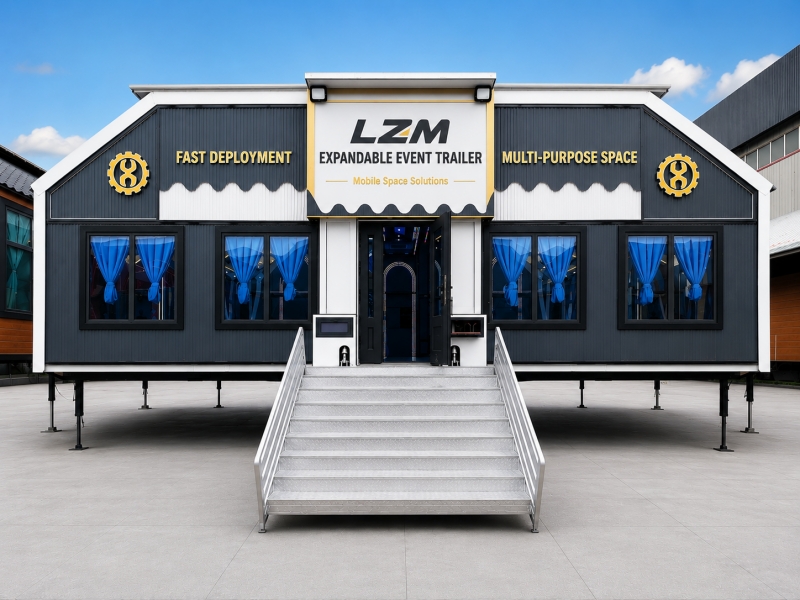
A mobile banquet hall is a transportable structure that can travel in a compact road configuration and expand at the destination to create a much larger enclosed event space.
Unlike a conventional small event trailer, a large expandable model can be configured more like a commercial indoor venue.
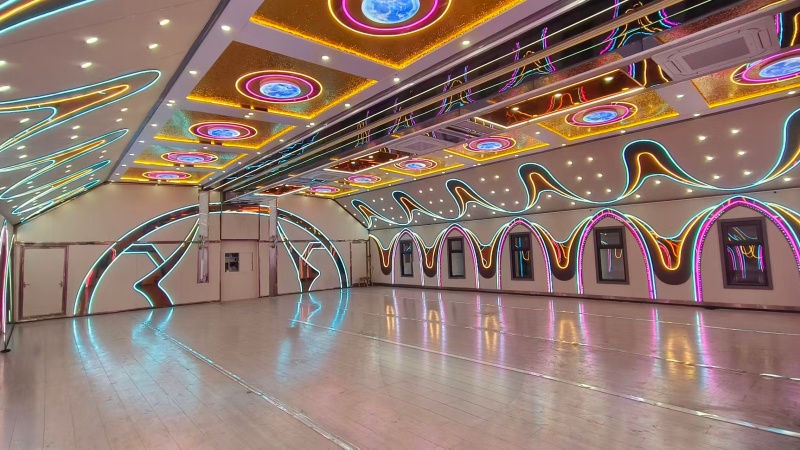
Depending on the project, the interior may include:
Banquet seating
Luxury wall and ceiling finishes
Decorative lighting
HVAC
Electrical systems
Large windows or glass sections
AV equipment
LED screens
Bar or catering areas
Optional sanitary facilities
Once deployed and furnished, the objective is for guests to experience an event venue, not simply the inside of a trailer.
That distinction is important to the business model.
Customers pay for the venue experience—not for the transportation mechanism underneath it.
A common mistake is assuming every buyer will operate the trailer as a daily rental product.
In reality, there are several different commercial models.
The main ones include:
The owner transports the banquet hall to different customer locations.
An existing wedding property adds the expandable hall to increase its bookable indoor space.
A hospitality property creates additional function space without immediately constructing another permanent ballroom.
The hall remains deployed at one location for several months during the high season.
The operator sells not only the space but also furniture, lighting, decoration, AV and other event services.
These models can have very different economics.
This is the most obvious mobile model.
An event rental company owns the expandable banquet hall and moves it between projects.
For example:
Wedding A
↓
Corporate Dinner
↓
Private Celebration
↓
Hotel Event
The same physical asset generates revenue from multiple customers.
This is where mobility becomes part of the commercial advantage.
The operator is not dependent on demand at one permanent address.
A permanent banquet hall serves customers who are willing to travel to that venue.
A mobile banquet hall can potentially travel toward the customer.
This can open opportunities at:
Private estates
Resorts
Golf clubs
Outdoor wedding properties
Corporate campuses
Sports venues
Temporary event grounds
The customer may already have an attractive location but lack sufficient indoor event infrastructure.
The mobile venue supplies the missing space.
A commercial operator should avoid pricing the product as if it were only temporary square meters.
The customer may be receiving:
Enclosed venue
Climate control
Lighting
Finished interior
Weather protection
Setup
Breakdown
Transportation
Depending on the package, the operator may also provide:
Furniture
AV
Decoration
Generator
Event staff
The product is therefore closer to a mobile venue service than simple equipment rental.
A second model is very different.
The buyer already owns a successful wedding property.
It may have:
Ceremony lawn
Gardens
Kitchen
Restrooms
Parking
Existing ballroom
The problem is insufficient indoor capacity.
Instead of creating an entirely new wedding business, the expandable banquet hall becomes an additional revenue-producing space within an existing business.
This can be a powerful model because much of the supporting infrastructure already exists.
Consider a resort that already pays for:
Land
Landscaping
Kitchen staff
Parking
Sales team
Maintenance
Marketing
Adding another bookable event space may allow the property to generate more revenue from infrastructure already in place.
The incremental investment is therefore not the same as starting a completely new wedding venue from zero.
This is one reason the same expandable banquet hall can have very different ROI for different buyers.
The obvious benefit is hosting another wedding.
But additional space may also allow the property to:
Accept larger weddings
Host simultaneous functions
Separate ceremony and reception
Add indoor weather backup
Host corporate events on weekdays
Create private dining events
The value of the hall therefore depends on how creatively the operator integrates it into the existing venue business.
Hotels face a similar problem.
A hotel may have strong demand for:
Weddings
Conferences
Corporate dinners
Holiday events
but limited ballroom inventory.
Building another permanent function room may require:
Architectural design
Construction
Significant capital
Long project schedule
An expandable banquet venue can provide another option where site conditions and local requirements allow.
The business case then depends on the additional events the property can accept.
A hotel considering additional banquet capacity should ask:
How much business are we currently unable to accept because our function rooms are occupied or too small?
This is much more useful than asking only:
“How much does an expandable trailer cost?”
If the hotel rarely reaches full event capacity, another venue may not produce strong returns.
If it regularly rejects profitable bookings, additional capacity may have much greater value.
Wedding venues often know:
How many inquiries they receive
How many dates are unavailable
How many clients need larger capacity
How many bookings are lost during peak months
This historical information can help estimate whether additional venue space is justified.
A purchase decision based on real booking data is stronger than one based on general optimism about the wedding market.
Not every expandable hall needs to move every week.
Some operators may deploy it for:
Wedding season
Summer resort season
Winter hospitality season
Festival season
and leave it in place for several months.
This reduces the number of transport and setup cycles.
The venue operates more like a seasonal building while retaining the ability to relocate later.
Imagine the hall hosts 20 weddings while remaining at one resort.
The operator may only need:
One Delivery
One Deployment
One Final Collection
Transport and setup costs are therefore spread across many events.
This is a very different cost structure from moving the trailer to 20 separate locations.
For the right property, semi-permanent deployment can improve operating efficiency.
The banquet hall itself can be only the beginning of the commercial offer.
A wedding operator may bundle:
Venue
Tables
Chairs
Lighting
Flowers
AV
Catering
Bar
Photography coordination
Instead of selling an empty hall, the company sells a complete event solution.
This can increase revenue per booking.
It can also make comparison with basic temporary structures less relevant because the customer is buying a different level of service.
For business analysis, it is useful to distinguish:
The amount charged for use of the expandable hall.
Revenue from:
Furniture
AV
Decoration
Catering
Transport
Setup
Staffing
This helps the operator understand which parts of the package actually generate margin.
A large total invoice does not necessarily mean every service is equally profitable.
Investors often ask:
“How much can I charge for one wedding?”
That matters.
But a more important metric may be:
How many profitable bookings can I realistically achieve each year?
Consider two hypothetical assets.
Rental revenue per booking: high
Annual bookings: low
Rental revenue per booking: moderately lower
Annual bookings: much higher
Venue B may generate more annual revenue.
Therefore:
Price per Event × Utilization
matters more than the highest possible advertised rental price.
For a mobile banquet hall, utilization can be measured in several ways.
A simple method is:
Booked Revenue Days ÷ Available Commercial Days
But the operator should be careful.
A one-day wedding may occupy the asset for more than one day because it may require:
Transport
Setup
Event
Breakdown
Return transport
Therefore, the true asset commitment may be several days.
This should be included in scheduling calculations.
For example:
Thursday: Transport
Friday: Setup and decoration
Saturday: Wedding
Sunday: Breakdown
Monday: Return
The customer sees a one-day event.
The rental company sees a five-day asset commitment.
This difference is extremely important when calculating revenue potential.
If operating procedures allow the company to reduce:
Transport time
Setup time
Breakdown time
Cleaning time
the same trailer may support more bookings per year.
This means operational efficiency directly affects ROI.
The hydraulic expansion system, standardized setup procedures and staff training are therefore not only technical issues.
They can influence revenue.
A mobile banquet hall business in one market cannot simply copy pricing from another country.
Local economics vary according to:
Wedding budgets
Venue prices
Labor costs
Fuel
Transport distances
Competition
Event seasonality
A U.S. operator may have a completely different pricing structure from an operator in the Middle East or Africa.
The correct business model should be built from local market data.
The customer does not evaluate the mobile banquet hall in isolation.
They may compare it with:
Hotel ballroom
Wedding tent
Permanent venue
Marquee
Temporary structure
Other event rental solutions
The mobile hall needs to offer a compelling combination of:
Appearance
Comfort
Flexibility
Location
Setup
Price
Premium pricing becomes easier when the customer understands why the experience is different.
If the operator presents the venue as:
“A more expensive tent,”
the sales conversation becomes difficult.
The stronger positioning is:
A climate-controlled, finished mobile event venue that can be installed where permanent ballroom space is unavailable.
This changes what the customer compares.
The product should compete on total venue value rather than square-meter rental price alone.
Wedding customers are buying an emotional experience.
They care about:
Appearance
Photography
Lighting
Comfort
Weather protection
Guest experience
A venue that looks substantially more premium may justify a different price position from basic temporary event infrastructure.
This is why interior design affects the business model.
However, spending more on decoration does not guarantee better returns.
A commercial buyer should distinguish between:
and
For example, customers may value:
Good HVAC
Attractive lighting
Quality flooring
Elegant ceiling
Large glass areas
more than extremely expensive decorative details that are difficult to maintain.
Commercial design should balance luxury and durability.
A permanent wedding hall can build a very specific identity.
A mobile rental venue needs to work for many customers.
One week may be:
White Wedding
The next:
Corporate Awards Dinner
The next:
Luxury Birthday Party
A relatively neutral premium interior can therefore increase commercial flexibility.
Branding and decoration can then change around the base design.
This is an important business point.
If the venue looks exclusively like a wedding ballroom, weekday corporate demand may be harder to capture.
If it can transform between:
Wedding
Corporate dinner
VIP hospitality
Private event
the operator may have more opportunities to fill the calendar.
Higher utilization can be more valuable than extreme specialization.
A wedding-focused venue may be busiest on:
Friday
Saturday
Sunday
What happens Monday through Thursday?
Commercial operators should look for complementary weekday demand.
Possible examples include:
Corporate meetings
Product presentations
Awards dinners
Training events
Private hospitality
This can improve asset utilization without abandoning the core wedding market.
Suppose the venue already covers strong wedding demand on weekends.
Adding even a moderate number of profitable weekday bookings can improve annual revenue significantly.
This is why a multi-use banquet layout can make commercial sense.
The venue should still be optimized for its primary market, but it does not need to remain idle outside wedding dates.
Wedding demand may be highly seasonal.
Some markets have strong:
Spring weddings
Summer weddings
Autumn weddings
while other periods are much quieter.
The investor should analyze at least a full year of local demand.
A business plan based only on peak-season pricing can overestimate annual performance.
A relocatable venue may potentially move between markets or applications.
For example:
Wedding Season
↓
Corporate Event Season
↓
Sports Hospitality Season
This does not mean relocation will always be economical.
But mobility gives the owner options that a permanent hall does not have.
The value of those options depends on the operator's sales network.
High revenue does not automatically mean high profit.
The operator also needs to understand costs.
These may include:
Financing
Insurance
Storage
Transportation
Driver
Setup labor
Cleaning
Maintenance
Repairs
Electricity
Generator fuel
Marketing
Administration
For mobile operations, transport and labor can be particularly significant.
A useful business model divides costs into two categories.
Expenses that exist even when the trailer is not booked.
Examples may include:
Financing
Insurance
Storage
Certain licenses
Marketing
Expenses created by each booking.
Examples may include:
Fuel
Driver
Setup labor
Cleaning
Generator operation
Consumables
This helps determine the minimum profitable rental rate.
A simple commercial calculation is:
Booking Revenue – Booking-Specific Costs = Contribution
That contribution then helps cover fixed costs and recover the original investment.
This is more useful than looking at gross booking revenue alone.
A high-value event located far away may produce less profit than a lower-priced local booking.
A customer may accept a high rental price.
But if the venue must travel a long distance, the operator may incur:
Tractor cost
Fuel
Driver time
Tolls
Permits where applicable
Additional travel days
Transport should therefore usually be calculated separately or incorporated carefully into the quote.
Offering unlimited delivery inside one flat rental price can be risky.
The trailer may travel to the event loaded with revenue.
But it still has to return.
Rental pricing should account for the complete transport movement rather than only the outbound distance.
This is particularly important for large heavy commercial trailers.
A venue rental company may discover that its most profitable projects are not necessarily the largest events.
Bookings within a practical service radius may offer:
Lower fuel cost
Faster turnaround
Easier staffing
Less road risk
This can produce better margin and higher annual utilization.
A geographic sales strategy can therefore improve profitability.
Instead of advertising everywhere, the operator can define:
Most competitive transport cost.
Higher delivery charge.
Quoted individually.
This makes pricing more predictable.
It also prevents sales staff from accidentally accepting unprofitable distant bookings.
If a customer 1,000 kilometers away wants the venue for six months, long-distance transport may still make commercial sense.
Why?
Because transport cost is spread across a long rental period.
The same distance for a one-day wedding may be economically unattractive.
Therefore, distance should always be considered relative to contract value and duration.
Suppose two trailers have different purchase prices.
The cheaper trailer is not automatically the better investment.
If the more expensive unit can:
Command higher rental rates
Book more events
Reduce setup labor
Serve more applications
Experience less downtime
it may produce better financial performance.
Investment decisions should therefore compare the asset's earning capability, not only the factory quotation.
Buyers often ask manufacturers:
“What is the ROI period?”
A manufacturer cannot responsibly provide one universal number.
The answer depends on:
Purchase price
Local rental rate
Bookings
Operating costs
Financing
Taxes
Maintenance
A trailer that pays back quickly in one business may perform poorly in another.
The buyer needs a local financial model.
Instead of using one optimistic forecast, investors can model:
Low booking volume.
Realistic booking volume based on market research.
Higher utilization after the business becomes established.
This provides a more useful view of investment risk.
No event venue operates at full commercial utilization every available day.
There will be:
Maintenance
Transport
Cleaning
Weather disruption
Sales gaps
Seasonal slow periods
A realistic business plan needs spare capacity.
Otherwise even a small operational problem can destroy the forecast.
Commercial equipment will eventually require:
Tires
Hydraulic service
HVAC service
Electrical repairs
Interior repairs
Seal replacement
A portion of revenue should be reserved for maintenance.
Treating every dollar of rental income as profit produces an unrealistic ROI calculation.
Wedding customers care about appearance.
After years of commercial use, the operator may want to update:
Flooring
Wall finishes
Lighting
Furniture
Branding
A refurbishment can extend the commercial life of the venue.
This should be viewed as part of lifecycle planning rather than an unexpected failure.
Unlike a permanent banquet hall attached to land, a mobile asset may potentially be sold separately.
The future resale value depends on factors such as:
Condition
Age
Maintenance
Design
Market demand
Road configuration
A well-maintained neutral commercial design may have broader resale appeal than an extremely customized niche interior.
Suppose a wedding business closes one location.
A permanent ballroom cannot simply move to another property.
An expandable venue potentially can.
This gives the owner several options:
Relocate
Rent
Sell
Reconfigure
This flexibility has economic value even if it is difficult to express as one exact ROI number.
A conventional wedding venue often requires significant real-estate investment.
A mobile banquet business may potentially operate through:
Partnerships with resorts
Leased event sites
Existing properties
Temporary commercial sites
This can reduce the need to own a dedicated permanent ballroom property.
However, local land-use and permitting requirements still need to be evaluated.
An event rental company may not need to find every wedding customer directly.
It can partner with:
Wedding planners
Resorts
Hotels
Golf clubs
Event properties
These partners already have:
Customers
Locations
Sales channels
The expandable venue becomes additional inventory they can offer.
This can reduce customer-acquisition difficulty.
Wedding planners regularly encounter customers who:
Love a property
Need more indoor space
Need weather protection
Want a distinctive reception venue
If planners understand the expandable venue concept, they may introduce it when conventional venue options do not fit.
For a new mobile banquet business, professional partnerships can be as important as consumer advertising.
A hotel may not want to purchase its own expandable venue immediately.
An event rental company can supply one for:
Peak season
Major conference
Special wedding
Renovation period
If the arrangement works well, the same hotel may rent repeatedly.
Repeat B2B customers can reduce sales costs compared with constantly acquiring new private clients.
Weddings may provide high-value weekend bookings.
Corporate customers may provide weekday demand.
This combination can create a stronger utilization profile.
A banquet hall designed with flexible:
Lighting
Furniture
Screens
Branding
can transition between these markets.
The operator is still selling one physical asset, but to multiple customer segments.
A new operator may want:
Full kitchen
Restrooms
LED wall
Generator
Solar
Battery
Luxury bar
Premium furniture
all in the first trailer.
Every feature increases:
Purchase cost
Weight
Maintenance
Complexity
The better question is:
Which features will customers actually pay for in our market?
Some functions may be more economical to provide through external equipment.
If the venue mainly serves hotels and resorts with:
Restrooms
Kitchens
Grid electricity
the trailer may not need to duplicate all of these systems.
That can preserve:
Interior space
Payload
Investment capital
A remote independent venue has different requirements.
The business model should therefore be defined before the technical specification.
On the other hand, a mobile venue intended for remote sites may benefit from greater independence.
Integrated sanitary facilities can reduce reliance on external infrastructure.
This may allow the operator to serve more locations.
But the business must also manage:
Water
Wastewater
Cleaning
Maintenance
Every additional capability has both revenue potential and operating cost.
A venue that can operate where grid power is unavailable can access more sites.
That flexibility may create bookings.
But generator operation adds:
Fuel
Noise
Maintenance
Transport
The operator should charge appropriately for this capability rather than absorbing the cost into every booking.
A clear commercial structure might distinguish:
Base Venue Rental
plus optional:
Delivery
Generator
Furniture
AV
Branding
Extended setup
Additional event days
This makes pricing more transparent and helps protect margins.
It also allows customers to buy only what they need.
Some operators publish a starting rental price.
This can help customers understand whether the venue is within budget.
However, the published price should clearly define what is included.
Otherwise customers may assume that:
Long-distance delivery
Furniture
Generator
Decoration
are all included.
Transparent package structure can improve lead quality.
A rental business may offer different levels.
For example:
Expandable hall and standard installed systems.
Venue plus furniture and selected lighting.
Venue plus expanded interior services, AV or other equipment.
The exact package depends on local capabilities.
The principle is to give customers a clear upgrade path.
Customization can generate revenue.
But it also creates:
Labor
Design time
Installation time
Inventory complexity
A rental company can standardize the base venue and offer modular customization.
This protects turnaround time.
The faster the trailer can transition between bookings, the more productive the asset can become.
For a multi-use rental venue, permanent branding for one customer is usually undesirable.
The exterior and interior can be designed to accept temporary:
Graphics
Signs
Screens
Decorative panels
This allows the same trailer to serve different brands and weddings.
Reusability improves utilization.
One couple may want:
White and gold
Another:
Green botanical theme
Another:
Modern black and white
The base interior should provide a premium neutral platform.
Decorators can then transform the venue without major construction.
This makes one asset commercially useful across many wedding styles.
Wedding customers often discover venues through:
Social media
Wedding websites
Planner portfolios
A mobile banquet hall therefore needs to photograph well.
Important visual areas include:
Entrance
Ceiling
Lighting
Table layout
Dance area
Good photography can support premium positioning and improve future bookings.
A new operator may initially lack a portfolio.
The first well-executed weddings can generate:
Professional photographs
Video
Customer testimonials
Planner referrals
These become sales assets for future bookings.
For a visually driven business like weddings, real event content can be more persuasive than manufacturer renderings.
Before investing, collect information on:
Local venue rental rates
Tent rental rates
Hotel ballroom rates
Wedding package prices
Typical guest counts
Peak months
This establishes the commercial environment.
Then determine whether the expandable venue can offer a compelling product at a profitable price.
Planners can provide valuable market information.
Ask:
What venue problems do clients encounter?
What capacities are most common?
How important is climate control?
How much do clients spend on temporary venues?
Which months have the strongest demand?
This research can influence:
Trailer size
Interior design
Equipment package
The manufacturer should not be the only source of information for the investment decision.
Local rental companies understand practical costs such as:
Labor
Transportation
Generator rental
Furniture
Setup
Even if they do not currently offer expandable trailers, their operating data can help build a realistic cost model.
The real competitor may not be another expandable trailer.
It may be:
Luxury tent company
Hotel
Convention center
Traditional wedding venue
Understanding these alternatives helps the operator define where the mobile venue has an advantage.
The strongest mobile banquet hall businesses usually solve a specific problem.
Examples:
“This resort has beautiful outdoor space but no indoor reception hall.”
“This hotel loses weddings because its ballroom is too small.”
“This city has strong wedding demand but few premium mobile venue options.”
The investment case becomes stronger when the problem is clearly defined.
A large expandable banquet hall is a significant commercial asset.
The ideal sequence is:
Market Research
↓
Target Customer
↓
Business Model
↓
Required Venue Size
↓
Technical Configuration
↓
Purchase
not:
Purchase
↓
Now, who might rent it?
The business model should determine the equipment.
A larger venue can host more guests.
But if most local weddings have 80–120 guests, buying a venue optimized only for very large receptions may not produce the highest utilization.
Conversely, a market dominated by large weddings may justify more floor area.
Guest-count research should influence model selection.
A large banquet hall needs more than additional purchase capital.
It may require:
Larger deployment area
More parking
More HVAC
More furniture
More transport capability
The complete operating system becomes larger.
Maximum capacity should therefore not be the only purchase criterion.
Some investors compare venues using revenue per square meter.
This can be useful, but event venues are not simple warehouses.
A lower-density luxury wedding may produce more revenue than a densely packed banquet.
Space used for:
Dance floor
Lounge
Entrance
Decoration
does not directly contain additional seats, but may increase the value of the experience.
Commercial layout should optimize revenue and guest quality together.
Packing the maximum possible number of tables into the venue may reduce:
Comfort
Service quality
Photography
Luxury perception
A premium wedding business may intentionally sell lower-density layouts at higher prices.
This can produce a stronger brand and potentially better margin.
Instead of marketing:
“Fits X people.”
the operator can market different event experiences.
For example:
Luxury Wedding Reception
Intimate Premium Banquet
Corporate Dinner
VIP Hospitality
Each can use the same venue differently.
This allows pricing to reflect event value rather than only guest count.
Rental companies can track:
Annual Venue Revenue ÷ Commercially Available Days
This helps compare asset productivity over time.
If revenue per available day increases, the venue is becoming more commercially efficient.
This metric can also help compare different trailer sizes within a fleet.
A large distant booking may produce a high invoice but occupy the trailer for seven days.
A smaller local booking may produce less revenue but use only three days.
Revenue per committed asset day can reveal which booking is actually more productive.
This helps sales teams make better scheduling decisions.
A mobile banquet hall is still a sales business.
Operators should track:
Inquiries
Quotations
Site visits
Bookings
If many customers inquire but few book, the problem may involve:
Price
Positioning
Location
Product presentation
This information can guide marketing rather than immediately assuming more advertising is required.
Lost leads contain useful information.
Possible reasons include:
Too expensive
Venue too large
Venue too small
Site cannot accommodate trailer
Customer chose hotel
Customer chose tent
Date unavailable
Over time, these reasons reveal whether the current product matches the market.
A new operator does not necessarily need a large fleet immediately.
The first trailer can help validate:
Demand
Pricing
Setup procedures
Customer preferences
Maintenance costs
If utilization becomes strong, the company can then consider additional models.
This reduces the risk of buying several assets based only on theoretical demand.
When expanding the fleet, ask:
What bookings are we currently losing?
If the first trailer is constantly booked, a second similar unit may be justified.
If customers frequently need a different capacity, another size may be better.
Fleet growth should follow actual sales data.
A hotel does not necessarily need to charge a separate rental fee for the mobile hall.
It may generate value through:
More room nights
Catering
Beverage sales
Wedding packages
Conference packages
Therefore, the hall's financial contribution can extend beyond venue rental revenue.
Hospitality buyers should calculate the total event value generated by additional capacity.
A resort may have attractive outdoor property that generates limited direct revenue.
Adding a mobile banquet venue can potentially turn part of that land into bookable event space.
The resort already owns or controls the site.
The new venue creates a commercial function for it.
This can be particularly interesting where permanent construction is undesirable or premature.
An established event company may already sell:
Tents
Furniture
Lighting
AV
Decoration
Adding a mobile banquet hall gives the same sales team another product.
The company does not need to build a customer base from zero.
Cross-selling to existing customers can improve the economics of the investment.
A company that already owns:
Trucks
Warehouse
Setup crew
may operate the trailer more efficiently than a new entrant that must outsource everything.
Therefore, the same purchase price can produce different profitability for different buyers.
Business infrastructure matters.
Someone starting from zero may need more than the trailer.
Potential additional investment can include:
Towing vehicle or transport contract
Furniture
Storage
Generator
Marketing
Staff
Insurance
Site equipment
The complete startup cost should be evaluated before purchase.
If the trailer is financed, monthly payments become part of fixed operating costs.
The business should calculate whether conservative booking levels can cover:
Financing
Insurance
Storage
Basic overhead
before relying on peak-season profits.
Cash flow is especially important during slow months.
Wedding businesses often book months in advance.
A structured deposit schedule can help:
Confirm the booking
Reduce cancellation risk
Support cash flow
The exact payment terms should comply with local law and market expectations.
The operator should clearly define:
Booking deposit
Final payment
Damage deposit where applicable
A trailer reserved for one customer may be unavailable to others.
If the customer cancels shortly before the event, the operator may not be able to replace the booking.
Cancellation terms therefore have economic value.
This becomes even more important for peak wedding dates.
An enclosed venue provides significant weather protection, but severe weather can still affect:
Transport
Deployment
Site safety
The rental agreement should explain what happens if conditions make setup or operation unsafe.
Commercial pressure should never override engineering or safety requirements.
A mobile banquet business may require several types of insurance depending on jurisdiction and operation.
These can potentially relate to:
Vehicle
Equipment
Public liability
Property
Event operations
Requirements vary significantly by market.
The buyer should consult an appropriate local insurance professional rather than relying on assumptions from another country.
A business model may look attractive until the operator discovers that every deployment requires complex local approval.
Before purchasing, investigate:
Road requirements
Temporary structure rules
Occupancy
Fire requirements
Site permits
Regulations vary by location.
Compliance cost and time should be included in commercial planning.
The fact that the venue has wheels does not mean local authorities will ignore it.
A trailer used for public events may still be subject to requirements involving:
Fire safety
Electrical systems
Accessibility
Occupancy
The exact treatment depends on the jurisdiction and deployment model.
Buyers should investigate this early.
The trailer may need to satisfy requirements while traveling on public roads.
After deployment, different requirements may apply to the event venue.
These are two separate questions:
A serious business plan needs answers to both.
In markets where importing a complete road trailer creates compliance challenges, some buyers may consider purchasing:
Expandable Superstructure
and installing it on a suitable locally sourced chassis.
This can potentially simplify some road-related issues.
However, structural integration, dimensions, weight distribution and local approval still need proper engineering.
It should be planned before manufacturing.
A mobile banquet hall only earns money when it is available.
Downtime caused by:
Hydraulic problem
Electrical problem
HVAC failure
Road-system issue
can result in lost bookings.
Commercial buyers should therefore plan:
Preventive maintenance
Spare parts
Local technical support
from the beginning.
Suppose one trailer costs slightly less but experiences frequent downtime.
Another costs more but operates more consistently.
The second may ultimately produce better returns.
For a rental business, reliability should be treated as part of the revenue model.
Equipment quality and business profitability are connected.
Instead of treating maintenance as an occasional surprise, the operator can allocate part of every booking's revenue toward future service.
Over time, this creates funds for:
Tires
Hydraulic maintenance
HVAC service
Interior refurbishment
This produces a more realistic view of profit.
A customer pays a large rental invoice.
That cash enters the business.
But some of it belongs economically to:
Transport
Labor
Maintenance
Financing
Tax
Future replacement
Good financial management separates revenue from true profit.
A simple planning exercise is:
Annual Fixed Costs ÷ Average Contribution per Booking
This estimates how many bookings are needed to cover annual fixed costs.
The calculation can then be repeated under:
Conservative
Expected
Strong
pricing and utilization assumptions.
This gives the investor a much clearer picture of risk.
When buyers search for mobile banquet hall price, they often want one number.
But the equipment price is only part of the investment.
A serious budget may need to include:
Trailer Purchase
Shipping
Import Costs
Local Road/Chassis Requirements
Site Equipment
Furniture
Transport Equipment
Launch Marketing
The exact combination depends on the business model.
For an existing venue operator, the alternative may be constructing another ballroom.
The comparison should consider more than construction cost.
Also compare:
Time to deploy
Location flexibility
Future relocation
Financing
Permitting
Site work
Residual asset value
In some situations, permanent construction may still be the better choice.
Expandable venues are not automatically the correct solution for every project.
A permanent building may be preferable when:
The venue will remain at one site for decades
Land is secure
Permanent construction is straightforward
Mobility has little value
Very large fixed infrastructure is required
A mobile banquet hall is strongest when flexibility has real commercial value.
The buyer should evaluate both options objectively.
It becomes more attractive when the business values:
Faster capacity addition
Relocation
Seasonal deployment
Multiple event sites
Reuse at another property
Mobile rental revenue
The more valuable these factors are, the stronger the mobile business case becomes.
A strong project does not begin with:
“This trailer looks interesting.”
It begins with:
“Our customers need this type of venue, and we understand what they will pay.”
That difference is critical.
Commercial equipment should solve a known market problem.
Before choosing:
12m
15m
17m
19m
21m
first define:
Target customer
Typical guest count
Rental model
Expected sites
Annual bookings
Required services
Then configure the trailer around that model.
The equipment should support the business—not force the business to adapt to an arbitrary equipment choice.
Before purchasing a mobile banquet hall, answer these five questions:
1. Who will rent or use the venue?
Weddings, hotels, corporate clients or multiple markets?
2. How much can we realistically charge?
Based on local alternatives, not another country's pricing.
3. How many profitable bookings can we realistically achieve?
Include seasonality and asset commitment days.
4. What will each booking really cost us?
Include transport, labor, cleaning and maintenance.
5. What happens if demand changes?
Can the venue be relocated, repurposed or sold?
If these questions have credible answers, the purchase decision becomes much easier to evaluate.
The purchase price matters.
But after the trailer enters commercial operation, another factor becomes even more important:
How effectively does the business keep the asset generating revenue?
A mobile banquet hall sitting unused is expensive equipment.
The same venue booked repeatedly for weddings, corporate events and hospitality functions becomes a productive commercial asset.
The difference is not created by hydraulics or interior decoration alone.
It is created by the business model around the equipment.
For commercial buyers, an expandable banquet hall should not be evaluated simply as:
Trailer + Equipment + Factory Price.
It should be evaluated as:
Investment
↓
Bookable Venue
↓
Revenue
↓
Operating Cost
↓
Utilization
↓
Return on Investment
That is why two buyers can purchase similar trailers and achieve completely different financial results.
One may use it only occasionally.
Another may integrate it into an existing wedding venue, sell premium packages, fill weekday dates and build partnerships with hotels and planners.
The physical asset may be similar.
The economics are not.
LZM manufactures expandable event trailers for mobile banquet halls, wedding venues and commercial event businesses, with multiple sizes and project-specific configurations available according to guest capacity, operating model and destination requirements.
If you are evaluating the investment, the useful starting point is not only the factory price. Define the target market, expected booking model, required capacity and operating location first, and then select the trailer configuration around the business case.
Explore expandable wedding venue solutions for venue operators.
Explore expandable mobile banquet hall configurations and compare options for your wedding or event venue business:
Mobile Banquet Hall & Expandable Wedding Venue