Welcome: Laizhou Machinery Group



Buying an expandable event trailer creates an asset.
Pricing it correctly creates a business.
For an event rental company, the commercial calculation does not end when the trailer arrives from the manufacturer.
The next question is more important:
How much should customers pay to rent it?
Charging too little can create a busy calendar with poor returns.
Charging too much without providing enough value can leave an expensive asset sitting in storage.
And unlike renting chairs or tables, an expandable event trailer creates substantial additional costs involving transportation, deployment, technical staff, HVAC, maintenance and site logistics.
For rental companies in the United States, a sensible rental price therefore needs to reflect the complete event operation, not simply the number of days the trailer is parked at the customer's location.
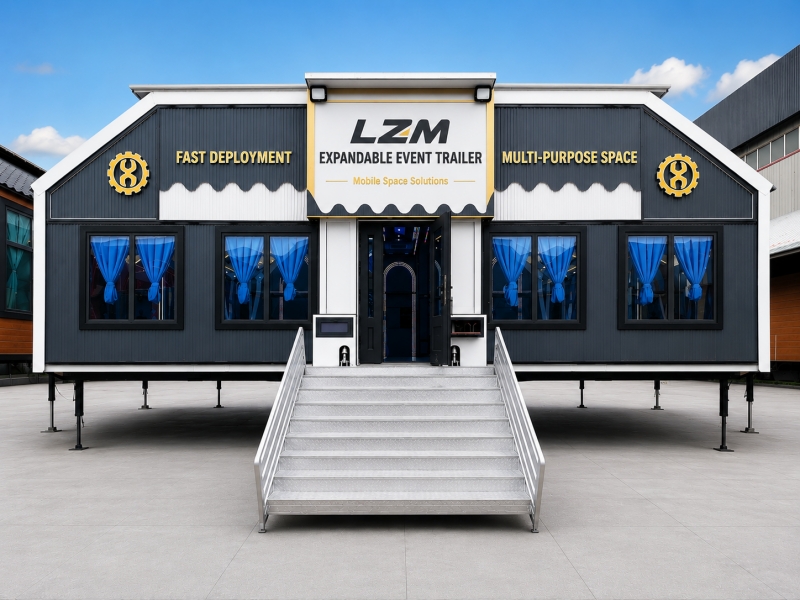
A rental operator should first understand what the trailer actually costs the business.
Purchase price is only the beginning.
The complete investment may include:
Trailer purchase
International freight
Import-related costs
Inland transportation
Local registration or project preparation
Furniture
AV equipment
Branding systems
Storage
Initial spare parts
Insurance
This creates the capital base the business ultimately needs to recover through paid bookings.
A trailer purchased for commercial rental should therefore be evaluated as a revenue-producing asset, not simply a piece of equipment.
Some costs exist whether the trailer is rented or not.
Others occur every time it moves.
These may include:
Financing
Insurance
Storage
Annual maintenance
Administration
Marketing
Depreciation
These may include:
Transportation
Driver
Setup labor
Breakdown labor
Fuel
Site preparation
Cleaning
Event-specific equipment
Consumables
Knowing the difference is important.
A rental rate that covers transportation and labor but contributes nothing toward the trailer's fixed costs is not a sustainable commercial price.
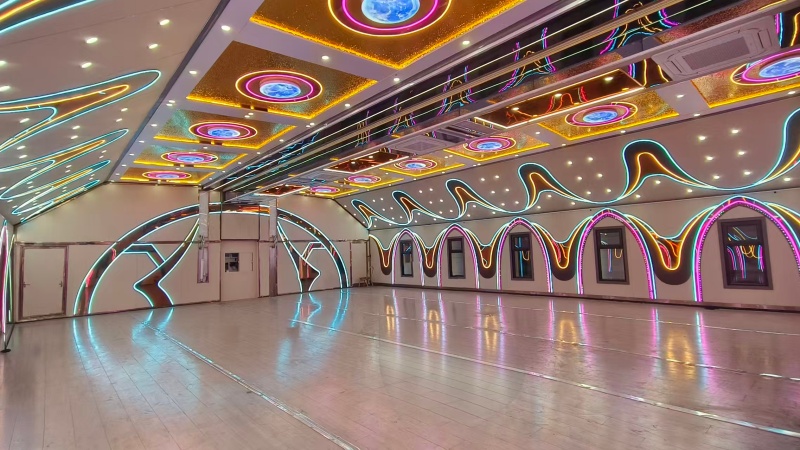
A customer may ask:
“How much per square foot?”
That can be useful for comparing venues, but an expandable event trailer is not simply rentable floor space.
The operator is providing a package that may include:
Mobile Venue + Transportation + Deployment + HVAC + Lighting + Electrical Infrastructure
Depending on the rental model, it may also include:
Furniture
LED displays
Sound
Branding
Restrooms
Catering support
The value is therefore different from leasing an empty room in a permanent building.
One practical model is to establish a base rental rate for the expandable venue itself.
That base package can define exactly what the customer receives.
For example:
Base Venue Package
may include:
Expandable event trailer
Standard deployment
Standard interior lighting
HVAC
Basic electrical system
Defined rental period
Everything beyond that can be priced separately.
This gives customers a clear starting point while protecting the operator from accidentally including expensive services for free.
Transportation distance varies from one booking to another.
A wedding 15 miles from the rental yard and a corporate event 400 miles away clearly do not create the same logistics cost.
Transportation pricing may need to account for:
Distance
Fuel
Driver time
Tolls
Permits where applicable
Empty return mileage
Overnight travel
Special transport arrangements
For this reason, many commercial operators may find it more practical to quote:
Venue Rental + Transportation
rather than hiding transport inside one universal rental price.
A trailer travels to the event.
It also needs to come back.
A 200-mile delivery may create substantially more than 200 miles of actual vehicle movement depending on the operation.
When calculating transportation cost, include:
Outbound Movement + Return Movement + Support Vehicles where applicable
Ignoring empty return mileage is an easy way to underestimate real logistics costs.
An expandable event trailer does not appear fully operational by itself.
The operator may need staff for:
Positioning
Leveling
Deployment
Utility connection
Inspection
Interior preparation
After the booking, the process happens again in reverse.
This labor has value.
A rental company should decide whether setup and breakdown are:
included in the base rate
or
quoted as separate service charges.
Either model can work.
What matters is that the cost is accounted for.
Two events located the same distance away can create very different operating costs.
Site A may provide:
Flat paved surface
Easy trailer access
Large turning area
Reliable power
Site B may involve:
Difficult access
Long positioning time
Temporary ground preparation
Limited utilities
Additional safety requirements
A standard rental rate should not automatically absorb unlimited site complexity.
The operator can define what constitutes standard deployment conditions and quote additional requirements separately.
A wedding may require the trailer for one weekend.
A brand activation may use it for two weeks.
A resort may need it for several months.
Charging the same daily rate for every rental length may not make commercial sense.
The company can establish different pricing structures such as:
Single-event rate
Weekend rate
Multi-day rate
Weekly rate
Monthly or longer-term deployment
Longer rentals may justify a lower average daily rate because transportation and deployment costs are spread across more operating days.
This is another common pricing mistake.
Suppose the wedding takes place Saturday evening.
The trailer may need to:
Leave Friday → Set Up Friday → Operate Saturday → Pack Down Sunday → Return Sunday
The customer sees one event day.
The rental company may have the asset committed for three calendar days.
That affects the opportunity cost.
During those days, the same trailer cannot serve another customer elsewhere.
Event demand is not distributed evenly throughout the year.
Wedding businesses may experience high demand on:
Saturdays
Holiday weekends
Popular wedding dates
Peak seasons
Corporate and sports events have their own busy periods.
A trailer rented on a high-demand Saturday may replace another potential booking.
Rental companies can therefore consider whether peak dates should use different pricing from low-demand periods.
This is normal revenue-management logic.
A mobile banquet hall does more than provide shelter.
For the right customer, it can create the actual wedding reception venue.
The customer may otherwise need to rent:
Tent
Flooring
HVAC
Lighting
Temporary walls
Interior finishing
An expandable wedding venue can combine several of these functions into one asset.
When setting the rental price, the operator should compare not only with tent rental prices, but with the complete alternative venue package the customer would otherwise need.
Not every wedding customer belongs in the same price category.
A premium configuration may include:
Luxury interior
Decorative lighting
LED screens
Premium furniture
Lounge areas
Enhanced entrance treatment
This creates a different commercial product from a basic empty venue rental.
The rental company could therefore offer:
Standard Wedding Package
and
Premium Wedding Package
using the same expandable structural platform with different additional equipment and services.
Corporate buyers often care less about wedding-style decoration and more about:
Professional appearance
Reliable HVAC
Presentation equipment
Screens
Branding
Networking space
Technical support
This means the same trailer can command value through a different service package.
A corporate rental rate might include:
Venue + Screens + AV Preparation + Branding + Technical Support
rather than tables and decorative wedding equipment.
A marketing campaign may require major visual changes.
The customer may request:
Exterior graphics
Interior graphics
Digital content
Custom counters
Product displays
These should not automatically be included in the base venue rate.
Rebranding involves:
Design
Production
Installation
Removal
Potential surface restoration
Experiential agencies and rental operators should treat campaign customization as a separate commercial workstream.
Large LED screens can represent substantial capital and operating cost.
A customer who does not need them should not necessarily pay the same price as one using multiple large displays.
Rental packages can distinguish between:
Venue Only
and
Venue + AV / LED Package
This makes pricing more transparent and helps the operator recover investment in additional equipment.
Rental companies often already own:
Tables
Chairs
Lounge furniture
Bars
Decorative equipment
An expandable event trailer creates an opportunity to bundle these assets.
For example:
Venue Only
Venue + Banquet Furniture
Venue + Premium Wedding Furniture
Venue + Corporate Lounge Package
The trailer can therefore increase utilization of the company's existing inventory as well.
For an enclosed premium event venue, HVAC is not simply an optional decorative feature.
It is part of the basic customer experience.
However, operating costs vary.
A venue running powerful air conditioning during a hot Texas summer may consume considerably more electricity than one operating under mild conditions.
The rental contract should make clear:
Who supplies site power
What electrical connection is required
Whether generator rental is additional
Who pays fuel where applicable
This prevents disputes after the booking.
Some event sites cannot provide sufficient electricity.
In those cases, an appropriately sized generator may be required.
The generator adds:
Rental or ownership cost
Transport
Fuel
Noise management
Setup
Maintenance
It should therefore usually be treated as a defined additional service rather than an invisible cost absorbed by the trailer rental.
A corporate presentation and a 200-person wedding reception may leave the venue in very different conditions.
Rental companies can define normal cleaning expectations and additional charges for:
Excessive waste
Spills
Damage
Special cleaning
Decoration removal
The objective is not to create unreasonable fees.
It is to protect the asset from costs caused by unusually intensive use.
An expandable event trailer is considerably more valuable than ordinary rental furniture.
Depending on the local business model, operators may use:
Damage deposits
Security deposits
Insurance requirements
Customer liability provisions
The appropriate arrangement should be developed with suitable local legal and insurance advice.
Commercial terms should reflect the value of the equipment being placed at the customer's site.
A trailer reserved for one customer may be unavailable to others.
If the booking is cancelled shortly before the event, the rental company may not have enough time to replace it.
This is particularly important on peak wedding dates.
A commercial rental contract should therefore define:
Deposit
Cancellation timing
Refund conditions
Weather policy
Rescheduling
These terms should be developed according to local law and the company's operating model.
Customers sometimes assume that bad weather automatically cancels all rental obligations.
But one advantage of an expandable venue is precisely that it provides enclosed indoor event space.
The rental company should define what happens if:
Rain occurs
Strong wind affects safe operation
Severe weather prevents transportation
The site becomes inaccessible
Safety must always take priority.
The contract should distinguish normal adverse weather from conditions that make operation unsafe or impossible.
Suppose a booking produces:
$X revenue
and direct transport/setup costs are:
$Y.
If the difference barely covers daily labor, the business may still be losing money after accounting for:
Asset depreciation
Insurance
Maintenance
Marketing
Storage
Financing
The minimum acceptable rental rate should therefore contribute to both:
Variable Cost Recovery
and
Fixed Asset Recovery.
One useful planning method is to work backward.
First estimate the annual amount the trailer needs to generate.
This may include:
Desired capital recovery
Financing cost
Fixed operating costs
Maintenance budget
Profit target
Then estimate realistic paid utilization.
For example:
How many event rental days can we realistically achieve each year?
The required average revenue per booking becomes much easier to understand.
A trailer will not be rented every day.
It needs time for:
Transport
Cleaning
Maintenance
Repairs
Reconfiguration
Storage
Sales gaps
Demand may also be seasonal.
A realistic financial model should include downtime.
Overestimating utilization can make an unsustainable rental rate look profitable on paper.
As the rental business matures, one useful metric is not only revenue per booking.
Consider:
Revenue per Available Rental Day
This helps compare:
Short high-value bookings
Longer lower-rate rentals
Seasonal utilization
The company can then understand whether discounting a long-term rental is more profitable than waiting for several uncertain short bookings.
Transportation can become one of the largest operating costs for mobile venues.
A booking generating attractive gross revenue may become less attractive if the trailer travels a very long distance.
Rental operators should track:
Transport Cost ÷ Booking Revenue
over time.
If distant bookings repeatedly produce weak margins, the company may need:
Higher distance charges
Minimum booking values
Geographic service limits
Data should guide these decisions.
A 12m and a 21m expandable trailer should not necessarily use the same pricing logic.
The larger asset may involve higher:
Capital investment
Transport complexity
Site requirements
HVAC
Setup
It may also serve higher-value events.
A rental fleet can therefore develop size-based pricing tiers.
This allows the sales team to match customer budget and capacity more efficiently.
If two expandable trailers are combined for a large event, simply doubling the single-unit rate may not reflect the real project.
The booking may require additional:
Positioning
Alignment
Utilities
Labor
Site planning
Connection work
Large multi-unit projects should therefore be quoted according to the complete operation.
A hotel may want an expandable banquet venue for six months.
A school may need additional dining space for an academic year.
A resort may deploy the trailer for an entire season.
These projects have much lower relocation frequency.
The operator may therefore accept a lower daily equivalent rate because:
Fewer transport movements are required
Setup occurs once
Calendar utilization is guaranteed for a longer period
This is a very different business model from weekend event rental.
Customization is useful, but every quotation should not need to start from zero.
A rental company can develop standard commercial packages.
For example:
Expandable trailer + standard systems.
Venue + banquet furniture + decorative lighting.
Venue + lounge furniture + screens.
Venue + digital displays + branding preparation.
Custom requirements can then be quoted as additions.
This makes sales faster and pricing more consistent.
Some rental companies publish:
“From $X per day.”
This can generate leads.
But it can also create confusion if customers assume every event costs the starting price.
If public pricing is used, the company should clearly define what the starting package includes.
For a large mobile venue, transport and site conditions can create substantial variation.
A starting figure should therefore be used as a qualification tool, not as a promise that every project costs the same amount.
An expandable event trailer is unlikely to win a price war against every temporary structure.
That should not necessarily be the objective.
The strongest commercial position may be:
premium mobile indoor venue
rather than:
cheapest temporary square footage.
Customers paying for:
Luxury weddings
VIP hospitality
Corporate events
Brand activation
may value quality, reliability and experience more than the lowest possible rental rate.
Pricing should match the target segment.
A customer may compare the trailer with:
Event tent
Hotel ballroom
Convention venue
Temporary modular building
Another mobile venue
These alternatives have different cost structures.
The rental company should understand the customer's real alternative.
If the client needs to rent a tent plus flooring plus HVAC plus lighting plus interior lining, the relevant comparison is the complete package, not the tent frame alone.
A rental rate that works in Houston may not work in Miami, Los Angeles or a smaller regional market.
Factors can include:
Local venue prices
Wedding budgets
Corporate-event demand
Competition
Transportation distances
Labor cost
Site availability
For this reason, LZM does not recommend one universal rental price for expandable event trailers.
The manufacturer can supply the asset.
The rental operator must build the local pricing strategy.
Before purchasing its first unit, a prospective operator should investigate:
Local wedding venue prices
Tent rental rates
Corporate venue rental
Event demand
Average event size
Competitor capacity
Typical travel distance
Labor cost
Storage
Insurance
Peak seasons
This information helps determine whether the local market can support the required rental rate.
Once the business begins operating, theoretical pricing should be replaced by real data.
After each booking, record:
Rental revenue
Transport cost
Setup hours
Breakdown hours
Fuel
Cleaning
Repairs
Additional services
Total asset days committed
Over time, this reveals which types of bookings are genuinely profitable.
High booking volume can be misleading.
A trailer may move constantly while generating weak margins because:
Distance charges are too low
Setup is underpriced
Too many services are included
Events are too short
Maintenance is ignored
A profitable rental business does not maximize movement.
It maximizes profitable utilization.
The first rental rate does not need to remain forever.
As the company collects data, it can adjust:
Base price
Transport charges
Package structure
Peak pricing
Minimum booking duration
Geographic limits
This is normal business optimization.
The important thing is to base changes on operating data rather than guesswork.
When evaluating an expandable event trailer, new buyers often ask:
How much does the trailer cost?
Rental companies need to ask one additional question:
What rental economics can this asset realistically support in our market?
The answer depends on:
Purchase Cost + Operating Cost + Rental Rate + Booking Frequency + Transportation + Utilization
A relatively expensive trailer can be a strong investment if it generates high-value repeat bookings.
A cheaper asset can still be a poor investment if local customers will not rent it at profitable rates.
For U.S. event rental companies, pricing therefore needs to be developed around the complete commercial operation—not simply the number of days between delivery and pickup.
LZM manufactures expandable event trailers in multiple sizes for weddings, banquets, corporate hospitality, brand activation and commercial event rental, with configurations developed according to individual project and market requirements.
Explore expandable event trailer configurations for commercial venue rental businesses:
Expandable Event Trailer for Event Rental Companies