Welcome: Laizhou Machinery Group


Fashion brands regularly move their collections between cities.
Models travel. Designers travel. Production teams travel. Clothing, lighting equipment, photography teams, and marketing materials can all travel.
The venue usually does not.
Every new fashion show requires the organizer to find another hotel ballroom, exhibition space, warehouse, or event venue and then recreate the production environment.
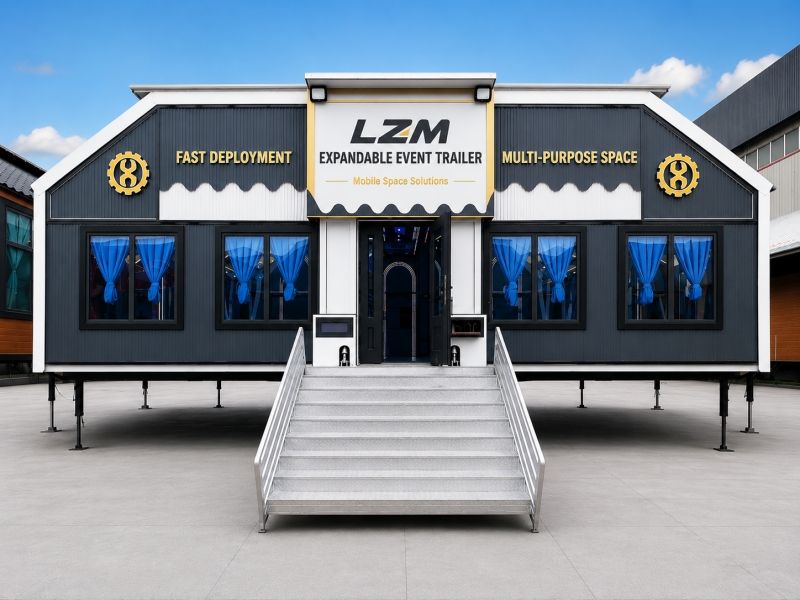
For fashion brands and event operators in Jeddah, Saudi Arabia, an expandable event trailer introduces another possibility: the fashion-show venue itself can become reusable mobile infrastructure.
A runway event is different from a conventional exhibition or banquet.
The central feature is not tables or display stands.
It is the relationship between the runway, audience, models, photographers, and backstage operation.
A typical configuration may require:
Runway
Audience seating
VIP seating
Backstage changing area
Model preparation area
Lighting positions
Audio equipment
Photography area
Media positions
Staff workspace
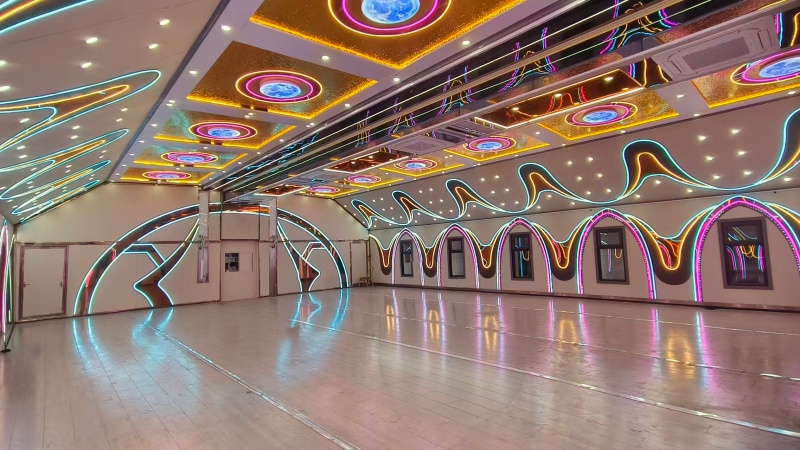
The interior therefore needs to be designed around the sequence of the show rather than simply maximizing seating capacity.
A buyer may initially ask:
“How many people can the trailer hold?”
For a fashion show, that is not necessarily the first question.
The organizer should first define:
How long and how wide does the runway need to be?
A longer runway gives models more presentation time and can create a stronger visual effect, but it also reduces the space available for seating.
The same applies to runway width.
Once the runway dimensions are established, audience seating can be planned around the remaining usable space.
The runway should define the layout—not be squeezed into whatever floor area remains after the chairs are installed.
Not every guest at a fashion show has the same role.
The organizer may need to accommodate:
Buyers
VIP customers
Media
Influencers
Sponsors
Industry guests
General attendees
Front-row positions can be reserved for priority guests, while additional seating can be arranged behind them.
For premium events, the operator may also want a separate VIP reception area before or after the show.
This changes the capacity calculation.
A 150-person fashion show with VIP hospitality may require more floor area than a simple 150-seat presentation.
The audience sees the runway.
The production team sees everything happening behind it.
Models may need space for:
Changing
Makeup
Hair styling
Clothing racks
Accessories
Mirrors
Waiting
Show sequencing
Designers and production staff may also need a controlled area that is not visible to the audience.
A fashion venue without enough backstage space can create operational problems even when the runway itself looks excellent.
The buyer should therefore define the expected number of models and clothing changes before the interior layout is finalized.
Runway lighting serves several purposes.
It needs to illuminate the clothing clearly, create the intended atmosphere, and provide suitable conditions for photography and video.
Depending on the production, the system could include:
Runway lighting
Stage lighting
Spotlights
Decorative lighting
Entrance lighting
Backstage lighting
Dimmable interior lighting
Lighting positions should be coordinated with runway dimensions and audience seating.
If the operator already owns professional event-lighting equipment, mounting and electrical provisions can be considered during the trailer design.
Fashion events generate visual content.
Photographers and videographers therefore need a position that allows them to capture models clearly as they move along the runway.
The interior layout may include a dedicated media position at the end of the runway.
This area needs to be considered before finalizing the number of audience seats.
For larger productions, additional camera positions may also be required.
Media visibility is part of the venue design because photography and video can extend the commercial reach of the show far beyond the guests physically attending.
A fashion presentation does not have to rely only on the physical runway.
Digital displays can show:
Brand films
Collection themes
Designer interviews
Sponsor content
Product details
Live camera feeds
Fashion photography
Large screens or projection systems can be positioned according to the production concept.
Electrical load, mounting points, and cable routing should be determined before interior finishing is completed.
A fashion show can place many people, powerful lighting, screens, cameras, and other equipment inside the venue simultaneously.
All of this generates heat.
In Jeddah's hot climate, HVAC capacity therefore needs careful planning.
The calculation should consider:
Audience capacity
Number of models and staff
Trailer dimensions
Outdoor temperature
Lighting load
AV equipment
Show duration
Door-opening frequency
Cooling requirements should be based on a full event, not an empty trailer.
Backstage areas also require suitable ventilation and temperature control because models and production teams may spend substantial time there before the show begins.
Fashion is highly visual.
The outside of the venue can therefore contribute to the event before guests enter.
Exterior treatment could include:
Brand graphics
Collection imagery
Designer name
Sponsor branding
Event title
Digital signage
For a mobile venue serving multiple brands, graphics can be designed for replacement between projects.
The structure remains the same while the visual identity changes.
A designer or fashion-event company may organize presentations in several markets.
Instead of rebuilding the same runway environment each time, the operator could potentially relocate the facility according to a regional schedule.
For example:
Collection launch → Private buyer event → Fashion festival → Brand presentation → Another city
The feasibility of each deployment depends on transport requirements, site permissions, utilities, and local event regulations.
But commercially, the concept changes the venue from a one-time rental expense into reusable event infrastructure.
A runway-oriented interior can also support other events.
With flexible seating and removable equipment, the same facility could potentially host:
Jewelry presentations
Beauty product launches
Designer showcases
Awards events
VIP brand presentations
Photography events
Private customer previews
This can increase utilization between major fashion productions.
Potential buyers include:
Fashion brands
Designer groups
Fashion-event organizers
Luxury retail companies
Event production companies
Shopping-center operators
Fashion festivals
Mobile venue rental companies
For a designer holding only one show per year, renting an existing venue may remain more economical.
The expandable model becomes more attractive where the facility can support repeated events, multiple brands, or a touring schedule.
Before selecting the trailer size and configuration, buyers should provide:
Runway length and width
Target audience capacity
VIP seating requirements
Number of models
Backstage requirements
Changing-room requirements
Lighting equipment
Audio requirements
Display-screen requirements
Media positions
HVAC requirements
Frequency of relocation
Transportation, electrical systems, accessibility, fire safety, public occupancy, event licensing, site use, and other applicable requirements should be evaluated according to Saudi and local project requirements.
Fashion collections change every season.
The physical infrastructure used to present them does not necessarily need to start from zero every time.
An expandable event trailer can combine runway, audience seating, backstage preparation, lighting, audiovisual systems, VIP hospitality, and media space inside a configurable mobile venue.
For fashion brands and event operators in Jeddah and other markets, this creates the possibility of taking a consistent presentation environment from one collection launch or fashion event to the next.
LZM develops expandable event trailers according to runway dimensions, audience capacity, backstage requirements, lighting, audiovisual systems, HVAC, and individual event applications.
Explore the expandable platform for fashion shows, designer launches, and runway events:
Mobile Fashion Show & Runway Event Venue