Welcome: Laizhou Machinery Group



An international buyer often starts an event trailer inquiry with a simple question:
“What size do I need for 200 people?”
It sounds like a specification question, but trailer length alone cannot provide a reliable answer.
Two customers expecting exactly the same number of guests may require completely different configurations. One may need banquet tables, a stage and dance floor. Another may need theater-style seating with almost no service area.
For that reason, buyers should normally think about how the space will be used before deciding which trailer length to purchase.
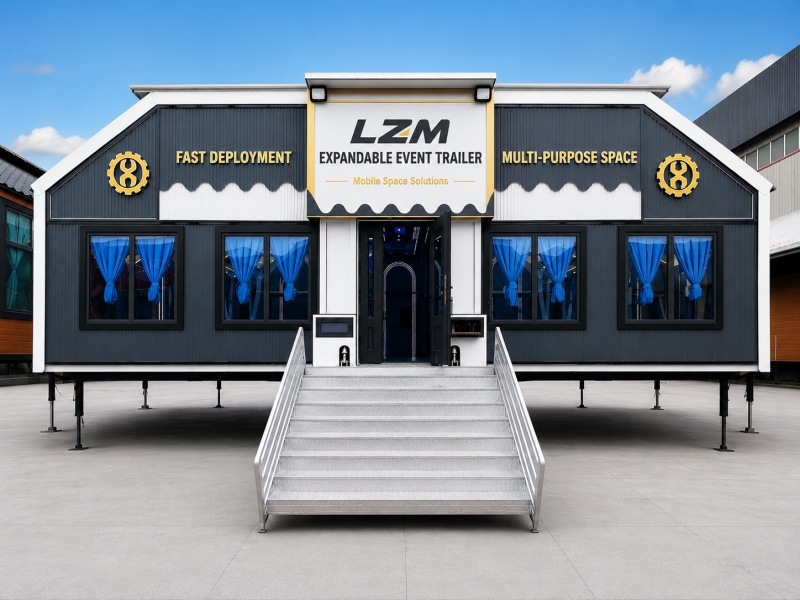
The number of people gives the manufacturer an initial reference, but it does not define the final layout.
Consider two 180-person projects.
The first requires:
Round banquet tables
Stage
Dance floor
DJ area
Catering circulation
The second requires:
Theater-style seating
Presentation screen
Central aisle
Small technical area
Although both projects accommodate 180 people, their floor-space requirements can be very different.
A capacity number without a seating plan can therefore be misleading.
Before comparing trailer models, buyers should define the main application.
An expandable event trailer might be used for:
Weddings and banquets
Corporate hospitality
Conferences
Entertainment
Education
Commercial events
Mobile business operations
Each application uses floor space differently.
A wedding operator may prioritize dining and entertainment. A conference operator may want more seats. A hospitality company may prefer fewer guests but larger VIP areas.
This is why there is rarely one universal answer to the question, “Which size is best?”
LZM expandable event trailers are available in different transport lengths, including approximately:
| Model | Transport Length | Typical Selection Logic |
|---|---|---|
| FBT1200B | 12 m | Smaller projects or lower capacity |
| FBT1500B | 15 m | Balance between usable space and transport size |
| FBT1700B | 17 m | Larger events requiring additional interior area |
| FBT1900B | 19 m | High-capacity or more complex layouts |
| FBT2100B | 21 m | Large event-space requirements |
These lengths should not be interpreted as fixed guest-capacity guarantees.
Actual capacity depends on the final interior arrangement, furniture, equipment, circulation requirements, and applicable local requirements.
It is easy to assume that purchasing the largest trailer provides the safest solution.
That is not always the case.
A longer unit can provide more usable space, but buyers also need to consider:
Transportation regulations
Route restrictions
Site access
Turning space
Installation area
Local trailer requirements
Shipping method
Towing arrangements
The best commercial choice is usually the size that provides enough operating space without creating unnecessary transportation complexity.
This becomes particularly important for buyers who intend to move the trailer frequently.
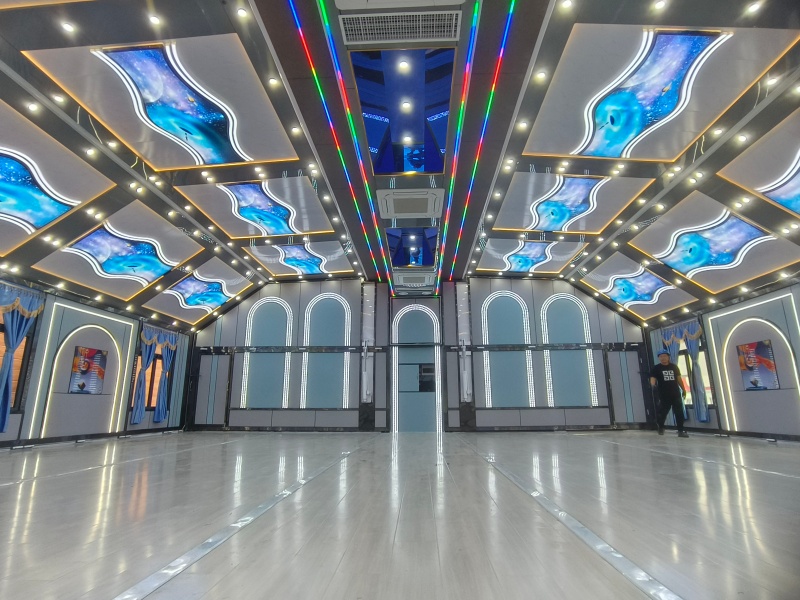
How often the trailer will move should influence the purchasing decision.
If the unit will remain at one resort, wedding property or commercial site for long periods, maximizing interior space may be more important.
If an event rental company expects to move it regularly between cities and venues, transportation practicality becomes much more important.
Buyers should therefore tell the manufacturer whether the trailer will be:
Relocated frequently
Moved only several times per year
Installed seasonally
Used mainly at one location
This information can change the recommended configuration.
International buyers should also consider the transport configuration.
Depending on the destination market and project requirements, purchasing a complete trailer is not always the only approach.
Some buyers may consider an expandable body with interfaces prepared for integration with a locally sourced chassis or transport solution.
This can be particularly relevant where local trailer registration, road regulations, lighting, braking systems, dimensions, or certification requirements differ from those in China.
The appropriate solution should be evaluated according to the destination country and intended operating model.
Large functional areas can significantly reduce usable seating space.
For example, a buyer requesting 200 seats may also want:
Large stage
Bar
Buffet
DJ booth
Storage
VIP area
Restroom
Kitchen
If all of these functions are placed inside the same expandable space, the remaining guest area can decrease considerably.
In some projects, it may be more practical to keep certain functions in separate modules or existing site facilities.
This is why the equipment and functional-area list should be discussed before the final trailer model is confirmed.
Instead of sending only:
“I need an event trailer for 200 people.”
a more useful inquiry should include:
Intended application
Expected guest capacity
Seating style
Required stage dimensions
Dance floor requirements
Kitchen or catering arrangement
Restroom requirements
Audio and visual equipment
Climate-control requirements
Destination country
Expected relocation frequency
Available installation area
Reference photos or a simple hand-drawn layout can also help communicate the intended use.
The manufacturer can then evaluate which size is more appropriate for the project.
International transportation and road-use requirements vary by market.
A trailer configuration that is practical in one country may create registration or transportation difficulties in another.
Buyers should evaluate applicable requirements concerning:
Overall transport dimensions
Weight
Axles
Braking
Lighting
Towing
Electrical systems
Fire safety
Public occupancy
Accessibility
The destination country's requirements should be considered before the final manufacturing configuration is confirmed.
This is especially important for large expandable trailers intended for frequent road transportation.
Choosing an expandable event trailer should not begin with finding the largest available model.
A better sequence is:
Application → Guest Capacity → Layout → Equipment → Site → Transportation → Trailer Size
Following this process makes it easier to avoid purchasing a trailer that is unnecessarily large, too small for the intended layout, or difficult to operate in the destination market.
LZM can evaluate an expandable event trailer project based on the buyer's application, capacity, layout, transportation requirements, and destination country before the final configuration is selected.
Compare expandable event trailer configurations for your project:
Expandable Event Trailer Size & Configuration Options