Welcome: Laizhou Machinery Group



A traditional cooking academy depends on a permanent kitchen and classroom. Students travel to the school, instructors work from the same location, and expanding into another city normally means investing in another facility.
But culinary education does not necessarily have to remain at one address.
In Chile, a cooking school or professional training organization could use a mobile culinary facility to operate courses in Santiago and then relocate the same training infrastructure to other cities for workshops, regional programs, or special events.
An expandable event trailer makes this business model possible by combining mobility with a substantially larger usable space after deployment.
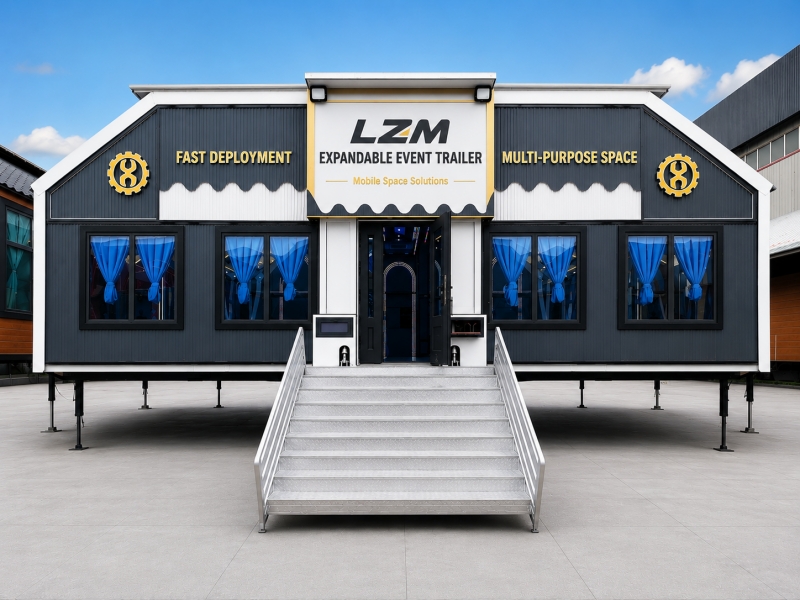
A cooking academy has very different requirements from a conventional mobile restaurant.
A restaurant kitchen is primarily designed to produce meals efficiently. A culinary training facility needs instructors and students to work together while observing demonstrations and practicing cooking techniques.
Depending on the teaching model, the interior may require:
Instructor demonstration station
Student preparation stations
Cooking equipment
Worktops
Sinks and washing areas
Refrigerated storage
Dry storage
Teaching screens
Seating or observation areas
The number of students participating in each class should be defined before the layout is developed.
Some culinary courses are demonstration-based. Others require every student to prepare food individually.
That distinction significantly affects the interior.
A mobile culinary school should be designed around the teaching workflow rather than simply installing kitchen equipment wherever space is available.
For example, an instructor may need a central demonstration area that can be clearly seen by students.
Hands-on courses may instead require several individual or shared preparation stations with sufficient circulation between them.
The equipment list should be prepared early in the project.
Buyers may need to specify:
Ovens
Cooktops
Grills
Refrigerators
Freezers
Mixers
Preparation equipment
Dishwashing equipment
Small appliances
These systems affect electrical capacity, ventilation, water supply, drainage, equipment positioning, and interior layout.
If gas or other specialized cooking systems are required, applicable local installation and safety requirements should also be evaluated.
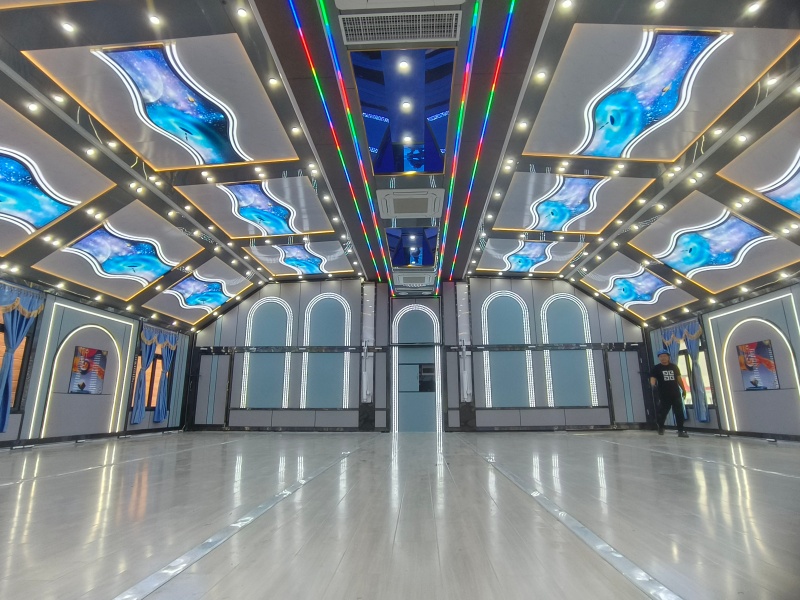
Cooking generates heat, steam, grease, smoke, and odors.
For this reason, ventilation is one of the key differences between a culinary training trailer and a general education facility.
Depending on the cooking equipment, the project may require:
Extraction hoods
Exhaust ducting
Fresh-air provision
Heat management
Grease control
Additional ventilation
The cooking method should be confirmed before the ventilation system is designed.
A culinary classroom requires frequent washing and cleaning.
Project planning may therefore need to consider:
Fresh-water supply
Hot water
Handwashing stations
Equipment washing
Wastewater
Food preparation sinks
Cleaning areas
Whether these systems use site connections or onboard storage depends on how and where the trailer will operate.
The commercial value of a mobile cooking academy is not simply that it has wheels.
Its value comes from using the same professional training facility in multiple markets.
Potential operators could include:
Culinary schools
Chef training institutes
Restaurant groups
Food brands
Hospitality companies
Vocational education providers
Government skills programs
A food brand, for example, could organize cooking demonstrations and professional training in several cities.
A culinary school could use the same facility to test demand for courses in a new region before investing in a permanent branch.
Before choosing the trailer size and interior configuration, buyers should prepare a clear operating plan.
Important information includes:
Number of students per class
Type of culinary courses
Complete cooking equipment list
Instructor demonstration requirements
Water requirements
Electrical load
Ventilation requirements
Storage needs
Frequency of relocation
Food-service, fire-safety, gas, electrical, transportation, accessibility, and other applicable requirements should be evaluated according to local standards and the final operating location.
Opening another permanent culinary school can require property investment, construction, kitchen installation, and a long-term commitment to one market.
A mobile cooking academy offers a different approach.
The same facility can support professional courses, regional workshops, branded cooking demonstrations, and vocational training programs at different locations throughout the year.
For culinary education projects in Santiago and other cities, an expandable structure can be configured around student capacity, kitchen equipment, teaching workflow, utilities, and operating requirements.
LZM develops customized expandable event trailers for education, hospitality, food-service, commercial, and event applications.
Explore the expandable platform for mobile culinary education and cooking-class projects:
Mobile Cooking Academy & Culinary Training Space