Welcome: Laizhou Machinery Group



Off road caravans operating in the UAE face very different environmental conditions from caravans used in cooler regions.
High summer temperatures, intense solar exposure, dust and desert travel can affect:
Interior comfort
Air-conditioning performance
Battery systems
Electrical equipment
Seals
Exterior materials
Water systems
For UAE caravan dealers and importers, these factors should be considered before confirming an OEM specification.
Simply importing a standard caravan configuration developed for a mild climate may not provide the best solution for customers planning desert and remote travel.
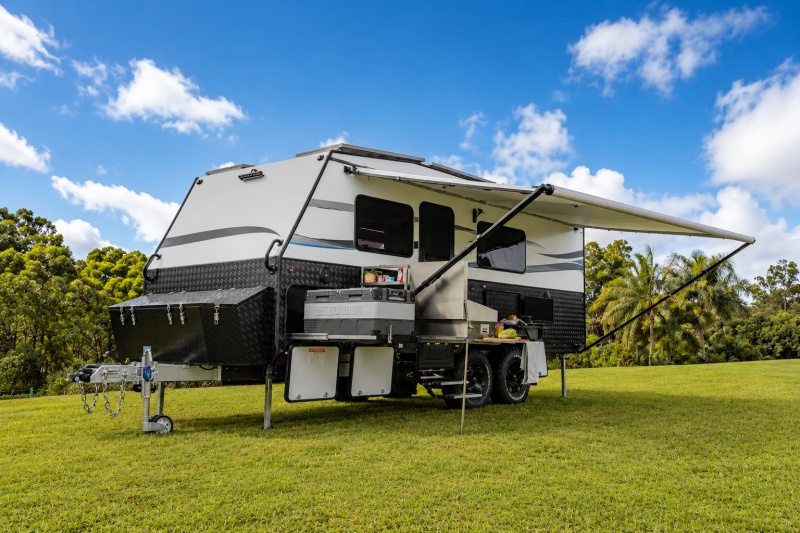
When a caravan is parked in direct sunlight, the interior temperature can rise considerably.
This increases the workload on:
Air conditioning
Refrigeration
Battery systems
Inverters
At the same time, prolonged heat exposure can affect materials and electrical components.
For this reason, a caravan intended for UAE conditions should be evaluated as a complete thermal and electrical system.
Air conditioning is important, but cooling performance also depends heavily on the caravan body.
Dealers should discuss insulation in:
Roof
Side walls
Floor
Doors
Windows
Better thermal insulation can reduce heat transfer into the interior.
This can help:
Improve comfort
Reduce cooling demand
Improve air-conditioner efficiency
Reduce electrical consumption
For a hot-climate caravan, simply installing a larger air conditioner without considering insulation is not necessarily the best solution.
Air-conditioning capacity depends on several factors:
Caravan size
Interior volume
Insulation
Number and size of windows
Outside temperature
Number of occupants
Expected operating conditions
A larger family caravan may require a different cooling solution from a compact two-person model.
Dealers should therefore discuss the complete caravan configuration before selecting the air-conditioning system.
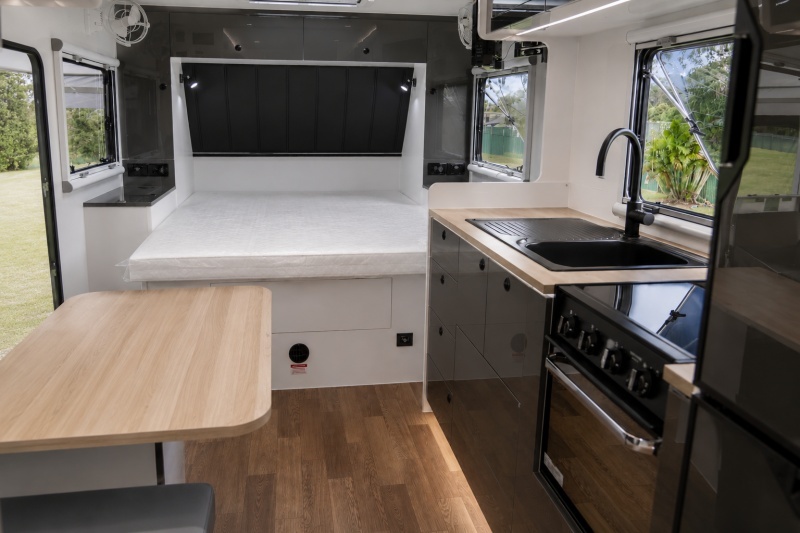
This is an important question for UAE customers interested in remote camping.
Air conditioning is one of the largest electrical loads in a caravan.
Battery-powered operation depends on:
Battery capacity
Air-conditioner consumption
Inverter capacity
Solar charging
Ambient temperature
Other electrical loads
Running air conditioning for extended periods can require a substantial electrical system.
For this reason, dealers should avoid evaluating battery capacity independently from cooling requirements.
Lithium batteries are widely used in off-grid caravan systems, but operating temperature remains an important consideration.
The electrical design should consider:
Battery installation location
Ventilation
Heat exposure
Battery management
Charging system
Component protection
Placing sensitive electrical components in locations exposed to excessive heat can affect performance and service life.
For UAE-oriented OEM projects, component placement should be discussed during the design stage.
The UAE's strong sunlight makes solar charging attractive for off-grid caravans.
Solar systems can help support:
Battery charging
Refrigeration
Lighting
Electronics
Water pumps
Other electrical equipment
However, dealers should not assume that strong sunshine means unlimited electrical power.
Solar performance depends on:
Panel capacity
Installation area
Charging equipment
Battery capacity
Daily consumption
Operating temperature
A balanced system remains important.
Desert travel exposes caravans to significant dust.
Dust can enter through:
Doors
Windows
Ventilation openings
Service compartments
Poorly sealed joints
Dealers evaluating a caravan for desert applications should pay attention to:
Door sealing
Window sealing
External compartment sealing
Ventilation design
Electrical enclosure protection
Good sealing can improve interior comfort and reduce maintenance requirements.
Large windows can create an attractive interior, but they also affect thermal performance.
For hot climates, dealers should consider:
Window size
Window construction
Shading
Curtains or blinds
Sealing
The correct solution depends on the balance between interior design and thermal performance.
Remote desert travel may involve limited access to water.
Depending on customer requirements, caravan specifications may need to consider:
Freshwater capacity
Wastewater capacity
Water pump
Tank installation
Weight distribution
Increasing water capacity also increases caravan weight.
For example, every additional quantity of water contributes directly to the loaded mass of the caravan.
Therefore, larger tanks must be considered together with chassis capacity and payload.
Not every UAE customer will use a caravan in deep sand.
Some will travel primarily on paved roads and established campsites, while others may require more demanding off-road capability.
The manufacturer should understand the intended application before specifying:
Suspension
Ground clearance
Wheels
Tyres
Chassis configuration
A caravan marketed as "off road" should not be defined only by its exterior appearance.
Its structural and running components need to match the intended operating conditions.
Before selecting an OEM caravan configuration, importers should ask:
What insulation system is used?
What air-conditioning options are available?
Can battery capacity be increased?
Can solar capacity be customized?
Where are lithium batteries installed?
How are electrical components protected from heat?
How are doors and windows sealed against dust?
Can water capacity be increased?
How will additional equipment affect total weight?
What suspension options are available?
These questions help define a caravan according to real operating conditions rather than appearance alone.
LZM works with dealers and importers requiring different caravan configurations for international markets.
For hot-climate and desert applications, specifications can be discussed around cooling, insulation, off-grid electrical systems, water capacity and running components.
Explore our Desert-Ready Off Road Caravan Solutions:
For businesses requiring a larger caravan platform, the LZM 21ft Family Off Road Caravan can be discussed with different configurations.
Options may include:
Air conditioning
Lithium batteries
Solar systems
Interior layout
Water storage
Suspension
Exterior equipment
See the 21ft Off Road Caravan for Hot Climate Applications:
If you are a caravan importer, dealer or outdoor business in the UAE, tell LZM how the caravan will actually be used.
Useful project information includes:
Target customers
Emirate or operating region
Road and terrain conditions
Required caravan size
Cooling requirements
Expected off-grid duration
Battery and solar requirements
Initial purchasing quantity
This information helps determine a more appropriate OEM specification before production.
A caravan designed for UAE conditions requires more than strong air conditioning.
Insulation, cooling capacity, battery temperature, solar charging, dust protection, water storage, suspension and total vehicle weight interact with each other.
For dealers and importers, specifying these systems together can create a caravan that is better suited to desert travel and high-temperature operation—and easier to position as a serious off road product rather than simply a visually rugged caravan.