Welcome: Laizhou Machinery Group



When Australian caravan dealers select off road caravan models, construction materials are an important factor to consider.
Many customers ask:
Is aluminium better than steel?
Which caravan body is stronger?
Which material is better for off road travel?
What should dealers consider before importing?
The answer depends on the complete caravan design, manufacturing quality, intended use and market requirements.
The material itself is only one part of caravan performance.
The body structure affects:
Overall weight
Durability
Repairability
Manufacturing method
Cost
Long-term ownership experience
For dealers, understanding material differences helps explain product advantages to customers and select suitable models.
Aluminium is widely used in many recreational vehicles because of its lightweight characteristics.
Potential advantages include:
Lower structural weight
Good corrosion resistance
Modern appearance
Reduced towing load
A lighter caravan may provide benefits for customers using smaller tow vehicles.
Weight is an important consideration for caravan buyers.
A lighter structure may help improve:
Fuel efficiency
Towing flexibility
Payload planning
However, final caravan weight depends on the complete design, including:
Chassis
Interior materials
Appliances
Battery systems
Water tanks
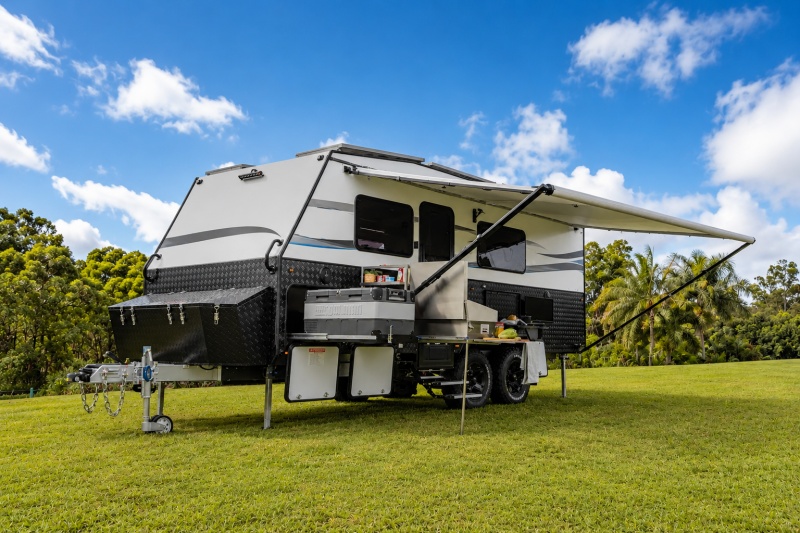
Aluminium naturally forms a protective oxide layer.
This can provide advantages in environments where corrosion resistance is important.
However, other caravan components also require proper protection, including:
Chassis
Fasteners
Electrical connections
Underbody components
Steel remains one of the most common engineering materials because of its strength and manufacturing flexibility.
Potential advantages include:
High structural strength
Strong connection points
Mature manufacturing processes
Flexible fabrication options
A properly engineered steel caravan can provide excellent durability for demanding applications.
Steel has excellent mechanical strength.
It is widely used for:
Chassis structures
Support frames
Heavy-duty components
For off road applications, structural design and engineering quality are extremely important.
Steel structures may provide advantages in some repair situations because many workshops are familiar with steel fabrication.
For dealers, serviceability is an important consideration when supporting customers.
Many people assume aluminium caravans are always much lighter.
However, actual weight depends on the complete vehicle.
Factors include:
Frame design
Wall construction
Interior materials
Chassis specification
Equipment level
A well-designed steel caravan can sometimes achieve practical weight targets, while a poorly designed aluminium caravan may not provide expected advantages.
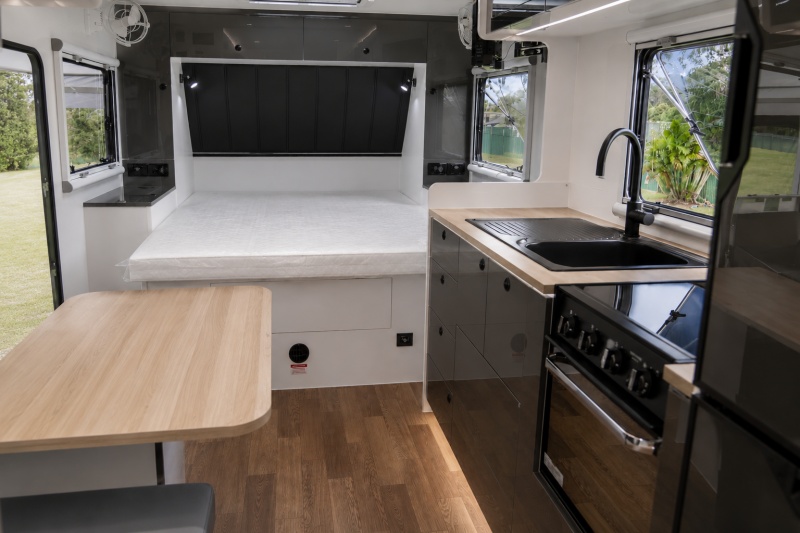
For off road caravans, customers should consider the entire system:
Chassis design
Suspension system
Weight distribution
Ground clearance
Sealing
Component quality
Manufacturing process
The body material alone does not determine whether a caravan is suitable for difficult terrain.
Two caravans using the same material can have very different quality levels.
Important manufacturing factors include:
Engineering design
Welding quality
Assembly accuracy
Inspection procedures
Material selection
Production consistency
Professional dealers evaluate the complete manufacturing capability, not only the material name.
Before choosing a caravan supplier, dealers should evaluate:
Does the market prefer:
Lightweight caravans?
Heavy-duty touring caravans?
Family models?
Remote adventure models?
Different construction methods may affect:
Production cost
Retail positioning
Customer expectations
Dealers should understand:
Repair methods
Replacement components
Maintenance requirements
Supplier technical support
For private-label projects, material selection should be discussed during product development.
OEM considerations may include:
Caravan size
Target market
Weight requirements
Interior design
Equipment packages
Production methods
A professional manufacturer can recommend solutions according to the final application.
Before placing an order, dealers should ask:
What materials are used in the caravan structure?
How is the chassis designed?
What corrosion protection is applied?
How is quality inspected?
How are repairs handled?
Can the design be customized?
These questions provide more value than simply asking:
"Is it aluminium or steel?"
LZM works with:
Caravan dealers
Importers
Distributors
Private-label brands
We support customized off road caravan projects including:
Different sizes
Interior layouts
Electrical systems
Equipment packages
OEM branding
Explore the complete LZM Off Road Caravan range:
https://www.lgloader.com/list/54-chinese-china-off-road-caravan.html
The LZM 21ft Family Off Road Caravan is designed for international dealers looking for a balance between space, durability and customization flexibility.
Configurations can be adjusted according to market requirements, including:
Interior layouts
Electrical systems
Battery packages
Storage solutions
Equipment options
Branding requirements
Learn more:
https://www.lgloader.com/products/285-21ft-Off-Road-Caravan-For-Sale.html
LZM works with overseas caravan businesses to develop suitable products for different markets.
Send us:
Target country
Customer type
Preferred caravan size
Required configuration
Expected quantity
Our team can discuss suitable manufacturing options.
There is no single material that is automatically the best choice for every off road caravan.
Aluminium may provide lightweight advantages, while steel can offer strong structural solutions and manufacturing flexibility.
For Australian dealers, the most important factor is choosing a well-engineered caravan from a manufacturer that understands customer requirements, product quality and long-term support.